


 Francais
 Deutsch
 Italiano
Refine Your Search
Melville Rhode Island 1943 stock footage and images
- Showing 2767 to 2772 of 6726 results more
more Hide
Hide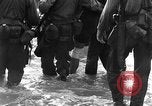
U.S. 81st Division, 323 Infantry Regiment troops wade through water and walk past wreckage of a village in Ulithi Atoll.
U.S. 81st Division, 323 Infantry Regiment troops at Ulithi Atoll in Caroline Island during World War II. The soldiers wade through water to board a landing barge. A soldier with a bandaged leg is helped by other soldiers in the water. Two soldiers with carbine advance warily towards ruins of a house. The troops looking from a hole in a damaged concrete wall of the house . A U.S. airplane in flight over a jungle. The soldiers advance through a jungle terrain. They walk past wreckage of a village in the jungle terrain. The soldiers advancing.

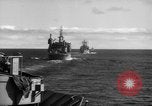
The U.S. fleet of warships at anchor off Ulithi Atoll in World War II
U.S. Naval fleet of warships anchored off Ulithi Atoll, Palau, Western Caroline Islands, during World War 2. Aircraft carriers are seen and many other types of warships. Closeup of a Pensacola, Salt Lake City ("Swayback Maru") class heavy cruiser, in camouflage paint, with Kingfisher scout plane on her stern. An escort aircraft carrier. A sling filled with supplies being unloaded on an aircraft carrier. A U.S. flag on the cargo ship in the background. Food supplies being unloaded from cargo nets. Sailors pick up the supplies and store them aboard the aircraft carrier. Cartons piled up inside the aircraft carrier. A sailor pulls a trolley loaded with food supplies. The interior of the carrier with stored food supplies.
Engineers install blast measuring devices, pressure gauge and steel cables on at Enewetak Atoll for atomic tests.
U.S. Army Engineers and the part they played in the preparations for the nuclear bomb tests of Operation Sandstone on at Enewetak Atoll , Marshall Islands. Ships and small crafts underway. United States Engineer personnel move for the final installation. Security guard registers every person. Engineers install blast measuring devices on ground. They set up many instruments to be used during tests. An engineer climbs up domestic control station . Engineers in chow line and take food in plates. They eat food. They swim, play during for relaxation. They attend religious services. Engineers make concrete structures and paint a wall. Engineer places pressure gauge in a bunker. Engineers place electronic device underground and cover it with mud by using shovels. They lay steel cables in hook on a road. The aircraft carrying safety crew lands on the road. Front end loader is driven. Aircraft takes off. Engineers stack up the pile. An engineer protects devices from radiation effect by sealing it and closes station door.
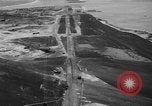
Each engineer leaves the site; nuclear bombs explode on the site during Operation Sandstone atomic bomb testing in Enewetak Atoll
U.S. Army Engineers and their role in the preparations for the atomic bomb tests on Enewetak Atoll, Marshall Islands, as part of Operation Sandstone in April-May 1948. View of site for nuclear bomb testing. Engineer personnel leave the site and are transported by landing crafts. Landing crafts comes along side a ship. Crew climb cargo net up and come aboard the ship. Bombs explode on the site and smoke cloud rise during tests. Detonations shown include Test X-Ray, Test Yoke, and Test Zebra. The scenes that follow are all from before the tests, as engineers and personnel work to prepare the test site. Engineers work. Palm trees are removed. Crew works at construction site. Crane hoist construction material. Cubic yards of material are hoisted and placed by crane. Airstrips are built. Planes in flight. Various units in Joint Task Force 7 are recognized for their efforts in contributing to the success of the United States nuclear testing program in Operation Sandstone.
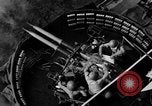
A task force crew puts out fire on a 5" turret and carry empty ammunition crates while underway off the shore of Saipan.
A U.S. Navy Task Force underway in the Pacific Ocean off the shore of Saipan, Mariana Islands during the Battle of Saipan of World War II. The task force crew fires artillery. Smoke rising in the background. Battleships and destroyers underway. Men put out fire on a 5" turret using a hose. A landing craft underway. Men carry empty ammunition crates.
Japanese air raid on Saipan destroys American jeeps, aircraft and trucks during World War II.
Japanese air raid on Saipan, Mariana Islands during World War II. Tracers, flares, and bomb bursts during Japanese night raid. Several attacking planes crash. Blazing hangars and demolished U.S. Army Air Forces B-24 Liberator bombers and B-29 Superfortress bombers on the ground. Bulldozers remove the wrecked aircraft from an airstrip. Men try to put off fire. Smashed trucks, jeeps and aircraft being inspected by U.S. soldiers.
CRITICALPAST.COM: About Us | Contact Us | FAQs - How to Order | License Agreement | My Account | My Lightboxes | Shopping Cart | Advanced Search | Featured Collections | Website Terms & Conditions | Privacy Policy ©2026 CriticalPast LLC.
License Agreement |
Terms & Conditions |
Privacy Policy
©2026 CriticalPast LLC.