


 Francais
 Deutsch
 Italiano
Refine Your Search
Melville Rhode Island 1943 stock footage and images
- Showing 3097 to 3102 of 6726 results more
more Hide
Hide
Japanese 1931 aggression in Manchuria condemned by the League of Nations. Continued Japanese aggression in the Pacific, through World War II
Japanese international activities during 1931-1945. Opening scene shows Japanese troops embarking on ships bound for an invasion of Manchuria, in 1931. Officers walking on the dock, amongst the departing troops. Scenes of explosions and destruction. Views of Shanghai during Japanese attacks in 1937. Destroyed buildings. Civilian dead lying in the streets. Japanese soldiers racing along a street in a three wheeled motorcycle vehicle. Change of scene shows Japanese diplomat Yosuke Matsuoka addressing a League of Nations meeting in 1933, after that body adopted a report blaming Japan for events in Manchuria. He objects to that action and then leads his delegation in walking out of the meeting. View of Japanese delegates in top hats and bowler hats exiting the building. Scene shifts to Japanese forces firing artillery and machine guns in Manchuria.They wave large Japanese flag victoriously after a battle. The next scene shows Italian forces occupying Ethiopia and raising the flag of the Kingdom of Italy, as Italian troops salute, presenting arms of rifles with fixed bayonets. Axis leaders celebrate the 1940 Tripartite Pact between German, Italy and Japan. The festivities take place in a hall displaying the three nation's flags on the walls. A large number of persons attend including Japan's Prime Minister, General Hideki Tojo, seen with two celebrants. Scene reverts to China with Chinese civilian people trying to escape from invading Japanese forces. The refugees carry their belongings as they flee. Occasional shell burst is seen among advancing Japanese troops as Chinese soldiers put up resistance. Chinese soldiers firing artillery. In the U.S., Japanese envoys Kichisaburō Nomura and Saburō Kurusu are seen walking together into a building and entering a room inside. Next, are views of the Japanese attack on Pearl Harbor, with huge plumes of smoke obscuring the bombed U.S. battleships in the harbor. U.S. battleships in line formation in the Pacific during World War 2. Aerial view of U.S. warships moving in parallel. British ships augmenting the U.S. warships. Naval guns firing. U.S. amphibious assaults on Japanese held islands in the Pacific. Prisoners of the Japanese who suffered in the Philippines. General Douglas MacArthur mingling with former prisoners and internees upon his return to Manila in 1944. Aerial views of Iwo Jima. Naval bombardment and amphibious assault of Iwo Jima. Numerous fallen Japanese soldiers. The iconic American flag raising by U.S. Marines on Iwo Jima. View of Lieutenant General Simon Bolivar Buckner Jr. during the campaign on Okinawa, where he was killed in action. A Soldier being carried on a stretcher. Another throwing a hand grenade. U.S. soldier firing at a Japanese defender who falls out of his bunker. Large numbers of Japanese prisoners of war assembled in a field. Japanese Kamikaze attacking U.S. warships off Okinawa. The sky filled with antiaircraft flak clouds. View of 40mm Bofors antiaircraft cannon firing and a Japanese plane falling and exploding on impact in the ocean.
U.S. wartime propaganda film - Japanese people toil in industry and at warfare unified to help Japan win World War II.
United States anti-Japanese propaganda war film about Japan and its people, and its intentions in World War 2. A White actor narrator impersonates a Japanese man, enforcing negative stereotypes and mocking Americans. “You’ve learned that the Japanese do not show their feelings, nor do I have big teeth and thick glasses- how sad to disillusion you” the narrator mocked. Japanese people work to help Japan win war. Japanese people work on a farm. People row in boats on a lake facing Mount Fuji. Snow-capped Mount Fuji. Volcanic explosion. Japanese soldiers seize the United States flag. Japanese flag flying. Sacred fishes in a pool. Soldiers hold Japanese flags as they cheer Banzai in a victory celebration after battle. Modern buildings in a Japanese city. High altitude view of buildings in an area. Bombardment in a city. Destroyed houses, buildings, and rubble on the ground of Japanese cities. United States warplane aircraft fly in formation. Aerial view of a Japanese city. People walk on the street. Vehicles pass on street. Ship 'Argentina Maru' docked at a Japanese harbor. People sow rice seeds on the farm. Narrator (actor impersonating a Japanese person) mocks Americans as being soft. View in an American town of cars parked along the sides of a main street. American 1940's cars. Jockey's Ball banner. People queue at theater box office and in train stations. United States nightclubs, bars, and casinos. United States people at beach. Japanese industry and munitions factories. Ships underway at sea. United States Marines carry a dead soldier on stretcher. United States Marines coming ashore and Japanese soldiers fighting in Pacific islands such as Guadalcanal and Tarawa. Forces of both sides fire guns and artillery. Smoke from bombardment. Ragged Japanese forces surrendering to United States forces. Japan's best forces shown marching in formation and review. Young Japanese soldiers in training. Japanese children study in a school. Burning Japanese city following attack. Japanese citizen refugees flee, a woman crawls across a railroad track. Japanese girls and boys exercise simultaneously outdoors. Japanese soldiers execute two men (possibly in China?). Prisoners held by Japan in forced labor; others executed. Japanese soldier puts his hat on a little girl, other children playing. Remains of a newborn infant wrapped in cloth lying on the street. Forced laborers from Japanese-occupied countries are made to farm rice. Remains of victims of Japanese forces. Heads of decapitated victims lying on the field. United States prisoners emaciated and injured in the Philippines. A United States soldier wipes his tears after losing an arm. Remains of United States troops, Japanese soldiers, and Asia civilians. Japanese soldiers deploy for war at train station. Map showing Japan, China, Manchuria, and Mongolia. A Type 3 Chi-Nu tank rolling up a fortress in China. Soldiers marching on rice fields and climbing rocky cliffs. Japanese soldiers assume prone position, firing rifles.
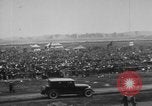
Lieutenant Cyrus Bettis and Lieutenant Jimmy Doolittle win air races in 1925.
In October 1925, crowd gathered to watch the Pulitzer Trophy air races at Mitchel Field, Long Island, New York. VIPs arrive in various automobiles. Army Air Service Curtiss R3C-1 airplane is pushed onto the field. Air Service Chief, General Patrick , speaks with Lieutenant Cyrus Bettis as Lieutenant James Doolittle listens. A Navy crew works on their entry in the race, similar to the Army Air Service airplane. Navy Lieutenant Al Williams seen with a pipe upside down in his mouth. Lieutenant Bettis taxis out for takeoff in his airplane number 43. Then Navy Lt. Williams proceeds to take off in his aircraft, number 40. Lt. Bettis breaks ground and begins to fly the closed course, coming very close to the ground at times. He lands and climbs out of the cockpit, surrounded by spectators and officials who are convinced he has won, registering a speed of 249 miles per hour. Navy Lt. Williams lands shortly thereafter having averaged 242 miles per hour. He is greeted by several spectators, including a young woman. Two weeks later, the U.S. Army was represented by Lieutenant Jimmy Doolittle, who flew the Curtis R3C-1, again, but this time fitted with floats, at the Schneider Cup Seaplane Race in Baltimore, Maryland. He shakes hands with a young woman, just before the race. The Navy also entered with a similar seaplane, shown being pushed into the water. The British entry, a Glouster-Mapier IIIA is seen (replacing the Supermarine-Napier S.4, that was damaged). The Italian Macci M.33 is seen on a dock with engine running. The float planes taxi out over the Chesapeake bay waters to takeoff position. Doolittle is the first to take off and to return, logging an average speed of 232 miles per hour. He is seen smiling after the race.
U.S. Navy successfully engages Japanese fleet at Battle of Coral Sea and Battle of Midway early in World War II.
U. S Mahon class destroyers speed through the water in the Pacific Theater in World War II. Closeup of one passing the camera ship. Distant head-on view of a North Carolina class U.S. Battleship. The American aircraft carrier, USS Enterprise (CV-6), with aircraft on her deck. Animated map shows the Coral Sea and Midway Island, in the Pacific, where the U.S. Navy successfully engaged the Japanese in major naval battles. Glimpse of sailor with binoculars at railing of an aircraft carrier with many Douglas Dauntless dive bomber aircraft on her deck. View, looking back from an airplane, toward the aircraft carrier, USS Intrepid (CV-11) underway in the Pacific, with aircraft crowded forward on her deck. A South Dakota class battleship underway and firing guns astern while defending against attacking Japanese aircraft Black flak clouds are visible low in the sky. Aircraft carrier and other U.S. warships under aerial attack. An American aircraft carrier tilting as she maneuvers sharply under fire. U.S. ships firing 1.1 inch quad anti-aircraft guns. Japanese bombers maneuvering and attacking amidst numerous black flak clouds. Skies filled with tracer rounds of ammunition. An airplane crashes into the water. Sailors reloading their quad anti-aircraft guns. Glimpse of a destroyer firing her anti-aircraft guns while racing behind an aircraft carrier. A Japanese bomber heading toward a U.S. ship, through heavy fire, is hit in the left wing and plunges into the sea. Black smoke marks its impact. Two Japanese aircraft hit by anti-aircraft fire, trail fire as the aircraft crash into the sea. More scenes of combat. Glimpse of a disabled Navy F4F airplane on a carrier deck. Sky littered with black flak smoke clouds. The sound of an engine on one Japanese aircraft begins cutting out. Two observers with binoculars point toward the plane as it falls into the sea. A PT boat is seen underway carrying Japanese airmen rescued from the sea. A sailor guards them with a Thompson machine gun. More rescued Japanese airmen are seen stepping from a Higgins boat, and then walking , while trying to avoid the cameras. Some prisoners crouched together smoking cigarettes provided by a U.S. soldier. At end of film, Admiral Chester W. Nimitz, Commander in Chief of the U.S. Pacific Fleet, decorates American aviators and sailors at a formal award ceremony aboard an aircraft carrier.
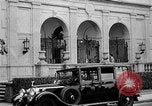
Creation of Good Neighbor Fleet of ships operated by Moore-McCormack Line with service from the U.s. to South America and Latin America
Exterior view of Pan American Union Building in Washington DC, with a 1930s Packard four door sedan-limousine parked in front. A man entering the building. Jefferson Caffery, U.S. Ambassador to Brazil, seated in an office and reviewing paperwork. Narrator describes the creation of the Good Neighbor Fleet (where Moore-McCormack Lines, also called Mooremack, was contracted to run three ocean liners of the U.S. Maritime Commission between the USA and South America, called the Good Neighbor Fleet.) Close up picture of brochure advertising the new fleet, and picturing the three ships (The California, Virginia and Pennsylvania from the former Panama Pacific Line, with new names Uruguay, Brazil and Argentina.) Next scene shows 3 men meeting (this is possibly Moore-McCormack Lines founder Albert V. Moore, on right, seated at a table and in discussion, possibly with U.S. Maritime officials. Man on left is possibly Emmet McCormack.) Passengers aboard liner SS Brazil as it departs port. Crowd on docks wave at the ship leaving New York harbor. View from on board SS Brazil in New York Harbor as a nearby tug boat sprays water. Skyline and skyscrapers of New York City's Manhattan Island seen in background. Map of South America showing route of a Good Neighbor ship. Good Neighbor Fleet ships at a harbor in South America. U.S. State Department diplomats in South America beside one of the ships as fleet service is inaugurated. Exterior view of Pan American Union building and its sign in Washington DC (later called the building of the Organization of American States). President Ortiz of Argentina, President Alfredo Baldomir of Uruguay, and President Getulio Vargas of Brazil are shown in discussion with various officials.
Views of United States Air Force Tactical aircraft
U.S. Air Force McDonnell-Douglas F-4C Phantom II fighter aircraft, tail number 63-3688, takes off away from the camera. A Republic F-105 Thunderchief fighter jet takes off toward the camera . F-105 aircraft dives over dirt target area and another makes high speed low pass over encampment in snow, leaving cloud of condensation behind. An F-105 climbing out at high speed. Another F-105 flies low over an Army M113A2 Armored Personnel Carrier driven on road in desert. Glimpse of an F-101 Voodoo aircraft maneuvering overhead. View from inside reconnaissance aircraft making a low level night flight. Camera on aircraft. Photo interpreters in control room. A C-130 lands on a dirt runway. Fully armed combat troops rush out of the aircraft. Aerial view of C-133 Cargomaster airplanes operating on dirt airfield. One takes off, raising a cloud of red dust, and maintains low, flat, flight path, with very little rate of climb. Views of F-105 aircraft in formations and one flying over snow capped mountains. Several C-130 Cargo aircraft flying in trail formation, low over jungle terrain. Closeup top view of an F-105 hooked up to a refueling tanker aircraft. Next, it is seen dropping away from the refueling boom. Armorers loading tactical aircraft with missiles, bombs, and rockets. Bombs and rockets mounted beneath wings of an F-105 and an F-4 aircraft in flight. Ground crews tending to F-101 Voodoo aircraft in a cold arctic environment. An F-100 aircraft illuminated by the sun while in flight. A pair of F-4 aircraft in flight. A formation flight of three F-105 aircraft flying over an island fort in the sea.