


 Francais
 Deutsch
 Italiano
Refine Your Search
Melville Rhode Island 1943 stock footage and images
- Showing 343 to 348 of 6726 results more
more Hide
Hide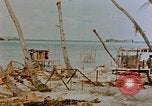
Wreckage on island after battle between marines and Japanese troops, Tarawa Island in Pacific.
Shores of Tarawa Atoll in Pacific Ocean. Wreckage on island. Trees after bombardment. Marines mill around. Tents put up on beach. (World War II period).
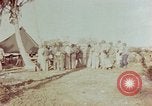
Admiral Nimitz and his party inspect island and move around on Kwajalein Island, Marshall Islands.
U.S. Navy Fleet Admiral Chester William Nimitz on inspection of Kwajalein Island, Marshall Islands. Admiral Nimitz and his party on Kwajalein Island. Tent and palm trees in the background. The party in jeep. Admiral Nimitz and his party move around and inspect the island. They inspect debris and damaged flag. Views of sea, U.S. Navy PB2YCoronado taxis on water surface.
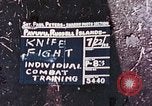
U.S. Marine Corp 5th Regiment practice individual knife fighting at Pavuvu Island, Russell Islands, Solomon Islands
United States Marine Corps of 5th Marine Regiment undergo individual combat training in Russell Islands, Solomon Islands, during World War II in Pacific theater. Group of Marines practice individual knife fighting. They demonstrate different types of holds during the practice.

Equipment being unloaded with the help of a crane in the Aleutian Islands, Alaska during the Aleutian Islands Campaign.
The Aleutian Islands Campaign of World War II. U.S. Army Service Force (ASF) provides logistical support to fight the enemy. A flag of the United States. A United States Army Air Forces B-25 Mitchell bomber flies. Various goods like timber, vehicles being unloaded from a cargo ship with the help of a crane. A ship carries troops. Soldiers disembark from a ship. A soldier carries a guitar.

Scenes of U.S. Army Air forces operations on Adak Island during the Aleutian Islands Campaign of World War II
As film begins, organ music is heard. Camera pans across tops of tents showing sky above. Scene shifts to a Chaplain conducting Sunday services in the open. A soldier plays a field organ as soldiers and airmen participate in the service. Closeup of the Chaplain kneeling before a makeshift altar where objects are placed to facilitate communion in a mass or service. Complete change of scene shows airmen arranging bombs for loading aboard an open truck that then backs up to an airplane, into which they are loaded. Narrator notes that these are all purpose bombs weighing 250, 500, and 1000 lbs, respectively. Closeup of a 1000 lb bomb in foreground marked "GP 1000 lb AN-M44." Airmen arnorers install fins and fuses before loading the bombs aboard the aircraft. An airman loads belts of machine gun ammunition at a gun turret of the airplane. others load guns elsewhere on the aircraft. Closeup of pilots being given final briefing about the mission, before departure. Narrator notes that the mission will involve two flights of B-24s and one of B-17s. Planned altitudes and routes of the bombers are drawn on a map in colors. They are to attack a Japanese installation on Kiska Island. Fighter support is described. A Flight crew assembles near their B-24 Liberator bomber. Closeups of individual crew members waiting on the airfield ramp. Scene shifts to fighter pilots who will be accompanying the bombers. They converse in front of a row of fighter aircraft. They are wearing flotation gear over their flight suits. The area is paved with Marsden matting (pierced steel planking). Closeups of men in the group, including: Lieutenant George I. Rudell, Lieutenant Holy P. Mail, Lieutenant Lial A. Bean, Major Willson Aston, Lieutenant Henry J. Strencops and Colonel Jackson.
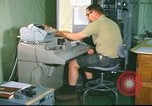
Technicians and men work aboard USS Compass Island underway at Sao Miguel Island in the Azores Islands.
U.S. ships at Sao Miguel Island in the Azores Islands. Technician Mr. Fred New works on a teletype aboard USS Compass Island. The technician at work. A yellow paper in the machine in motion. Other technician aboard the ship. Two men in the background working on some equipment. The two men work on a plotting chart. The teletype is in direct communication with Tyros satellite. A technician hands over a teletype communication to navigator Paul Taylor and Dr. Chester L Buchanon who is a senior scientist. Both men are working on a plotting chart. A digital clock. The teletype in operation.
CRITICALPAST.COM: About Us | Contact Us | FAQs - How to Order | License Agreement | My Account | My Lightboxes | Shopping Cart | Advanced Search | Featured Collections | Website Terms & Conditions | Privacy Policy ©2026 CriticalPast LLC.
License Agreement |
Terms & Conditions |
Privacy Policy
©2026 CriticalPast LLC.