


 Francais
 Deutsch
 Italiano

Refine Your Search
Miami Beach Florida USA 1963 stock footage and images
- Showing 6067 to 6072 of 26889 results more
 Hide
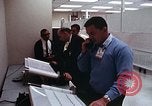
National Aeronautics and Space Administration (NASA) investigation of Apollo 1 disaster in United States.
NASA investigators pore over data related to the Apollo 1 command module fire on January 27, 1967. They discuss computer printouts showing graphical depictions of conditions during the event. Document control practice is shown with persons logging them in and out with a custodian. Engineers place long computer printouts on a white board. Many make notes and annotate documents.

NASA investigation following the deadly accident involving Apollo 1 command module
National Aeronautics and Space Administration (NASA) engineers stand around wrecked components from the Apollo 1 command module destroyed by fire on January 27, 1967. They confer among themselves.

NASA Apollo 204 review board room setup for review of Apollo 1 tragedy
Apollo 204 review board room at National Aeronautics and Space Administration (NASA) in United States. Charts on a board in the room. Photographs of the wrecked parts of the Apollo 1 command module on the boards in the room. Chairs and tables for meeting purpose. Charts show the sequence of events associated with the accident.

NASA Apollo 204 review board conducting inquiry into tragic fire involving Apollo 1 command module, January 27,1967
Apollo 204 review board investigating tragic accident involving Apollo 1 command module.Formal meeting at National Aeronautics and Space Administration (NASA) in United States. Members in board room discuss matters amongst themselves. Among those seated at the conference table is Colonel Frank Borman, USAF, in civilian clothes. He turns and looks toward the camera. " Secretarial support Board Inquiry" is written on the door of an adjoining room where a staff of administrative and clerical persons are working.

NASA Apollo 204 review board discusses report of investigation into Apollo 1 tragedy
Apollo 204 review board discusses draft report of inquiry into Apollo 1 tragedy. National Aeronautics and Space Administration (NASA) in United States. Board Principals seated around a table discussing and annotating their draft report. Two of them make phone calls.

NASA laboratory supporting Apollo 204 review board investigating Apollo 1 tragedy. Xray analysis
Laboratory supporting Apollo 204 review board inquiry into the Apollo 1 tragedy. National Aeronautics and Space Administration (NASA) in United States. Woman works in the laboratory. She works with a machine labeled "Consolidated Electrodynamics Company." Her notebook contains an entry in hand reading: "XRay Differentiation." A technician in Lab coat sets up a test device. He presses "start" button and the machinery runs (time-lapse) for many hours. A gauge reads 40 thousand volts.
CRITICALPAST.COM: About Us | Contact Us | FAQs - How to Order | License Agreement | My Account | My Lightboxes | Shopping Cart | Advanced Search | Featured Collections | Website Terms & Conditions | Privacy Policy ©2026 CriticalPast LLC.
License Agreement |
Terms & Conditions |
Privacy Policy
©2026 CriticalPast LLC.