


 Francais
 Deutsch
 Italiano
Refine Your Search
Miami Beach Florida USA 1963 stock footage and images
- Showing 7429 to 7434 of 26838 results more
more Hide
Hide
A newsreel depicting launch of Victory ships, men joining Merchant Marines, and war factory production in World War 2
A newsreel showing merchant ship building and role of merchant ships and liberty ships in World War 2. Launch of U.S. ship "SS Joseph N Teal" on September 23, 1942, just 10 days after its keel was laid at Oregon Shipbuilding Corporation, owned by Henry Kaiser. A motorcade of President Franklin D. Roosevelt and Henry J. Kaiser, American industrialist and father of modern American shipbuilding industry. A huge gathering at the Kaiser shipyard in Portland for the launch of the merchant ship. Views of U.S. Merchant Marine Academy. Cadets in officer training program practice emergency ship evacuation drills and diving drills. Civilian recruits in line at recruiting station to join the Merchant Marines. War production workers in factories and manufacturing scenes in war time industries, making bomber aircraft, artillery, patrol boats and tanks. War materiel loaded on railroad cars and cargo vessels. View in ship engineering area below including view of ship engine fires burning for propulsion. Sign on wall "Alert! Your skill and devotion will win the war." Views of the ship galley kitchen, wheel house and sailors eating food prepared by ship cooks. A world map is shown. Scenes of victory fleet ships unloading cargo at ports worldwide.
Drought affected areas of the Great Plains during the Dust Bowl in the Great Depression
'Rain for the Earth' : A documentary on emergency relief activities by the WPA (Works Progress Administration) in drought areas of the Great Plains during the Great Depression. Drought affected areas of the west and southwest in the Dust Bowl. Dark wind clouds in the sky drop burning dust. Dry land and parched soil. Dry water holes. Grasshoppers on dry grass blades, dry trees and dead corn stock. A dust storm raging. The storm engulfs the landscape including houses and roads. Cars and pedestrians on the road during the storm. Women and children fight their way through the blinding dust as they take the cattle for grazing. A farmer and his son observe the dry straw in the fields. The farmer takes the dust in his hand and lets it fly away with the wind.
Abandoned farms and implements in the drought affected areas of the Great Plains during the Dust Bowl
Drought affected areas of the Great Plains during the Dust Bowl in the U.S. Abandoned farms. Children outside a house. Traditional houses held together with grass roots. A child draws drops of water from a hand pump. A damaged deserted barn and rampages farmyards. Open windows and doors of abandoned houses swing with the wind. Abandoned farm implements and equipment rust in the sun. A wind mill at a farm. Cattle drink water from a well. A cow with her suckling calf.
Farmers bring water from distant places and people draw water from the relief well in the Great Plains.
Drought affected areas of the Great Plains during the Dust Bowl in the U.S. Dry, parched land. Shepherds with their sheep. A wind mill at a farm. Sheep ranchers draw water. A rancher with barrels of water in a cart. He pours water into a trough for the sheep. Sheep drink water from the trough. Birds on parched ground. A farmer couple haul water from distant places in a horse cart. They pour water from barrels into a tub. Cows drink water. Ranchers on horses with a herd of cattle on dry land. The herd and cars pass through the town. Ranchers herd the cattle into rail cars to be transported to greener pastures. The train begins its journey. 'Trail City, Post Office' sign on a building. A notice by the Township Board regarding the use of water from the relief well. Men, women and children line up and draw water from the relief well. The water carrier or delivery man goes door to door to distribute water. He takes water in a bucket from a carriage and pours in into a barrel outside a house. Men dig a deep well using equipment and machinery in search of water. A horse pulls to rotate the digging equipment.
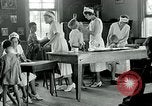
WPA nurses conduct health check ups in nurseries while men construct roads and build dams in drought areas of the Great Plains.
Drought affected areas of the Great Plains during the Dust Bowl and the Great Depression in the United States. A Nursery school in the drought area. Works Progress Administration (WPA) nurses conduct a health checkup physical examination of children. Children seated on benches in the school. A nurse questions a little girl. They administer typhoid serum. A nurse takes a little boy’s temperature while another examines a boy's eyes and throat for signs of problems caused by dust. Farmers with horses and horse carts. They construct roads under the Works Administration Program (WPA). They employ horses and plows for road building to carry crops to market. They cut wide fire lanes in drought damaged farms to prevent the spread of Prairie fire. Construction of assorted small dams to capture rainwater. Men transport dirt and rocks in wheelbarrows, dig in the ground, and work with machinery and equipment. Larger dams are also built. Men at cleared land. They twist strengthening wires into place using pliers. Men wearing gloves and smoking pipes work at the dam site.
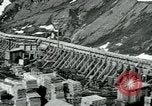
Construction of the Fort Peck Dam in Montana and ponds and lakes built by WPA relief workers in the Great Plains.
Drought affected areas of the Great Plains during the Dust Bowl and Great Depression in the United States. U.S. Army engineers and WPA (Works Progress Administration) relief workers construct the Fort Peck Dam in Montana. Workers digging. Tunnels and spillways at the construction site. Heavy machinery and equipment. A worker on the tracks leading into a tunnel. The gigantic structure at the headwaters of the Missouri River. Ranchers with their cattle near ponds and lakes built by WPA labor. An old rancher on his horse with a dog alongside. Ranchers with horses as they drink from a pond. A rancher with his son and their dogs look on as cattle graze and bathe.
CRITICALPAST.COM: About Us | Contact Us | FAQs - How to Order | License Agreement | My Account | My Lightboxes | Shopping Cart | Advanced Search | Featured Collections | Website Terms & Conditions | Privacy Policy ©2026 CriticalPast LLC.
License Agreement |
Terms & Conditions |
Privacy Policy
©2026 CriticalPast LLC.