


 Francais
 Deutsch
 Italiano
Refine Your Search
Miami Beach Florida USA 1963 stock footage and images
- Showing 9073 to 9078 of 26838 results more
more Hide
Hide
Vulnerabilities of United States Air Force communication systems
United States Air Force retired Major General Barry Goldwater explains the role of voice communication and the importance of ensuring its security followed by a film titled ' The third man is listening' The film shows the vulnerabilities of United States communication systems. An Air Force officer explains enemy capabilities for acquiring intelligence through interception of these communications.
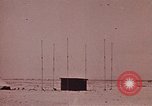
U.S. Air Force film about the threat of communications intelligence gathering by Communist nations
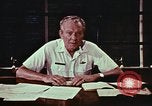
After showing several Russian signal intelligence sites, a map, centered on the North Pole, depicts numerous forms of communications facilities and antennas. An animated map depicts what it calls the world-wide communist communications intelligence (COMINT) threat, comprised of fixed sites, trawlers, airborne, submarine, and satellite platforms. Then several types of facilities are shown. The film narrator, a U.S. Air Force Colonel in short-sleeved summer uniform shirt, is then seen as he mentions diplomatic posts around the world that also serve as intelligence gathering sites. Aerial views, from overflying helicopter, of Washington, DC, and environs, including the Capitol, Federal buildings, and the Pentagon. Map showing Soviet Military Attache Office, Soviet school, Soviet Embassy, and the Pentagon, together with the telephone trunk lines serving them. Another map displays microwave links in the Washington area. View of the residence of the Russian Ambassador, at 1125 16th Street, NW, Washington, D.C. The radio antenna on the roof of the building. Images of "Krug" signal gathering sites, and map of their locations in the Soviet Union., Map of USSR communications intelligence threat in Asiatic-Alaskan area. Innocent-appearing fishing trawlers used by Soviets to intercept communications. A Soviet Tupolev Tu-95 aircraft, equipped for signal intelligence collection, is seen in flight. Closeup of the aircraft tail. Views from an aircraft flying around the Tu-95. Animated illustration of earth rotating in space and of satellites passing over it. Map of Cuban COMINT threat. Polar-centered map showing Chinese and North Korean communications intercept installations. U.S. intelligence aerial photograph of a site in China, across from Taiwan. Map of COMINT threat sites in Southeast Asia.
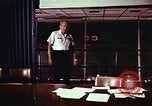
Officer shows enemy log book containing intelligence information obtained by intercepting American communication systems
United States Air Force officer shows pages from enemy log book containing intelligence information obtained by intercepting American communication system. A document aimed at establishment of operations to ensure communication security.
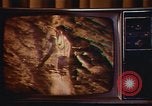
USAF Security Service activities to detect and prevent intercept of classified or secret information from electromagnetic emanations
View of a TV screen image distorted by emanations from an electric razor held nearby A woman typing on a classified message teletype typewriter machine. Signals being detected on an oscilloscope screen. Closeup view of round head of typewriter applying type while typewriter is in use. View of woman typing a letter or memo on an early model electronic typewriter. Two Airmen walking toward the entrance of the Headquarters, United States Air Force Security Service. A Security Service van used to detect electromagnetic emanations capable of intercept. Air Force technicians charting such problems.
Activities of the U.S. Air Force Security Service to defend against communications intercepts by enemies
A USAF Colonel speaks about the Air Force Security Service. A group of Security Service communications specialists planning a communications security survey. The survey leader is seen discussing results with the a Colonel, the Commander of the unite that was surveyed. Security Service personnel conducting a simulated enemy intelligence gathering effort in a Communications Security Surveillance unit. They employ sophisticated eavesdropping equipment to ferret out potential problems. A mobile van that can be airlifted to anyplace needed. Technicians inside the van, using monitoring equipment to intercept telephone and radio communications. Closeup of Airman wearing headset. Tape decks recording the monitored communications.The Colonel, narrator, describes a monitored communication that revealed details of a planned air strike. He shows and mentions reports of other communications leaks. View of an SR-71 aircraft taking off. Aerial views of it in flight, from various angles. A USAF F-111 aircraft in flight, viewed from various angles. A model of the F-15 fighter plane, and an illustration of the B-1 bomber.
U.S. Air Force encodes communications to protect against enemy intercepts
Images of persons communicating by telephone and radio. A U.S.Air Force Colonel discusses encoding of such communications to prevent enemy eavesdropping. A senior controller in a command post is seen using the Automatic Secure Voice Communications Network (AUTOSEVOCOM) to protect his conversation. Steel containers housing cryptographic devices that encode the communications. A panel in the command post is part of the Automatic Digital Communications Network (AUTODIN). Command post personnel using the system for teletype transmissions. Another system called the "KG-30" is seen that will extend protection to a range of communications types. Narrator states it is in use to securely transmit images from Southeast Asia. A technician places a photograph into a laser scanning device that digitizes it for transmission via the KG-30 system. An illustration shows how the image is transmitted via satellites and relay stations.
CRITICALPAST.COM: About Us | Contact Us | FAQs - How to Order | License Agreement | My Account | My Lightboxes | Shopping Cart | Advanced Search | Featured Collections | Website Terms & Conditions | Privacy Policy ©2026 CriticalPast LLC.
License Agreement |
Terms & Conditions |
Privacy Policy
©2026 CriticalPast LLC.