


 Francais
 Deutsch
 Italiano
Refine Your Search
Miami Beach Florida USA 1963 stock footage and images
- Showing 10495 to 10500 of 26838 results more
more Hide
Hide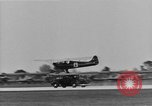
Taylor Cub airplane takes off from car roof.
A Taylor Cub airplane sits on a platform fastened to the top of an automobile. The car drives along a taxiway and as it gains speed, the airplane suddenly takes off steeply from the platform.
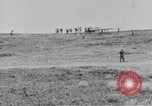
Early primary glider launched from hilltop in the United States
Film leads with slate reading: "How the Wrights learned to fly--the motorless, man-carrying glider." A group of people stand on a hilltop, watching as two men launch a primary glider with a downhill running start. The glider consists of tubular frame tapering to nearly a point at the empennage. It is equipped with wheels, and the pilot sits upright with legs extended straight ahead.. The glider has a single high wing. It rises quickly and flies above ground for a good distance, appearing to approach the ground as it moves downhill.
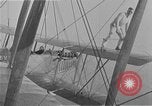
Barnstorming between the wars. Wing-walker preparing to transfer from one biplane aircraft to another, in flight.
Between World War I and World War II, so-called barnstorming was popular. Here a wing-walker stands on wing of a Curtis "Jenny" JN4 biplane, preparing to transfer to another , in flight.
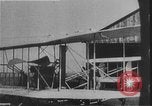
Wright Flyer is rolled from hangar, catapulted, and flown. View of wing, from the airplane.
A Wright Flyer is pulled from a hangar by ground crew. They raise a heavy weight on a tower to provide energy for catapulting the Flyer into the air. The Airplane takes off. Views of the wing from aboard the Wright Flyer. Views of Orville Wright.
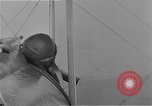
Pilot in a World War I biplane aircraft prepares gun for firing.
Pilot in open cockpit of World war I vintage biplane. He wears helmet and goggles. He taps his machine gun, and looks around.
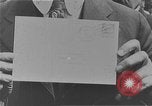
Inauguration of the first regular U.S. Airmail service. President and Mrs. Wilson and other officials are present.
The first piece of airmail is displayed. President Wilson holds an envelope for mailing by airmail. Mrs. Wilson stands with him. Many officials and spectators are present. The Curtis JN-4 airmail airplane, piloted by Lieutenant George L. Boyle, takes off from the Polo field in Washington DC.
CRITICALPAST.COM: About Us | Contact Us | FAQs - How to Order | License Agreement | My Account | My Lightboxes | Shopping Cart | Advanced Search | Featured Collections | Website Terms & Conditions | Privacy Policy ©2026 CriticalPast LLC.
License Agreement |
Terms & Conditions |
Privacy Policy
©2026 CriticalPast LLC.