


 Francais
 Deutsch
 Italiano
Refine Your Search
Miami Beach Florida USA 1963 stock footage and images
- Showing 12895 to 12900 of 26838 results more
more Hide
Hide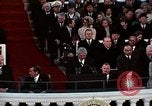
Senator Cook introduces speakers and Chief Justice administers President Nixon's oath at Swearing In ceremony, Washington DC.
A ceremony of Swearing In at the U.S. Capitol on the Inauguration Day, Washington DC. U.S. President Nixon, Vice President Agnew and other dignitaries seated in inauguration stand. Senator Cook introduces Chief Justice who administers oath to President Richard Nixon. President takes oath as First Lady Pat stands by him. President completes his speech. The guests and dignitaries stand and cannon fired one after another to mark end of ceremony.
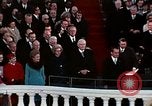
United States President Nixon addresses the assembly at Swearing In ceremony on Inauguration Day in U.S. Capitol, Washington DC.
A ceremony of Swearing In at the U.S. Capitol on the Inauguration Day, Washington DC. Vice President Agnew, First Lady and other dignitaries seated in inauguration stand. President Richard gives speech. He mentions important issues like world peace and the assembly applauds. He calls for a greater role of America in solving other countries' problems. He talks of betterment of infrastructure and welfare of citizens of America.
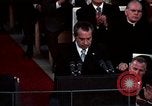
U.S. President Richard Nixon finishes his speech at the Swearing In Ceremony on Inauguration Day at the U.S. Capitol.
A Swearing In Ceremony at the U.S. Capitol on Inauguration Day, Washington DC. Vice President Agnew, First Lady and other dignitaries seated in inauguration stand. President Richard Nixon gives speech. He calls to be proud for being American. Vision for America and finishes speech. He shakes hands with Senator Cook as First Lady stands by him. Cardinal Terrence Cook gives closing remarks.
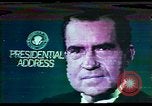
United States President Richard Nixon addresses the nation about the Vietnam War from White House, Washington DC.
News correspondent reads news about stand of U.S. President Richard Nixon on Vietnam War. President Nixon addresses the nation about the Vietnam War from White House. He details how United States got involved in the war. Nixon says that time has come to end the battle in Vietnam. (This became known as Nixon's "Silent Majority" speech.)
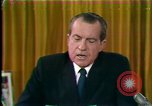
U.S. President Richard Nixon addresses nation about Vietnam War, from White House, Washington DC.
Stand of U.S. President Richard Nixon on Vietnam War. President Nixon addresses the nation about the Vietnam War from White House. He explains what has been described as "The Nixon Doctrine" regarding U.S. involvement in war, foreign policy support, and defense of freedom. He discusses the concept of helping other nations fight wars, rather than fighting wars for them. He illustrates this approach in describing U.S. efforts in Vietnam. He promises that 20% of U.S. combat forces will return by mid December. He notes he will not reveal withdrawal decisions that will compromise efforts at the Paris talks. He indicates he will pursue a path seeking a just peace through a negotiated settlement or through continued vietnamization.
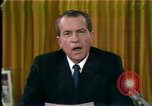
U.S. President Richard Nixon addresses nation about steps to end the war in Vietnam. He asks support of the "silent majority"
Stand of U.S. President Richard Nixon on Vietnam War. President Nixon addresses the nation about the Vietnam War from White House. He details how United States got involved in the war. He talks of protests and demonstrations of anti war activists and wants an everlasting solution to the problem. He reminds of Woodrow Wilson's efforts to end wars and peace. Nixon tells the youth of America about their demonstrations: "I respect your idealism. I share your concern for peace. I want peace as much as you do." He speaks to the "great silent majority" of Americans (contrasted with the youth demonstrators) and asks for their support in fighting "the forces of totalitarianism" and in supporting his plans for fighting and ending the war. He asks that Americans be united for peace and united against defeat. In the final part of this speech segment, President Nixon invokes the term "silent majority."
CRITICALPAST.COM: About Us | Contact Us | FAQs - How to Order | License Agreement | My Account | My Lightboxes | Shopping Cart | Advanced Search | Featured Collections | Website Terms & Conditions | Privacy Policy ©2026 CriticalPast LLC.
License Agreement |
Terms & Conditions |
Privacy Policy
©2026 CriticalPast LLC.