


 Francais
 Deutsch
 Italiano
Refine Your Search
Miami Beach Florida USA 1963 stock footage and images
- Showing 13159 to 13164 of 26838 results more
more Hide
Hide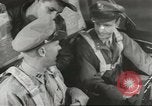
A USAAF officer trains a new B-17 pilot in cockpit check, including seat and controls check in the United States
A U.S. Army Air Forces (USAAF) training film titled 'How to fly the B-17. Part I. Ground Operations.' about inspections and safety precautions by a pilot prior to take off. A USAAF officer trains a new pilot beginning his career as a USAAF B-17 Flying Fortress pilot. The instructing officer, trainee pilot and aircraft engineer inspect a USAAF B-17 Flying Fortress. Cockpit check including seat and controls check: Seat check: seat belts, seat adjustment, rudder pedals. Control check: rudders and elevator controls unlocked, lock down and latched, aileron lock. Trim tab indicators inspection: rudder tab control, elevator tab control, aileron tab control. Check for: fuel transfer valves and switches, inter-coolers, JAIROS, fuel shut off switches, landing gear switch, cowl flaps, turbos, waste gate open, idle cut offs, throttles, RPM, auto pilot, de-ice and anti-ices, wing and propellers, cabin heat controllers, generators. Engine start check: The officer instructs the pilot to check for the fire guard with a fire extinguisher standing by near each engine. The pilot warns the ground crew for propeller clearance. (World War II period).
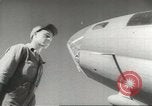
A USAAF officer trains a new B-17 pilot in cockpit inspection and start up procedures in the United States.
A U.S. Army Air Forces (USAAF) training film titled 'How to fly the B-17. Part I. Ground Operations.' about inspections and safety precautions by a pilot prior to take off. A USAAF officer trains a new pilot beginning his career as a USAAF B-17 Flying Fortress pilot. The instructing officer, trainee pilot and aircraft engineer in the cockpit, prepare for take off. The fire guard gives the all clear. The pilot is instructed to check and adjust the: master and ignition switches, batteries and inverter power, volts on the inverter. The pilot reaches out of the cockpit window and gives the hand signal for external power (source of electric power). The ground crew man turns on the portable generator and links the power cable to the aircraft. Further cockpit check includes turning on or inspection of: parking brakes, hydraulics check, booster pumps, pressure carborator filters, fuel quantity in the tanks. the pilot is instructed to give the signal to start engine number 1 and adjust the throttle. Check: the starter switch, hand timer, other start and mesh controls, oil pressure, RPM. The pilot gives the signal to start engine number 2. Adjustment of the vacuum selector switch, flight indicator check. The officer instructs the pilot to repeat all inspection procedures for engine number 2 as conducted for engine number 1. (World War II period).
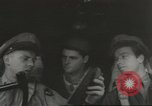
An officer shows safety precautions and control tower communication for flying a B-17 aircraft is carried out in the U.S.
A U.S. Army Air Forces ( USAAF ) training film on instructions to fly USAAF Boeing B-17 Flying Fortress aircraft in the United States. An officer turns on a radio switch. Trainees wear head phones. Men check fuel pressure gauge. Governor control is operated to get desired revolutions per minute ( RPM). The RPM gauge shows readings. A system engineer communicates with men in aircraft. A gauge shows flap position. The flaps are turned down. A dial shows zero flap position. A compass chord, a hydrolic pressure gauge and a suction gauge show readings. A trainee turns a vacuum pump switch. He checks for oxygen cylinder pressure. An officer checks filter warning lights. A trainee turns on an output switch. A pilot communicates with a man in a control tower. A crew man gives hand signals to a man on the ground. The man removes wheel chokes. Switches and handles are operated as the aircraft taxis. The pilot locks the tail wheel. The aircraft taxis past other parked aircraft. Th pilot turns on the automatic control switch. The tail wheel is unlocked.
Cattle and sheep graze, and piglets feed on a domestic sow in the United States.
Meat packing industry in the United States. Cattle graze on a western ranch. Cattle graze near a pond. A herd of sheep comes down a pasture land. Corn Belt: Piglets feed on a domestic sow.
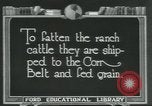
Buyers select cattle from a stockyard and cattle walk in a narrow passage of a meat packing plant in Chicago, Illinois.
Meat packing industry in the United States. Corn Belt: Cattle are fed on grain. In Chicago, Illinois : cattle in a stockyard. Buyers walk near fences to select animals. A buyer selects cattle. Cattle walk in a narrow passage of a meat packing plant.
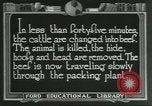
Meat packing line with Butchers cutting beef and a government official inspecting it in Chicago
Meat packing industry in Chicago, Illinois, United States. Butchers near carcasses hanging from a ceiling. The butchers remove organs from the carcasses. A butcher cuts beef into two parts. A government official inspects beef. The man puts a seal on beef. Beef is cleaned and washed in warm water. Beef in a chilling chamber. Men place beef in cold storage. Men close the door of the cold storage.
CRITICALPAST.COM: About Us | Contact Us | FAQs - How to Order | License Agreement | My Account | My Lightboxes | Shopping Cart | Advanced Search | Featured Collections | Website Terms & Conditions | Privacy Policy ©2026 CriticalPast LLC.
License Agreement |
Terms & Conditions |
Privacy Policy
©2026 CriticalPast LLC.