


 Francais
 Deutsch
 Italiano
Refine Your Search
Miami Beach Florida USA 1963 stock footage and images
- Showing 13999 to 14004 of 26838 results more
more Hide
Hide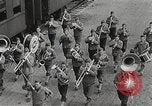
US Army soldiers and heavy equipment transported by railroad trains in the United States, bound for war front in World War 2
Activities of the United States Army in the United States during World War II. A U.S. Army band from the 407th Engineer Battalion playing musical instruments and marching. U.S. Army soldiers board railroad trains at a railroad station for transportation toward the war front. A railway steam locomotive pulling train cars. M4 Sherman tanks are seen on them as well as M2A4 (Mae West) tanks sitting partially turned with their guns out of sight away from the direction of travel.Browning M1919 .30 caliber machine guns are seen in their extra turrets. Army trucks and other military vehicles are also aboard the supply trains. The supply train moves through American countryside. Two women seated under hair dryers converse about the war in a beauty shop or beauty parlor. U.S. troops on troop transport railroad trains at night. Interior of a train car. American soldiers read books, sleep, and some play dice. An African American porter watches the game. A chaplain speaks to the soldiers. Civilians buy newspapers at a news stand. Headline on newspaper reads "London Expects Invasion of Europe at Any Hour" (before the upcoming Normandy Invasion of France in June 1944.)
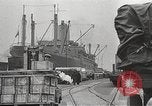
Soldiers load supplies and equipment onto ships at a harbor in the United States.
Activities of the Army Service Forces (ASF) in the United States during World War II. Soldiers at a harbor. Ships docked in the harbor. Men load supplies and equipment onto a ship. A sign on a building reads 'US Army Transport Service'. Trucks, artillery and other equipment are loaded onto the ship. Interior of an office. Officials seated at a desk. Commanding General of the Army Service Forces Brehon Burke Somervell talks to staff officers. He walks down a corridor and comes out of the Pentagon.

A Port of Embarkation switchboard operator continues working after receiving news of the death of her son in World War II.
Contribution of Signal Corps and army messengers during World War II. A map locates target areas. Telephone operators seated at a switchboard in the United States, at a Port of Embarkation. Men and women work in a room and pass messages to soldiers at a battlefield. The switchboard operator goes on break and places a call to her 10 year old boy at home using a pay phone booth. The woman picks up the phone and dials a number. She talks to her son and gets the information of the death of her eldest son, a Signal Corps soldier in combat. She puts the phone down and sits in her chair. Other women talk to her and suggest that she go home. She continues with her work.

A Pentagon messenger performs his duties in Arlington, Virginia unaware of the vital information he carries.
Contribution of messengers during World War II. Wrecked tanks and equipment on a field. U.S. Army soldiers guarding prisoner of war German soldiers as they march. View of German prisoners at an encampment. Duties of an African American messenger at the Pentagon in Arlington, Virginia. Augustus Johnson walks in various corridors of the Pentagon building, carrying messages. He talks to an African American dispatching supervisor. He places an envelope carrying information on a rack. A sign board reads: 'Army Air Forces'. He meets a visiting official and escorts him to his destination. Narrator extols importance of the messenger job during World War 2.
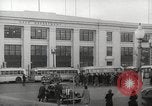
Soldiers and people stand outside and enter the buildings of the Navy Department and War Department in Washington DC.
Activities of civilian workers and soldiers at the War Department and Navy Department buildings in Washington DC, early in World War 2. Exterior of a building. 'Navy Department' written on the building. A crowd enters the building. Buses and other vehicles drive past along a street. 'War Department' written on a building. Soldiers stand outside the building. Soldiers and marines near a truck. Soldiers in front of the Munitions Department. Women come out of the building. Armed guards stand outside a building.

People arrive at the Lincoln Memorial in Washington DC, United States.
The Lincoln Memorial in Washington DC, United States. A man and woman enter the building. People inside the building look at the Lincoln Memorial.
CRITICALPAST.COM: About Us | Contact Us | FAQs - How to Order | License Agreement | My Account | My Lightboxes | Shopping Cart | Advanced Search | Featured Collections | Website Terms & Conditions | Privacy Policy ©2026 CriticalPast LLC.
License Agreement |
Terms & Conditions |
Privacy Policy
©2026 CriticalPast LLC.