


 Francais
 Deutsch
 Italiano
Refine Your Search
Miami Beach Florida USA 1963 stock footage and images
- Showing 1579 to 1584 of 26838 results more
more Hide
Hide
OSS personnel being trained for underwater demolitions as they learn to shoot and operate radio in Nassau, Bahama Island (WW2)
A training of U.S. OSS ( Office of the Strategic Services) personnel for underwater demolition at Salt Key in Nassau, Bahama Island during World War II. OSS personnel lined up on the beach as they stand at attention. The personnel get down on the beach. They don swimming gear and put on oxygen masks. Oxygen valves being opened and flow being controlled. The personnel on a boat and they get into the water. The personnel on the beach as they learn to handle different types of demolitions. Men carry a pole and move into the sea. The personnel seated on the beach take lessons. They shoot pistols at targets. They get trained in operating a radio to call mother ship in case of an emergency. The personnel carrying receiver sets as they learn to operate them. A personnel works on a radio set.
Allied troops land at Anzio and launch of all out assault in Italy during World War II.
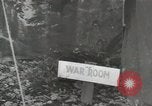
Allied campaign in Italy during World War 2. Supreme Commander of the Allied forces General Dwight D. Eisenhower emerges from War Room tent, with General Mark Clark, on the central front in Italy. An officer briefs the General. A map of Italy depicts the location of Cassino and Rome. The map depicts the course of the Rapido River and the Allied strategy to drive away the Germans from the area. Allied soldiers fight in the streets and at "Hangmans Hill". British soldiers in combat. British medics try to assist a wounded comrade. Damaged buildings and wounded soldiers. A map of Italy depicts Allied landings at Anzio. An LST ( Landing Ship Tank) beached at Anzio as American and British troops unload. German Field Marshal Erwin Rommel and General Field Marshal Albert Kesselring of Germany. Allied equipment advances in Anzio. German soldier divisions are seen advancing on roads to attack the new Allied threat to their flank. German Luftwaffe fighters seen overhead as they bomb an Allied convoy in a harbor in Anzio. Aerial closeup of German Junkers JU 87 dive bomber aircraft as it dives toward Allied ships. On ship view of Allied navy guns on ships opening fire on attacking Nazi German airplanes. View from beach of may explosions at and near Allied ships in harbor. Aerial view of formation of German aircraft diving toward battle. Closeup view of British antiaircraft gun operator as he sights cross hairs and presses foot control to open fire on German aircraft. Buildings and military vehicles near Allies on beach blown up and on fire during air raid. A DUKW ( amphibious truck ) burns in a street. Allied soldiers fight against the Germans, holding the beach. The Allies lay down an artillery barrage. Dead and injured soldiers of the Allied Army. Ship packed with injured U.S. Army soldiers on the deck moves toward a hospital ship anchored off shore. Allied prisoner soldiers (most American POWs) taken prisoner by the Germans are marched on a street under German guard. In Cassino, Germans continue to hold Benedictine Monastery atop hill in Cassino. Aerial view of American B-27 bomber aircraft as Allied air raid drops bombs on and near the Abbey to drive out the Germans. Bombs impact and billows of smoke rise up. Nearly 543 Allied aircraft bombard the city of Cassino one month later to attack the remaining Nazis. Allied forces prepare for an all out assault. Supply convoys seen moving on roads toward front. British and Polish troops marching toward front. Additional American forces marching. French Expeditionary Corps soldiers taking up positions. Equipment arrives and soldiers being regrouped for the assault. The assault is launched and Allied artillery fire seen lighting up the sky at night with brilliant flashes and explosions on May 11, 1944. Allied commander Field Marshal Harold Alexander looks on as Allied forces push forward on the morning of May 12.
U.S. Marines land at Peleliu Island, Palau during World War II.
United States Marines in Peleliu Island, Palau during World War II. Small crafts underway towards Peleliu Island. Coastline in the background. United States Marines on a LVT (Landing Vehicle Tracked) underway towards the coast. The LVT hits the beach. Soldiers disembark at the beach. United States Marines with small guns crouched on the beach. Marines milling about on the beach as smoke rises in the background.
U.S. 1st Marine Division secures the beachhead of Incheon in Korea during the Korean War.
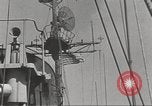
Amphibious invasion of Incheon, Korea by U.S. 1st Marine Division during the Korean War. A radar on the bridge of a U.S. ship. U.S. destroyer USS DeHaven (DD-727), Ships head for the beach of Incheon. The importance of securing a beachhead is explained. U.S. battleships fire at coastal targets. Smoke billows up from explosions. Landing crafts loaded with U.S. Mariens head for the beach. Amphibious vehicles loaded with troops are driven on the beach. The marines advance inland. Men of the North Korean People's Army surrender before U.S. Marines. U.S. Navy USS Mahoning County (Landing Ship, Tank-914) embarks units and equipment of 1st Marine Division on beaches.
U.S. ships and landing craft underway at sea near Iwo Jima, Japan.
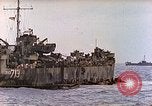
Activities of United States Marine Corps near Iwo Jima, Japan during the Battle of Iwo Jima, World War II. Landing Ship Tank (LST) 713 underway at sea. Landing Vehicle Tracked (LVTs) also underway. LSTs in the foreground. The silhouette of the LST. Mount Suribachi in view. A beach area. Two LSTs in the foreground. An explosion on Mount Suribachi. A beachhead. LSTs and Landing Craft Infantry (LCIs) on the beach. Two LSTs on the beach. USS Monrovia underway at sea. A Landing Craft alongside. The U.S. flag flutters from a flag pole on the top of Mount Suribachi. Two LSTs on the beach.
U.S. 4th Marine Division engaged in the Battle of Iwo Jima during World War II
U.S. 4th Marine Division during the Battle of Iwo Jima in World War 2. Views from Landing craft arriving at Yellow 1 Beach during U.S. amphibious assault on Iwo Jima. A sherman tank at the water's edge. The next day, two marines tend to a wounded out of sight below a bluff. One is seen holding a container of blood plasma above his head as they administer emergency treatment. A sherman flailing (crab) mine-clearing tank equipped for deep wading moves across the beach. Closeups of marines hunkered down on the beach, taking cover near armor, as they attempt to move inland. Marines and equipment covering the beachhead. Close offshore, an explosion sends water into the air. LSM-216 is seen maneuvering close to shore, attempting to bring ashore "C" Company tanks to Yellow Beach II. Marines setting a smoke screen of dense white smoke.
CRITICALPAST.COM: About Us | Contact Us | FAQs - How to Order | License Agreement | My Account | My Lightboxes | Shopping Cart | Advanced Search | Featured Collections | Website Terms & Conditions | Privacy Policy ©2026 CriticalPast LLC.
License Agreement |
Terms & Conditions |
Privacy Policy
©2026 CriticalPast LLC.