


 Francais
 Deutsch
 Italiano
Refine Your Search
Miami Beach Florida USA 1963 stock footage and images
- Showing 16957 to 16962 of 26838 results more
more Hide
Hide
U.S. Army Brigadier General Prichard talking to Boy Scouts in his office at the Pentagon building in Arlington County, Virginia.
Eagle rank Boy Scouts representing the 12 regions of the Boy Scouts of America visit the Pentagon building in Arlington County, Virginia, during Boy Scout Week 1949. The interiors of the office of U.S. Army Brigadier General Vernon E Prichard. Boy Scouts arrive in the office and meet Brigadier General Prichard. A wall map in the background. Brigadier General Prichard speaks to the boys. The Vice Chief of Staff General Joseph Lawton Collins, talking to the boys in his office. The 12 Boy Scout representatives are: Alan Fritts of Troop 11 in Mankato, Minnesota; Andrew L. Clement, senior patrol leader of Troop 2 in Raleigh, North Carolina; George Barron of Troop 17 in Franklin, Virginia; Daniel Abbott of Senior Outfit 16, in Newtonville, Massachusetts; James Roswurm of Troop 31 in Huron, Ohio; Charles S. Wilson of Troop 3, in Bristol Tennessee; H. Cumings Johnson of Senior Outfit 230 in Traverse City, Michigan; Joseph L. Cox of Troop 98 in Trenton, Missouri; Howard M. Williams of Explorer Post 345 in Houston, Texas; James C. Vincent of Sea Scout Ship 232 in Brookings, Oregon; James E. Gill of Air Scout Squadron 234 in Berkeley, California; L. Drury Cathers of Troop 22 in Gouverneur, New York.
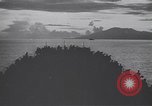
The production of war films and other work in the Signal Corps Photographic Center in the United States (WW2)
Soldiers of the U.S. Signal Corps in the European Theater during World War II. Signal Corps cameramen of Army Pictorial Service photograph and film an amphibious landing. The soldiers wade ashore. U.S. soldiers advance on a battlefield, firing rifles. Camera man present. Street fighting on the war front. The wall of a building leans and crashes to the ground as a U.S. Army camera man captures moving image footage on camera. U.S. soldier rips a Nazi German eagle symbol from a building and it crashes to the street. A U.S. Army Air Corps B-17 aircraft in flight , seen from beside and close up from below and beside. View of exterior of Signal Corps Photographic Center building in New York. Men working inside the Signal Corps Photographic Center in the United States. Soldiers at film cutting machines at work, and view of film canisters in storage. The production of films in the center including a segment from "Why We Fight" and one from "The Fighting Men" pictures. Several war related films, and training and orientation films are produced. The foreign version of the films are also made so that they can be seen by other countries. Scene of an American soldier speaking Japanese in a U.S. military created film. Bing Crosby singing "Accentuate the Positive" during a filmed segment for the American G.I. audience at a USO show. Elevated view of war material and equipment stacked in a massive warehouse building, with Signal Corps workers moving about in the building. Men working and placing more equipment in the building. 'MacArthur's Headquarters' written on a wooden shipping crate. Boxes of war materiel being loaded into trucks, railroad train cars, and ships for transport to the war front in World War 2. Views of various kinds of Signal Corps communication equipment, radios, transmitters, cameras, vacuum tubes and other electronic equipment that was innovated during World War II. A moisture-proof switchboard is tested in the field. A U.S. Army Signal Corps soldier holding a phone during the switchboard testing.
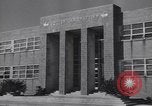
Innovations in communication equipment from the U.S. Signal Corps engineers working in Squier Laboratory during World War 2
Soldiers of the U.S. Signal Corps working on radio equipment in the United States. The exterior of a U.S. Army Signal Corps building with "Squier laboratory" written outside the building. The interior of the laboratory. Engineers conducting experiments and working on various equipment for communications, including Radar, Color Radio Telephoto, and single sideband transmission for long haul radio communication. A machine that appears to be spinning and heating hot glass. An engineer operating a machine beneath a sign that says "Thermionic Shake Tests." An engineer tests various signal lights. Signal Corps men observing a radio tower. Instructors teach and demonstrate various kinds of radio relay equipment to other Signal Corps personnel. A large board reads "Multiplex terminating." An officer explains a diagram to the Signal Corps personnel. Soldiers examine disassembled radios. Demonstration of a map being transmitted to a soldier in the field via facsimile machine. Close views of a spinning drum on the facsimile machine and the map visible on it. A dramatized shot of a B-17 bomber aircraft in flight. The pilot in the cockpit of the aircraft. The pilot looks at the signals transmitted through the radar. The aircraft navigates with the radar in bad weather. A map locates Boston, Lynn, Nantasket and Quincy and it is compared to the radar image of the same region.
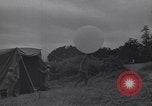
Instruments dropped by the parachutes transmit meteorological information in the United States.
Soldiers of the U.S. Signal Corps working on the radio equipment in the United States. Long range forecast by the radar instruments. Men gather on a field testing weather analysis and automatic weather station forecasting instruments. Man seated in a large portable spinning radar device in the field. The instruments dropped by parachute send the weather observations details.
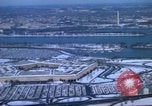
Aerial view of the Pentagon building, Washington Monument, Jefferson Memorial and the Lincoln Memorial in the United States.
Aerial views of Washington DC monuments and the surrounding area in the United States. Aerial views of landmarks including the Pentagon building in Virginia. The Jefferson Memorial, Lincoln Memorial and the Washington monument in Washington DC. The Arlington National cemetery in Virginia. The snow covered ground.

Aerial view of the Washington Monument and the Lincoln Memorial in Washington DC, United States.
Aerial views of Washington DC monuments and the surrounding area in the United States. A boat underway at the Potomac River. Aerial views of Lincoln Memorial and the Washington Monument. Other buildings in the background.
CRITICALPAST.COM: About Us | Contact Us | FAQs - How to Order | License Agreement | My Account | My Lightboxes | Shopping Cart | Advanced Search | Featured Collections | Website Terms & Conditions | Privacy Policy ©2026 CriticalPast LLC.
License Agreement |
Terms & Conditions |
Privacy Policy
©2026 CriticalPast LLC.