


 Francais
 Deutsch
 Italiano
Refine Your Search
Miami Beach Florida USA 1963 stock footage and images
- Showing 17521 to 17526 of 26838 results more
more Hide
Hide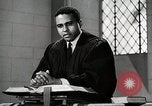
Major events of American history like the Boston Massacre, the independence and establishment of democracy.
A film about the role of African Americans in the history of America. A dramatization shows an African American priest tracing the history of America and the role of African Americans. The Granary Burying Ground in Boston. Pictures of the Boston Massacre. The Bunker Hill Monument (Monument Sq, Charlestown, MA 02129, United States) with soldiers in the foreground. A copy of 'Valley Forge'. Events leading to and after the independence of America. Men cut trees in a forest. Pictures related to the American Civil War of 1861. Ships in water as the war is fought. The Statue of Abraham Lincoln at the Lincoln Memorial (2 Lincoln Memorial Cir NW, Washington, DC 20002, United States) in Washington DC. An African American couple in the countryside. A railroad track is seen.
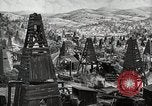
Contribution of African American soldiers during the Spanish American War and World War I.
A film about the role of African American soldiers during various wars in the United States. A dramatization shows a black soldier during the Spanish American War. He also talks about his role in Cuba and the construction of the Panama Canal. Footage of the Panama Canal being constructed and ships underway in the canal. United States Army forces including black soldiers boarding troop transport ships bound for Europe during World War 1. A railroad train carries African American soldiers to France during World War I. African American soldier units under General Pershing march in formation with an Army band in France during World War 1. African American soldiers work and fight against the Germans, including the 813th Pioneer Regiment near Marseilles, the 332nd Labor Battalion, and the 808th Pioneer Regiment near Verdun. African American soldiers racing for front lines including the soldiers with the 8th Illinois and the 372nd regiment and the 371st, and the 369th Infantry Regiment (sometimes called the "Harlem Hellfighters") in the Argonne. View from behind soldier as he fires a machine gun, and United States Army infantry firing artillery. African American soldiers of the 369th regiment "Harlem Hellfighters" being decorated and receiving the French Croix de Guerre for their heroic actions in World War I. The African American soldiers march at a parade in New York City following World War I and are greeted by throngs of enthusiastic African American civilians attending the parade. View of Henry Johnson being congratulated by civilians after he and Needham Roberts performed with exceptional heroism and received the Croix de Guerre. Close up view of the Croix de Guerre medal on a uniform. Graves of African American soldiers who lost their lives during World War I at Arlington National Cemetery in Virginia. View of the All-Wars Memorial to Colored Soldiers and Sailors in Logan Square in Philadelphia (Logan Square, SE corner 20th Street & Benjamin Franklin Parkway, Philadelphia, Pennsylvania). View of a stone memorial erected in the Meuse-Argonne region, north of Sechault, as a tribute to the efforts of the African American soldiers of the 371st Infantry Regiment who fought and died there on April 21, 1918 during World War 1.
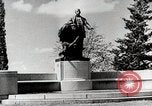
Achievements of African Americans in art, literature, music science, and medicine in the United States, in the late 1930s and 1940s.
A film about achievements of various African American men and women citizens in the United States. A statue of Booker T. Washington, founder of Tuskegee University in Alabama. View of African American scientist and inventor George Washington Carver, as an elderly man, working with another scientist in a laboratory. African American judge of New York city court. African American explorer Matthew Henson is seen looking at a globe (he was with Admiral Peary planting the American flag at the North Pole in 1909), and an unnamed African American surgeon at work in an operating room in New York. Next scene shows famous "father of the blues" musician and composer W.C. Handy (William Christoper Handy) smiling. Next is seen the financier and publisher of the Amsterdam News, Dr. C.B. Powell (Clilan Powell) greeting three uniformed African American women during a World War 2 war bond drive, and handing them a check (close up is shown) for 25,000 dollars, dated January 4, 1942, for the war bond drive. It is from the account of the Victory Mutual Life Insurance Company which Dr. Powell also owned. The check is signed by C.B Powell and Philip M.H. Savory (Dr. Savory was co-owner of the New York Amsterdam News). The next scene shows Elise Johnson McDougald, better known as Gertrude Elise Ayer, who was the first black full-time public school principal after the consolidation of New York City schools in 1898. She was also a noted woman writer during the Harlem Renaissance. She is seated in her office at her desk, likely in P.S. 119 in Harlem, since this is approximately year 1945 and she was at P.S 119 at that time. Her name plaque is visible on the front center of the desk. Principal Ayer smiles as a woman delivers a document to her. Next is seen the African American historian, author, and professor, Lawrence D. Reddick, serving in his role as the curator of the Schomburg Collection of African American Literature. In an art studio is seen the famous "Harlem Renaissance" African American sculptor and painter Charles Alston, at work on a sculpture. Next scene shows the famous African American contralto singer, Marian Anderson, receiving a bouquet of flowers and smiling after a performance. This transitions to a view of African American orchestra conductor Dean Dixon leading an orchestra in a performance of Beethoven's 9th Symphony. Several views of different sections of the orchestra performing under Dixon's direction. Clip closes with brief shots of campuses of several historically black colleges and universities in the United States like Howard University, Hampton, Tuskegee, Fisk, Prairie View. A football game underway in one of the colleges, and view on the field as quarterback throws a pass.
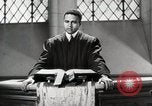
A film in the United States shows the commencement of World War II in Europe and Asia and Japanese attack on Pearl Harbor.
A film in the United States about achievements and role of African American soldiers during World War II. A dramatization depicts An African American priest at a church as he addresses people about the outbreak of World War II. Nazi eagle symbol. Past events show German Chancellor Adolf Hitler and Japanese officers conferring at a map. A Japanese flag flies. A building being bombed during World War II. Smoke rises. Civilians being hanged to death by the Nazis in the European Theater. Japanese aircraft bombard areas in Asia. Asian civilians rush as bombs explode. Dead and injured civilians after the bombings. Injured being loaded onto a truck. Japanese attack on Pearl Harbor. Naval guns being fired at Japanese aircraft in flight during the attack. An African American machine gunner fires at Japanese aircraft.
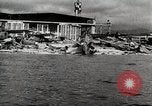
Training of United States Army African American recruits in the United States during World War 2.
A film in the United States about achievements and role of African American soldiers during World War II. A dramatization depicts an African American priest at a church as he addresses people about the contribution of African Americans in every branch of army like quartermaster corps, infantry. A woman gets up and says that her son is serving in the infantry. She reads out a letter from her son Robert. Army recruits at a railroad station. Elevated view of men walking in organized lines in the train station. Robert bids goodbye to his mother. A train arrives at an army training camp with snow on the ground and icicles hanging from the train station. Recruits being addressed by an officer. Robert being interviewed about his past life. An officer teaches the recruits the correct manner of saluting. The recruits remove civilian clothing and put on military uniforms. They undergo physical examination by U.S. Army medical staff. They board a train and leave for a replacement center. The recruits arrive at a camp and get off trucks onto snow covered ground. In a barracks area, they learn to make their beds and march. The recruits march across training grounds. Ill soldiers and recruits at a hospital as doctors examine them. The recruits undergo a dental check up. They learn to fire rifles at rifle ranges. The recruits play football, baseball, boxing and ping pong. They listen to poetry. African American women WACs ( Women's Army Corps) march at a training academy. They drive jeeps over a rough terrain. A recruit polishes his shoe. The African American recruits dance with girls at a dance ball. They perform exercises during a drill.
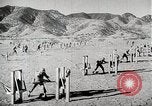
Contributions of African American soldiers in the United States Army during World War 2.
The roles and achievements of African American soldiers during World War 2. United States Army recruits undergo training and running across a field during a maneuver and practice bayonet drills. Recruits attend a Sunday Church service and pray together. An officer reads out a GI report and speaks about the increasing number of African American officers in the army. African American soldiers being commissioned into the army at West Point. An African American woman reads out her son's letter. A black priest addresses people at a church.
CRITICALPAST.COM: About Us | Contact Us | FAQs - How to Order | License Agreement | My Account | My Lightboxes | Shopping Cart | Advanced Search | Featured Collections | Website Terms & Conditions | Privacy Policy ©2026 CriticalPast LLC.
License Agreement |
Terms & Conditions |
Privacy Policy
©2026 CriticalPast LLC.