


 Francais
 Deutsch
 Italiano
Refine Your Search
Miami Beach Florida USA 1963 stock footage and images
- Showing 5887 to 5892 of 26889 results more
more Hide
Hide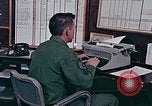
Security Escort procedures for access to unmanned Minuteman Missile sites
Security system and procedures for access to unmanned Minuteman Missile sites of the Strategic Air Command (SAC). Shown are procedures used by Security escort accompanying a maintenance team to a site. View of soldier typing on a typewriter and answering phone at the security dispatch office. The security form, called the 'pre-dispatch security notification' is shown. Military escort receiving codes on a card given to him at the dispatch window is also issued and M-16 rifle with 54 rounds. The military escort, dressed in a winter parka, shows that he knows the lock combination using a simulated lock at the dispatch desk. A separate detail goes through similar measures at a separate dispatch desk. Map shows radio check points that will be used by the escort during the missile maintenance activity. Green M1 Dodge truck driving in the desert to missile silo site. Military escort and maintenance crew dressed in winter coats arrive at chain link fence surrounding missile silo in the desert. They unlock the chain link fence gate. They open ground level security hatch. Soldier at missile command answers phone call from them and authorizes. Close up of combination lock set into the ground of the missile silo. Guard unlocks the combination lock and lifts the tube door cover out of the ground. Soldier wearing winter parka with M16 rifle watches as men open hatches to missile silo and descend into silo to perform maintenance. After procedure, men get into the back of the military truck and leave the missile area. Aerial view of minuteman missile site. (Note: Narrated by Kemal Amen "Casey" Kasem)
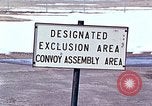
Procedures for Convoy Escort in Movement of Priority 'A' components of Minuteman missiles
Security system and procedures for movement of "priority A" components of Minuteman Missiles. A sign reads 'Designated Explosive area Convoy Assembly Area'. A convoy team leader briefs his team regarding use of deadly force, to protect "priority A" resources. Convoy escort transports "priority A resource" to launch site from base. Lead vehicle in movement team contains Convoy Security Officer and two Security Police escorts. Second vehicle is of local police guards and third is the convoy containing alarm system, maintenance personnel and two additional security policemen. Convoy Security Officer make periodic radio positions. A helicopter keeps eye on movement from air with the help of numbers written over roofs of vehicles. When the convoy halts. Security personnel make the area a national defense area and inform the main Launch base of the halt. Off duty recreation of guards include, spending time at recreational center or fishing ice skating and practicing archery. (Note: Narrated by Kemal Amen "Casey" Kasem)
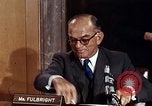
Secretary of Defense, Melvin R Laird and General Earl G Wheeler greeted by William J Fulbright in Washington DC.
Secretary Laird before Senate Committee in Washington DC. William J Fulbright, Chairman of the Senate Foreign Relations Committee seated. Secretary of Defense, Melvin R Laird arrives. Fulbright and Laird shake hands and talk. They laugh and sit down. General Earl G Wheeler greeted by Fulbright. Fulbright speaks. Laird and Wheeler speaks. Both answer the committee's questions.
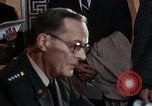
Secretary of Defense Melvin R Laird and General Earl G Wheeler speaks before Senate Committee in Washington DC.
Secretary Laird before Senate Committee in Washington DC. General Earl G Wheeler answers Committee's questions. Senate Foreign Relations Committee includes William J Fulbright. Chairman of the Senate sit and listen. Secretary of Defense, Melvin R Laird speaks. Court steno records minutes of the session.
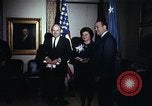
Secretary of Defense, Melvin R Laird swears in two Assistants in Pentagon, Washington DC.
Secretary of Defense, Melvin R Laird swears in new Assistants in Pentagon, Washington DC. Laird stands with Mr Carl S Wallace and his wife. The flag of United States in the background. Laird swears in Mr Wallace. Officers and friends applaud. Secretary stands with Mr William J Baroody Junior. Laird calls upon Baroody's children. Laird swears Baroody. Baroody addresses. Mr David Packard, Assistant Secretary of Defense, arrives and congratulates both men.
Senator J.William Fulbright's office in the Senate Office Building, Washington, DC
Office of Senator J. William Fulbright in Washington DC. Sign on office door reads '1215, W Fulbright, ARKANSAS'. Photographs on the wall inside Fulbright's office. Photographs signed by President Lyndon B Johnson, with humorous comments. Senator Fulbright is seen being interviewed on a television show with caption: "Fulbright Advise & Dissent."
CRITICALPAST.COM: About Us | Contact Us | FAQs - How to Order | License Agreement | My Account | My Lightboxes | Shopping Cart | Advanced Search | Featured Collections | Website Terms & Conditions | Privacy Policy ©2026 CriticalPast LLC.
License Agreement |
Terms & Conditions |
Privacy Policy
©2026 CriticalPast LLC.