


 Francais
 Deutsch
 Italiano
Refine Your Search
Mojave California 1955 stock footage and images
- Showing 2161 to 2166 of 3122 results more
more Hide
Hide
Operations and maneuvers of U.S. Navy airplanes aboard USS Lexington underway at sea in the United States.
A film on maneuvers of the U.S. Navy in the United States. USS Lexington (CV-2) aircraft carrier underway at sea. Several aircraft parked on the flight deck of the ship. A clock shows 8 o'clock. Pilots of the Lexington air group man the aircraft. The aircraft take off and in flight overhead. Airplanes being catapulted from battleships and cruisers. A formation of seaplanes in flight overhead. Airplanes take off to assist in maneuvers of a U.S. fleet. A formation of airplanes in flight over Naval Air Station North Island in San Diego, California. A torpedo installed on an airplane. The airplane takes off. A formation of three torpedo airplanes in flight. Torpedo squadron drops the torpedoes during the fleet maneuvers. Gun crew of 6" guns of a battleship man the guns and fire them. A line of battleships steaming in formation and firing turrets. A torpedo airplane with a torpedo in flight. A dive bomber during dives on USS Utah (BB-31). USS Lexington steaming at sea preparing for the landing of an airplane. Undercarriage of the airplane approaches the aircraft carrier for landing. Airplanes land aboard the carrier. A large formation of airplanes in flight. Aerial view of a U.S. Navy dirigible airship in flight.
U.S. Army Air Service pilot Russell L. Maughan makes a one-stop dawn-to-dusk flight across the United States.
U.S. Army Air Service test pilot 1st Lieutenant Russell L. Maughan's dawn to dusk flight across the United States on June 23rd, 1924. Lt. Maughan in the cockpit of a Curtiiss P-1 Hawk airplane. He takes off from Mitchel Field in New York at dawn. The airplane in flight over Manhattan, New York City showing the East River with Williamsburg, Manhattan, and Brooklyn Bridges. The Curtiiss P-1 Hawk in flight over the Wall Street district, the Battery Park and the Hudson River. The aircraft arrives at McCook Field in Dayton, Ohio. Lt Maughan in the aircraft. A ground-gasoline truck and a fire truck near the airplane as it is refueled with the engine running. He climbs out of the cockpit briefly to allow a boy to look inside. Maughan takes off from McCook field. He is seen by his Curtiss P-1 Hawk, after arriving at Crissy Field in the Presidio, San Francisco, California.
Lieutenants Macready and Kelly are helped in parachutes prior to a transcontinental non stop flight in the United States.
A transcontinental non stop flight in the United States. A U.S. Army Air Service Fokker T-2 aircraft at Roosevelt Field in New York. ' Army Air Service Non-Stop Coast to Coast' painted on the side of the aircraft. Men near the aircraft. Lieutenant John A. Macready and Lt. Oakley G. Kelly are helped in their parachutes beside the aircraft. They pose. The aircraft taxis and takes off. The aircraft in flight. It lands in San Diego, California. Lieutenants Macready and Kelly beside the aircraft. People in the background.
United States aircraft carrier USS Independence (CVL-22) damaged in Operation Crossroad "Test Able," risk in daily lives and discussion of radioactivity.
'Radioactive contamination' about the hazards posed by the sinking of a United States aircraft carrier and the methods to control radioactivity. United States Navy F6F-3 Hellcat aircraft taking off from United States aircraft carrier USS Independence (CVL-22) in the Pacific Ocean during World War II. F6F-3 Hellcat firing rockets in air. Landing signal operator LSO using flags while guiding plane for landing on USS Independence. Kamikaze attacks at Tarawa. Anti aircraft guns on carrier cut down kamikaze planes as they attack. USS Independence flying USA flag at Tokyo Bay. Scene of surrender of Japanese at Tokyo Bay aboard the USS Missouri. Aerial view of atomic bomb blast at Bikini in 1946. The wrecked carrier Independence being towed away after it was used as a target for an atomic bomb test in 1946 as part of Operation Crossroads. Men at a construction site talk about contamination caused in sea water due to sinking of Independence containing radioactive waste. They comment, "she's all full of that radioactive poison" and with respect to eating fish in water near the ship, "would you eat fish again?" Two women dressed in furs, in a car, also discuss radioactivity. One woman says, "from what I've heard it's very dangerous. " View of 1940s car backing into oncoming traffic and almost causing an accident. An aerial view of atomic explosion at Bikini. Damaged USS Independence ship after TEST ABLE. Signs on board warn of radioactivity with words, "Keep Clear, Danger! Very Radio-Active" and "Radioactivity. Do not remain more than 2 hours." Men in small boat near USS Independence examine damage to the ship. Parts of the USS Independence being tested for radioactive contamination at the Naval Radiological Defense Laboratory NRDL, Hunter's Point Naval Shipyard in San Francisco, California. The USS Independence being sunk in 1951. View of Bikini atomic bomb blast within a bay surrounded by ships. Simulation shows the effect a similar blast would have on a coastal city as a radioactive cloud covers the city. Officers holding handkerchiefs to their mouths as they enter an office building from outside. Firemen climb ladders while putting out a large fire. A house wife working in a kitchen and responding to a pot boiling over on the stove burns her hand. A man slips on a bar of soap in the shower while singing. An officer honking at an oncoming car as he is run off the road. Woman driver dressed in furs exclaims to her friend about the bad driving of men. Officer just run off the road by woman driver exclaims, "Women !" with frustration. Aerial view of test nuclear explosion at Bikini Atoll.
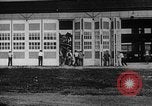
U.S. Army Air Service Fokker T-2 flown coast to coast nonstop by Lieutenant John A Macready and Lieutenant Oakley G Kelly.
On May 2, 1923, scenes of the first successful non stop flight across USA. Men open accordian doors to large hangar, revealing a specially modified Fokker T-2 airplane. Lieutenant Kelly and Lieutenant Macready, on the field, pose with Orville Wright. United States Army Air Service Fokker T-2 plane is pushed out of hangar by men. Painted on side of the plane is: 'Army Air Service Non Stop Coast to Coast'. Pilot gets ready as the airplane is fueled. Pilots and other Army officers on airfield. Animated map of the United States map illustrates course the flyers will take. Plane taxis on airfield. The Plane in flight and over Rockwell field, San Diego, California, and making a landing. Spectators on field greet the pilots as they climb down from the airplane.
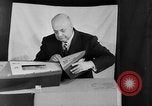
Assembly of liberty ships at Kaiser Shipyards, assembly of airplanes at aircraft factories in America during World War II
Opening scene shows U.S. Industrialist Henry J. Kaiser, demonstrating, on a scale model, how prefabricated parts are assembled into a Liberty Ship, in World war 2. Closeup shows each section of ship labeled by number and name, such as, “Transverse Bulkhead, number 44.” Scene shifts to Permanente Metals Corporation No. 2 shipyard in Richmond, California, where Liberty ships are seen in various stages of construction. Views of keels being laid, superstructures being raised into position, View from interior as skeleton of a ship is being completed. Sign atop the Liberty Ship, Robert E. Peary, as it is being launched, announces that it was completed from keel laying, to launch, in 4 days, 15 hours and 29 minutes. (This was a record for shortest time.) Camera view of the Robert E. Peary, from across the yard area where she was built. A brief view of shipyard activity at night, followed by camera panning over shipyard in daytime. Change of scene to an aircraft factory where B-17 bomber aircraft are being built. Women are seen riveting inside a plane’s fuselage. Other women work on a vertical stabilizer and still others work inside airplane structural members Men assemble an aircraft engine. Women fasten parts of engines together. Engines move through the plant on overhead cranes. An engine and propeller being placed into position on a wing with use of a crane. A right wing with two engines installed is moved into position for installation on a B-17 aircraft. Scene shifts to other aircraft factories building Martin Marauder B-26 aircraft; P-47 fighter aircraft;Navy Catalina aircraft; Douglas A-20 fighter bomber aircraft; and more B-17 bomber aircraft.