


 Francais
 Deutsch
 Italiano
Refine Your Search
Moosburg Germany 1945 stock footage and images
- Showing 4255 to 4260 of 10461 results more
more Hide
Hide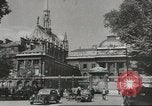
Comparison of post World War 1 and post World War 2 war crimes trials.
A court trial in session. Fascist Pietro Caruso of Italy in court. Norwegian Army officer Vidkun Quisling in court. General Henri-Philippe Petain of France. French politician Pierre Laval in court speaking forcefully. Prosecutors gesturing. Nazi Hermann Goering. Nazi generals being arrested at end of World War II including Field Marshal von Rundstedt. Germany's Kaiser Wilhlem II and General Staff during World War I. Henry Lloyd George of Britain, after World War I. Kaiser Wilhelm II, residing in Holland, after World War I. He smoke a cigarette and throws wood into a pile using his right hand. A post-war aerial view of bomb-damaged Nuremberg, Germany. The court house of Nuremberg. U.S. chief prosecutor Robert Houghwout Jackson on walk outside the Nuremberg courthouse. Enactment of British Courtroom scene. View from above of Red Square in Moscow, Russia, Soviet Union. View of a Soviet court in session.
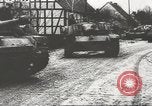
A Russian attack near Breslau is repelled by German tanks, artillery and rocket launchers during World War II.
Germany responds to the Russian attack near Breslau, Lower Silesia, Germany (Now part of Poland) during World War II. StuG III's move on the road. Soldiers stand with Panzerfaust recoilless antitank weapons and guns. Sdkfz 251/21 Drilling half-tracks advance. Two soldiers look through binoculars. A stationary Panther (Panzer) tank. Soldiers sit on a Hetzer Jagdpanzer 38 light tank destroyer (Sd.Kfz. 138/2). A tank gun is fired. Soldiers sit holding small arms in the battle field.
Allied leaders meet at Yalta conference and Potsdam conference
President Franklin D. Roosevelt, Winston Churchill and Joseph Stalin at Yalta conference in Ukraine. American and Russian troops meet at Elbe River in Aerial views of destroyed buildings in Berlin, Germany. German officers sign surrender documents in Rheims. President Harry S. Truman, Stalin and Churchill meet at Potsdam conference in Germany. American troops fight in Iwo Jima, Japan. American flag raised. Aerial views of ruins in Tokyo. (World War II period).
Animation and footage depict American strategies to attack the Nazis in the European Theater during World War II.
A film about U.S. response to the activities of the Axis powers Italy, Germany and Japan during World War II. U.S. Army Chief of Staff George Marshall praises the United States Military offensives in Europe and Africa. George Marshall narrates rest of the clip. Animation of a globe depicts the Allied forces in the middle east planning to isolate China and Russia. The animation depicts the German Forces crossing the British allies, joining Japan and then attacking America. It depicts U.S. plans to stop the collaboration of Germany and Japan. Scenes of American shipyards are shown, with workers building new war ships. Some workers welding. A sign reads, "Work must continue during launching. Positively." The animation depicts the shorter routes to the European Theater. Aerial footage of a large fleet of U.S. Navy Ships at sea, underway during World War 2. Next scenes shows smoke pouring from ships at Pearl Harbor in Hawaii following attack by Japan. View of Soviet Russian horse cavalry forces charging toward enemy German positions during a battle in World War 2. Scenes of Allied artillery being fired at night in North Africa. Animation depicts the need to establish American air bases closer to Japan before launching successful air attacks. Footage of U.S. soldiers running out of landing crafts and coming ashore at a beach head during World War 2. Animation depicts U.S. plan to defeat Japan. Animation depicts strong German Army. Animation depicts U.S. plan to defeat the Nazi and the Fascist power in Europe.
Troop ship USS General J. C. Breckinridge (AP-176) transports soldiers back home from Europe right after World War II
The troopship USS General J. C. Breckinridge (AP-176) is seen being guided by tugboats as she makes her way to the pier, while carrying U.S. troops back home from Europe at end of World War 2. View of the upper deck jammed with soldiers, waving happily. A large banner is displayed showing Division patch of the Tenth Armored "Tiger" Division and the key places they operated in Germany as the first im General Patton's Third Army in Germany, during the war. More views of soldiers waving. Many stand in the ship's lifeboats. Troops carrying their gear in dufflebags as they disembark from the ship. Friends and relatives standing behind a fence waiting to greet the returning soldiers.

Korean film depicts German Chancellor Adolf Hitler's plan of world conquest and shows montage of German military action scenes from World War II
After lenthy period of slates in Korean, the first images appear at TC: 01:52, as camera pans down over ruins at the exterior front of the German Reich Chancellery building in Berlin, Germany. A plaque in German identifies it as the Kanzlei des Führers der NSDAP (Chancellery of the Führer of the Nazi Party). Camera moves through various rooms of the building showing wreckage. In one room a world globe, a table and some broken furniture are shown. Scene changes to an animated map of Europe centered on Germany that depicts the dramatic expansion of German conquest in beginning of World War 2. It then shows further expansion with German invasion of the Soviet Union. From then on It adds a line directed to India (labeled in Russian) and another pointed into North America.The map then sends more lines covering the Continent of Africa and the South and Central America. These represent a plan for world conquest. View of a German three engine twin tail seaplane being launched by a catapult. Closeups of the plane in flight. Scene changes to German paratroopers jumping from a Junkers 52, three engine transport plane. Aerial view from above of the paratroopers leaping from the aircraft and from below as they descend with their chutes billowing out above them. Ground view of them landing on sand in North Africa. German troops on motor cycles, half track personnel carriers ( Sd.Kfz. 250 ) and Panzer III tanks. German Field Marshal Erwin Rommel standing with his staff, directing elements of his Afrika Korps forces in North Africa. Smiling German troops riding in an open Sd.Kfz. 251 (Sonderkraftfahrzeug 251) half-track personnel carrier. A huge explosion and dense black smoke is seen. Then, a German Heinkel HE 111 bomber is seen maneuvering overhead. Brief glimpse from an aircraft strafing an armored vehicle on the ground. Suddenly a submarine's periscope is seen just above the water and a transport ship (or freighter) is seen as through the periscope. Next, inside a German submarine, the Captain lowers his periscope and scene shifts to bow of submarine surfacing and the ship is seen burning and exploding. A torpedo is launched from a surfaced submarine and it strikes a ship creating a huge explosion and fireball.
CRITICALPAST.COM: About Us | Contact Us | FAQs - How to Order | License Agreement | My Account | My Lightboxes | Shopping Cart | Advanced Search | Featured Collections | Website Terms & Conditions | Privacy Policy ©2026 CriticalPast LLC.
License Agreement |
Terms & Conditions |
Privacy Policy
©2026 CriticalPast LLC.