


 Francais
 Deutsch
 Italiano
Refine Your Search
Naha Okinawa Ryukyu Islands 1945 stock footage and images
- Showing 7393 to 7398 of 9416 results more
more Hide
Hide
Animation cartoon: Hirohito shoves German Chancellor Adolf Hitler aside and proclaims himself the greatest conqueror.
Animated film titled 'Hall of Ill Fame' shows the Emperor of Japan and German Chancellor Adolf Hitler during World War II. Animation shows Emperor of Japan Hirohito shoving German Chancellor Adolf Hitler aside and proclaiming himself the greatest conqueror.
Animation : Mind control operation in Japan showing Japanese people during World War II.
"A Few Quick Facts -Japan" . An animated World War 2 anti-Japanese propaganda film with 'Sato San' shows citizens of Japan during World War 2. Animation depicts the operation thought control in Japan. Japanese men under umbrellas. A Japanese man drinks tea. Another Japanese man commits suicide. Animation shows how mind control operation affects the minds of Japanese people. Japanese policemen arrest Japanese people for thinking wrong.
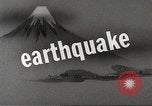
Animation: United States aid to Japan during 1923 earthquake.
"A Few Quick Facts - Japan". Animated propaganda film shows Japan facing an earthquake disaster in 1923. Animation shows an earthquake in Japan. U.S. aid to Japan shows U.S. warships carrying food, clothing and medical supplies to Japan. Japanese newspapers express gratitude. Japanese citizens waving flags of Japan and America together. Japanese leaders bow in gratitude. Quotation from a newspaper article of the time commenting on the support from America, and that if there is another war, "he who attacks America shall die." Narrator restates that same quote as animation in cartoon shows bombs raining down from the sky and exploding (reference to World War 2 bombing).
U.S. troops prepare to embark for the Pacific Theater from Europe during World War II.
A film titled 'Here We Come' shows U.S. troops during World War II. The troops travel by trucks to a building in Europe. A sign reads 'Incoming Troops Report Room-5 This Building'. The troops pile out of trucks and take showers. A sign reads '89th Bn. Clothing Issue'. The troops get new clothing. They receive money. The soldiers deposit their weapons other than pistols.
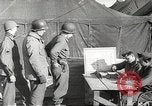
U.S. troops embark for the United States from France following their European service in World War II.
U.S. troops prepare to embark for the United States from France at the conclusion of their service in Europe during World War II, but before the end of the war, so it is regarded as a 30 day furlough. Soldiers stand in line and receive awards and recognitions for their service. The troops go through a chow line and eat food. Soldiers march and smiling U.S. Army soldiers board waiting trucks. The soldiers carry barracks bags as they board troop transport ships, embarking on the voyage back to America. Narrator notes that they will still be needed to help in the fight against the Japanese.
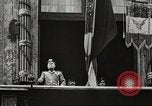
Italian Prime Minister Benito Mussolini speaks to a crowd in Venice, Italy at his declaration of war during World War II.
Italian Prime Minister Benito Mussolini's declaration of war on Britain during World War II. A crowd assembled in Venice, Italy to hear the dictator's declaration of war. Dictator Benito Mussolini speaks from a balcony flanked by banners and large fasces (symbol of Fascism). Ethiopian Emperor Haile Selassie saluting in Ethiopia before Italian annexation of the country.
CRITICALPAST.COM: About Us | Contact Us | FAQs - How to Order | License Agreement | My Account | My Lightboxes | Shopping Cart | Advanced Search | Featured Collections | Website Terms & Conditions | Privacy Policy ©2026 CriticalPast LLC.
License Agreement |
Terms & Conditions |
Privacy Policy
©2026 CriticalPast LLC.