


 Francais
 Deutsch
 Italiano
Refine Your Search
Naha Okinawa Ryukyu Islands 1945 stock footage and images
- Showing 757 to 762 of 9403 results more
more Hide
Hide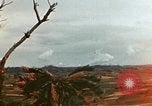
White phosphorous explosions on hills during mop up of Yasusu village, Okinawa.
U.S. 3rd Battalion 1st Marines advances during mop up of Yasusu village in Okinawa. Shows white phosphorous explosions on hill. Tanks fire in the background. (World War II period).
View of traffic on a highway in Okinawa,Japan
View of traffic on a highway in Okinawa. Cars and transport trucks on street. Street signs '50','Stop','Drive Safely The Life You Save May Be Your Own'.
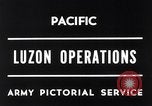
Units of United states 14th Corps capture Clark Field as they advance toward Manila, Philippines, during World War II
American troops in their drive toward Manila, in 1945, during World War 2, pass several knocked out and burning Japanese Type 89 Chi-Ro tanks. A dead Japanese soldier, shot dead while trying to commit suicide, lies on the ground with an undetonated hand grenade in his mouth. U.S. M4A2 sherman III tanks and infantry of the XIV Corps moving on the Lingayen Plains Philippines, leading to the capital, Manila. U.S. armor towing artillery ford a stream, as they pass beneath framework of an apparently unusable bridge. A battery of U.S. M101 105mm Howitzer artillery pieces is set up and bombards the Clark Field area. One striking shell produces an explosion, fire and column of black smoke. U.S. troops ride forward atop tanks. Glimpse of one soldier with flamethrower tanks on his back. American tanks firing their guns. Destroyed Japanese aircraft on the ground. A soldier using a mine detector to sweep the area. He signals to another soldier who comes to probe the area with a long knife. Next a soldier is seen standing in a hole dug around a bomb Placed nose up under the ground by the Japanese. Soldiers pull it from the hole, using a rope. U.S. soldiers walk in area full of similar holes and bombs pulled from them. General Douglas MacArthur is seen, on January 26, 1945, walking among remains of Japanese aircraft at Clark Field. He visits the Filipino cemetery at Camp O'Donnell, which was a prisoner of war camp, considered the terminating point of the Bataan Death March, where some 20 thousand Filipinos and almost 2 thousand Americans died during the Japanese occupation of the Philippines. MacArthur is seen standing by a large Christian Cross monument, and walks among untended graves marked with small wooden crosses. The Mount Pinatubo volcano is seen on the horizon in the background. MacArthur and those accompanying him walk around a large monument containing a placard written in tagolog. U.S. soldiers start a mortar barrage against Japanese forces dug in on "Hill 70." Infantrymen move through trees and brush to flush out the entrenched enemy. Glimpse of type of improvised device made of explosives and gasoline, that U.S. soldiers are using to drive Japanese troops out of their fortifications. As a soldier watches with binoculars, the camera records several of these devices exploding with great force. Glimpse of a dead Japanese soldier on the ground. U.S. troops ride atop an M18 Gun motor carriage of the 637th Tank Destroyer Battalion, as it crosses a river. American tanks and infantry moving cautiously across a bridge as shells explode ahead of them. Tanks firing at Japanese troops entrenched in hillside above a road. Large numbers of American infantry marching along a road accompanied by tanks. Areas around them burning from fires set by retreating Japanese forces.
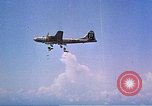
U.S. defeats Japan in Pacific through air power in World War II; multiple views of American combat aircraft in action in World War 2
From "The Last Bomb": The defeat of Japan through American airpower in World War 2. Mix of actual combat footage and a small amount of vintage, dramatized, pilot in cockpit footage. A single B-29 from the 39th Bomb Group (stationed at North Field Guam) drops clusters of incendiary and fragmentation bombs over Japan. Bombs away view of large number of bombs falling toward Japan. A formation of B-29s from the 498th Bomb Group, Isley Field, Saipan, in flight during a daytime bombing mission over Japan. Explosions and smoke rise from targets in Japan, including two Japanese aircraft plants and an airdrome as part of U.S. tactical plan 574. Color, low aerial view of massive bomb damage over Tokyo following U.S. air attacks of March 1945. Escorting P-51s from Iwo Jima engage defending Japanese fighter aircraft in dogfights. Aerial gun camera footage of Japanese airplanes being hit, exploding, bursting into flames, and falling from sky to crash. Later, P-51s conduct strafing attacks against Japanese ground targets, including: lines of communication; railroads; marshaling yards; factories; airfields; ships; and harbors. Color gun camera footage shows these strafing attacks. P-51s returning to land at Iwo Jima and performing celebratory rolls over the field. Crippled B-29s making emergency landings on Iwo Jima. A B-29 from 500th Bomb Group with an engine shutdown. A B-29 from the 29th Bomb Group. Bad weather over runway at Iwo Jima forces a P-51 pilot to bail out over the field. A B-29 from the 6th Bomb Group ditches in water near beach on Iwo Jima. A B-29 crashes and bursts into flames during landing at Iwo Jima (all crew escapes.) Firefighters douse the flames with foam. Formation of B-29s from 39th Bomb Group returning to Guam after bombing mission over Japan. A B-29 crashing on landing and bursting into flames. Sole surviving crew member being carried on stretcher, as firemen and rescue teams work at scene. Formations of B-29s from 498th Bomb Group and 9th Bomb Group, in flight. Good color view from B-29 of the atomic bombing of Nagasaki on August 9, 1945, which brought about the capitulation of Japan and end of World War 2. Large mushroom cloud rising into the air following atomic bomb explosion at Nagasaki.
The end of WWII and U.S. President Harry Truman's role in immediate postwar actions
Opening scene shows some German infantry surrendering with hands raised. Next scene shows people thronging Times Square in Manhattan, New York City, celebrating VE Day, or Victory in Europe Day, on May 8, 1945, when Germany surrendered to end World War II, in Europe. Image of the first atomic explosion (Trinity) on July 16, 1945, in New Mexico, United States. Scene shifts to deck of the U.S. Battleship, USS Missouri, where Japanese foreign minister, Mamoru Shigemitsu, is seated and signing the instrument of surrender., on September 2, 1945. Closeup profile of General Douglas MacArthur. Another glimpse of Mamoru Shigemitsu signing. Next, MacArthur is seen signing the document. He turns and presents the pen to Lieutenant General Jonathan M. Wainwright , who is standing behind him alongside British Lieutenant-General Arthur Ernest Percival. Brief glimpse of the San Francisco War Memorial and Performing Arts Center with flag appearing to be at half staff and a long awning extending from its entrance to the sidewalk. View of representatives at the first United Nations meeting there . Views of audience in auditorium shows many notables. Closeups of Soviet Ambassador, Andrey Gromyko and Soviet Foreign Minister, Vyacheslav Molotov.. Next, President Harry S. Truman is seen broadcasting a greeting to the delegates, from the Capitol, Washington, DC, on April 25, 1945. The delegates are seen listening to the broadcast and then applauding.
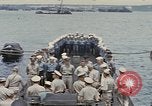
Admiral Nimitz decorates officers and sailors aboard the submarine, USS Bowfin, in Guam, during World War II
View from conning tower of the submarine, USS Bowfin, in Apra Harbor, Guam, during World War 2. Officers and crew of the USS Bowfin stand in formation on the foredeck. With his back to the camera, Fleet Admiral Chester W. Nimitz, stands at a microphone, reading a citation. He then steps forward to decorate Commander Alexander Kelly Tyree with the Navy Cross for extraordinary heroism in the line of his profession as Commanding Officer of the U.S.S. Bowfin (SS-287), on the Seventh War Patrol of that submarine during the period 25 January 1945 to 25 March 1945. Admiral Nimitz then proceeds to decorate other officers and sailors of the Bowfin, as Navy photographers take photographs. The Admiral with two officers and a sailor hold hand salutes a while as the ceremony is finishing. Admiral Nimitz then steps from the Bowfin, across another submarine docked next to it, and down to his launch. He salutes, as the launch pulls away. (Another view of Nimitz stepping into his launch is inserted here, as well.) Glimpse of the officers back on the Bowfin. (Note: Commander Tyree subsequently received a Gold Star in lieu of a Second Navy Cross, following the War Patrol of the Bowfin from 29 May 1945 to 4 July 1945.)
CRITICALPAST.COM: About Us | Contact Us | FAQs - How to Order | License Agreement | My Account | My Lightboxes | Shopping Cart | Advanced Search | Featured Collections | Website Terms & Conditions | Privacy Policy ©2026 CriticalPast LLC.
License Agreement |
Terms & Conditions |
Privacy Policy
©2026 CriticalPast LLC.