


 Francais
 Deutsch
 Italiano
Refine Your Search
Naha Okinawa Ryukyu Islands 1945 stock footage and images
- Showing 793 to 798 of 9403 results more
more Hide
Hide
Surrender of Japan after atomic bombings of Hiroshima and Nagasaki, Japan.
Surrender of Japanese Imperial forces leads to end of World War II. V-J Day (Victory over Japan) celebrations in August 1945. Americans celebrate as newspaper headlines announce V-J Day. Close up view of man holding Boston Post with headline "War Is Over." Teeming crowds in New York City's Times Square celebrating the news. Crowd of citizens, soldiers, and sailors in uniform surrounds a newspaper with headline "U.S. Announces Jap Surrender." Happy crowds of people waving, jumping, and smiling in jubilation. People show V signs. U.S. warships underway at sea. U.S. soldiers aboard ship. Japanese troops parading in Japan. Japanese aircraft lined up in flight line ready for take off to defend the Japanese mainland. Japanese amphibian tanks lined up ready for use against a possible allied invasion. Aerial view of actual atomic bomb explosion over Hiroshima as seen from second B-29 aircraft accompanying the Enola Gay on the bombing run on August 6, 1945. Ruins of twisted metal and debris in Hiroshima and Nagasaki and civilians walking among the devastation. Japanese civilians along road. Japanese Generals deplaning and meeting U.S. General MacArthur on an airfield. Troops of 11th Airborne Division land in Japan. Marines reach Japanese shores at Yokosuka Naval Base in Landing crafts. American soldier raises American flag in Japan. American troops aboard Japanese battleship Nagato after Japanese surrender. View of the Nagato (later used as a target ship during Operation Crossroads).

Liuchow recaptured from the Japanese forces, and Chinese 169th Division troops in flag raising ceremony in Liuchow, China.
Chinese troops recapturing Liuchow, China. Liuchow, the former U.S. 14th Air Force Base and largest communication center in South Central China, in ruins after the withdrawal of Japanese forces. The burnt buildings on the streets in Liuchow. The ruins of buildings along the sides of the road. Chinese troops walk along the road. The Chinese troops recapture Liuchow on 13th June 1945. The civilians in China cheering and welcoming the soldiers to the town. The Liuchow Air Base, which was not usable since the Japanese forces had dug holes in places. The entire stretch of the airstrip being blocked with gas drums. The center stretch of the airstrip being damaged. An Air Force engineer examines the heavily mined air strip. Men of Chinese 169th Division assemble for the flag raising ceremony on 2nd July 1945. The troops are welcomed by a citizens' committee. The Chinese 169th Division Major General addresses the men. The Chinese flag hoisted. The troops salute the flag. (World War II period).

American Army troops entering area of Dachau Concentration Camp, Dachau, Germany, near end of World War II
U.S. troops of the 45th Division, 157th Infantry Regiment, 3rd Battalion, I Company, entering the area of Dachau concentration camp, in the final days of World War 2. They are seen escorting German prisoners of war, with their hands raised, along a railroad siding. U.S. troops in front of a railroad train of boxcars. A dead German soldier, face down on the ground. The U.S. troops follow the railroad track into area of buildings, and run to take cover due to incoming fire. One fires a browning automatic rifle from an elevated walkway. Other American soldiers hunker down behind the walkway wall. U.S. Army soldier fires rifle while standing on a roadway. Surrendering German soldier, carrying a white flag, is attacked by a concentration camp inmate, as several other liberated inmates and U.S. Army soldiers stand nearby, watching. (Note: Opening cameraman slate states date as 04-27-1945, but historical records indicate this took place on 04-29-1945.)
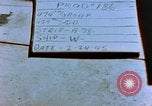
Two soldiers arrest suspected Nazis and a woman takes firewood out of debris in Germany during World War II.
Activities of civilians in Germany during World War II. Two U.S. Army soldiers arrest two suspected Nazis. They stand and interact at the entrance gate of a building that is under guard by American forces. Scene changes to a bomb damaged Atlas relief carving on a destroyed building. Next scene is a wide view of a totally destroyed area from bombing, with the same portion of broken wall with the Atlas carving seen at center. A German woman walks through rubble and debris from bombing, carrying two stacks of broken wooden timber pieces for firewood. (Location is possibly Nuremberg. Despite film slate stating 2-24-1945, these shots appear to be more likely April or May 1945.)
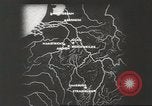
German Army Group Oberrhein undertakes Operation Nordwind, in Alsace, during World War II
German troops are seen in white winter uniforms, during World War 2, with some holding panzerfaust. Narrator mentions combat against Anglo-Canadian forces, and then speaks of preparation for the New Year's offensive. Heinrich Himmler, as commander of Army Group "Oberrhein" had ordered the launch of Operation Nordwind to recapture Strasbourg. Accordingly, On New Year's Eve, 1945,The Germans launch an offensive (Nordwind) into Alsace, attacking the Allied 6th Army Group at multiple points. On January 5, 1945, Army Group Oberrhein begins a support attack by General Otto von dem Bach's XIV SS Corps, the 553d Volksgrenadier Division, reinforced with armor and commando units. They are seen crossing the Rhine river in small boats at Gambsheim, just ten miles north of Strasbourg. Allied aircraft bomb German positions on the West bank of the Rhein (Rhine) River. The German troopers seize high ground West of the Rhein. German troops are seen firing recoilless anti-tank weapons in a field, Views of knocked out British and American tanks. Abandoned German Jagdpanzer IV faces a U.S. Tank Destroyer. German troops are seen advancing into town North of Strasbourg (Herrlisheim, Drusenheim, Offendorf ?). Scenes of destruction in town. Words: "Haus Bewohnt Civil" scrawled on homes to identify them as civilian occupied.
Allied armies including the Ninth United States Army fight and German citizens surrender in Germany.
The Allies invade Germany during period March 1945 - April 1945, during World War II. Animated map depicts Allied invasion of Germany. Ninth United States Army troops and tanks advance in Hanover, Germany. A convoy of military vehicles on a road. Smoke rises from behind a house. Smoke near a tank. Allied M4 Sherman tanks and trucks move at various German fronts. German women wave white handkerchief signifying surrender. Over the border in Overijssel, Netherlands, British Coldstream Guards roll in to Enschede to liberate the Dutch people there, and many Dutch citizens wave and cheer their liberators. A captured train loaded with German V-2 rockets. United States Army Air Force P-47 Thunderbolt aircraft drop bombs on a village. Smoke rise due to explosions. Tanks and troops of Ninth U.S. Army cross a bridge. U.S. Infantry soldiers cross a bridge and run through ruins of bombed buildings in house to house village fighting, working to evade German sniper fire. Some German soldiers seen surrendering to American forces. US Army forces walking single file on both sides of a road as tanks and equipment roll by in Germany.
CRITICALPAST.COM: About Us | Contact Us | FAQs - How to Order | License Agreement | My Account | My Lightboxes | Shopping Cart | Advanced Search | Featured Collections | Website Terms & Conditions | Privacy Policy ©2026 CriticalPast LLC.
License Agreement |
Terms & Conditions |
Privacy Policy
©2026 CriticalPast LLC.