


 Francais
 Deutsch
 Italiano
Refine Your Search
Naha Okinawa Ryukyu Islands 1945 stock footage and images
- Showing 121 to 126 of 9403 results more
more Hide
Hide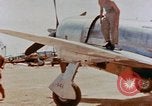
P-47 operations of USAAF 464th Fighter Squadron, 507th Fighter Group,on Ie Shima Airfield in World War II
Armorers work on P-47N Thunderbolts of the 464th Fighter Squadron, 507th Fighter Group, on Ie Shima Airfield, Ryukyu Islands, Japan. The unit was targeting Kyushu, Japan, near end of World War 2. Airmen near P-47s. Airman on the wing of a plane. Another walks nearby. Gun camera footage shot inflight and aerial views of return to Ie Shima, including the landing rollout.
U.S. Navy Task Force 58 defends against Japanese Kamikaze attacks and bombards Okinawa during Operation Iceberg
A glimpse of Navy gunners firing Bofors anti-aircraft guns from battle station on a U.S. aircraft carrier is how this film begins. Next, black flak clouds fill the sky and tracer rounds are seen in a nighttime battle as ships of U.S. Task Force 58 (TF-58) battles attacks from Japanese aircraft, including Kamikazes dispatched from Mainland Japan, during World War 2. View of Japanese attacking aircraft subject to relentless tracer bullet fire, until is is hit. It continues toward a target ship, but misses and crashes into the sea. A flaming Japanese aircraft moving overhead in daylight, amidst many black flak clouds. It crashes into the sea. Another nighttime scene shows numerous tracer rounds flashing through the darkness as hundreds of land--based Japanese warplanes attack ships of Task Force 58. Explosions are seen in the air as attacking planes are hit by anti-aircraft fire. View of a Japanese attacking aircraft diving from overcast skies, banking to its left and crashing into the water. Gun camera views from American aircraft shooting down a Japanese multi-engine bomber from the rear and one from another aircraft shooting a Japanese fighter head-on. It veers off in smoke as the American plane passes to its left. The Japanese plane crashes into the sea with a huge explosion and fireball. Another gun camera view of large Japanese aircraft being shot down from the rear. Scene shifts to column of 5 "old" U.S. battleships underway. Views of guns firing from newer battleships of the line. Glimpse of foreign correspondent Ernie Pyle aboard a warship. The battleship USS Pennsylvania (BB-38) seen silhouetted against moonlit sky. (She was damaged by hit from Japanese aerial torpedo, off Okinawa on April 12th, 1945.) Views of fast battleships and other ships of TF 58,firing their naval guns. View on Okinawa as their shells explode, supporting advance by U.S. Army and Marine advancing forces. The U.S. troops running across fields as they advance. Burning buildings on Okinawa. US troops advancing through rice paddies. A soldier calling for close air support on a field radio. View of two Escort carriers providing air support. View air control officers aboard the Command ship, heavy cruiser USS Indianapolis (CA-35), as they order air strikes in support of the troops. F4F fighter planes carrying bombs take off from a carrier. Formations of U.S. aircraft in flight overhead. Their bombs exploding on Okinawa. frontal view of an F4F firing rockets. Wider views of F4Fs firing rockets.
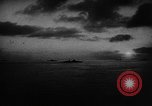
U.S. Navy ships bombarding Okinawa and fighting off attacks by Japanese Kamikaze aircraft in World War II
Conclusion of U.S. Navy film: "The Fleet That Came To Stay." Role of U.S. Navy Task Force 58 during the Battle of Okinawa in World War 2. Opening scene shows ships of U.S. Task Force 58 sitting quietly in waters off the coast of Okinawa, at dawn on May 9, 1945 (VE Day, when Germany surrendered in World War 2). Navy gunners silhouetted against the dawning sky, with twin Bofors anti-aircraft guns. Silhouettes of sailors on early watch. Sailor walks on deck of an aircraft carrier, past parked aircraft with it's vertical stabilizer and rudder riddled to pieces by battle damage. An escort aircraft carrier and other warships are moving slowly past the camera ship. A Douglas Dauntless dive bomber, with only a pilot aboard, takes off from a carrier. Brief glimpse of aircraft taking off from a carrier. It carries a bomb underneath and displays the number 559 on its engine cowling. Numerous American aircraft in formation above the ships. A U.S. cruiser in the distance. Closeups of capital ships bombarding Okinawa with heavy guns and firing anti-aircraft guns at attacking Kamikaze aircraft. Black flak clouds and tracer bullets tracking a Japanese aircraft. Superimposed slate tallies Japanese aircraft shot down: "May 12th: 164; June 3rd: 45; June 6th: 67; June 8th: 30." A kamikaze plane crashes into the sea. Gunners aboard a ship work rapidly to reload their anti-aircraft guns. View of an Essex class aircraft carrier with black flak clouds overhead. Two explosions occur next to her hull. Gunners track a Japanese airplane flying low and close to the water. It passes a carrier and crashes into the sea. More views of sailors working at speed to reload anti-aircraft guns. A sailor firing an Oerlikon 20 mm cannon from gun position atop a ship. A Kamikaze plane crashes at starboard side of an Escort aircraft carrier underway. View of long line of anti-aircraft guns firing simultaneously from beside the flight deck of an aircraft carrier. Smoke rising from the firing and driven by the wind. Remains of a Kamikaze plane spin down amid black flak clouds, after being hit by gunfire. Slate reads "4232 (Japanese planes shot down). The spinning pieces of the Kamikaze plane crash well clear of a nearby Cleveland class light cruiser. Against background of flak filled sky, a Washington Post Newspaper headline is shown reading: "Navy Okinawa Casualties near 10,000 and 2 more ships hit."
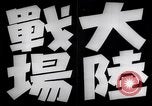
Various scenes of Japanese military activity in China, circa 1938 through 1942
Scenes of Japanese military activities in China, circa 1938 through 1942. Animated map shows thrusts of Japanese military forces at Guangzhou (Canton); Changsha to the North and points West circa 1938. A captured airfield with destroyed and damaged aircraft. A destroyed P-40 with Thunderbird image on its wing. A damaged P-40 parked in the grass displaying painted teeth motif of the Flying Tigers (American Volunteer Group of the Chinese Air Force). A scrap heap of airplane parts, at least one displaying the American star in circle insignia. A tattered map on Bulletin Board showing a logo on part of China. A village near the airfield. Japanese troops board a camouflaged barge to cross a river. A Japanese Ki-27 (Nate) airplane in flight overhead. Column of Japanese troops wending their way along a hillside. Smoke rising from explosions in a port town, with water and hill in background. Bombed out buildings in a town. Japanese infantry and an officer on horseback enter virtually deserted Chinese town. Camouflaged Japanese army vehicles and artillery travel on dusty road. A Ki-27 airplane flies low overhead. Japanese artillerymen set up 120mm gun and rangefinder. Battery of Japanese 120mm guns firing. Wreckage of an American B-25 aircraft. Wreckage of more Allied warplanes. Map showing Formosa; Wenzhou, opposite, on Chinese mainland; and Philippine Islands. Arrows depict Japanese military movements from the Ryukyu Islands. (World War II period).
Operation of United States Coast Guard in Okinawa and Iwo Jima, Pacific Theater during World War II
Overseas activities of United States Coast Guard in World War 2. February 19, 1945, U.S. Marines invade Iwo Jima in Pacific Theater. Naval guns and aircraft bombard Iwo Jima. Mountain in the background. Aircraft in flight. Marines and Coast Guardsmen aboard landing craft. Marines landing on Iwo Jima under heavy Japanese fire. Destroyed landing ships litter water's edge. Marines hunkered down and treating wounded, under fire. LSTs and other ships at established beachhead. Vehicles drive onto beach. April 1, 1945, Marines attack Okinawa. Navy warships bombard Okinawa with heavy guns and continuous rocket fire. Beachhead is established against light resistance. Japanese kamikaze aircraft attack American invasion ships. Several ships are hit and sunk. Surviving sailors are helped aboard rescue boats. Antiaircraft fire from American ships fills sky with smoke and flak. A kamikaze aircraft crashes in the sea. Sky filled with American bombers. Aerial view of Atomic bomb explosion over Nagasaki Japan on August 9, 1945. Raising American Flag on Japan homeland.
Japanese bombers strike Port Darwin, Australia, during World War II.
Japanese bombing of Darwin, Australia in World War 2. Animated map showing line of Japanese attack from the RyukYu Islands to Darwin, Australia. Japanese MitsubishiG4M1 (Betty) long range bombers being readied at a Japanese air base. They take off on mission to bomb Port Darwin.Those on ground wave goodbye to them. View through nose greenhouse of a bomber. Bombers in formation. View of pilot and copilot in cockpit. More views of formation flying over clouds. Pilot with hands on control yoke. A note in Japanese fastened to the cockpit window. Crew members take lunch break while underway. Crew of bomber seen in warm clothing and on oxygen, as they proceed at a higher altitude.Radio operator keys message. Gunner at his station. The bombers begin their bomb run over Port Darwin. Bomb seen dropping from the aircraft, and striking the airfield of the Australian Naval Base on the coast.
CRITICALPAST.COM: About Us | Contact Us | FAQs - How to Order | License Agreement | My Account | My Lightboxes | Shopping Cart | Advanced Search | Featured Collections | Website Terms & Conditions | Privacy Policy ©2026 CriticalPast LLC.
License Agreement |
Terms & Conditions |
Privacy Policy
©2026 CriticalPast LLC.