


 Francais
 Deutsch
 Italiano
Refine Your Search
Naha Okinawa Ryukyu Islands 1945 stock footage and images
- Showing 3451 to 3456 of 9416 results more
more Hide
Hide
U.S. Army Air Forces P-47 airplanes strafe Japanese targets in Kagoshima, Kyushu, Japan during last days of World War II
Gun camera views from P-47 aircraft of U.S. Army Air Forces 464th Fighter Squadron, 507th Fighter Group, during strafing attacks in Kagoshima Prefecture, Japan, in the final days of World War 2. A low pass at cluster of buildings in a valley. Fire burning at edge of town on small island. Smoke rising from waterfront town as fires ignite from strafing. Hazy clouds and water below as camera continues to run between strafing runs. Image shakes from guns during strafing of buildings between sea and a river. Black smoke rising from flames ignited during the attack. Strafing of a large coastal town.
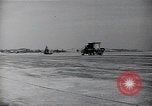
Mechanics stand on hoists to remove engines of a crashed B-29 bomber at U.S. Army base in Iwo Jima, Japan during World War II.
United States Army Air Force at their base in the Japanese island of Iwo Jima, during World War II. Wrecker truck and other vehicles on the runway. Mechanics on hoist, work to remove engines of a B-29 bomber which crashed while take off. One mechanic sets the hoist at right position beneath a wing of the bomber. Another mechanic on hoist tries to get the belts of hoists.
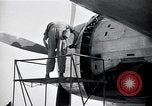
Mechanics rotate propeller blades of a crashed B-29 bomber at U.S. Army Air Force base in Iwo Jima, Japan during World War II.
United States Army Air Force at their base in the Japanese island of Iwo Jima, during World War II. Mechanics and airmen work to remove engines of a B-29 bomber which crashed while take off. One man stands on a hoist near wing of the plane and checks propeller blades. Men try to rotate the large propeller blades of the bomber.
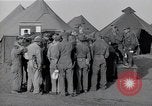
Airmen assemble outside their tents at U.S. Army Air Force base in Iwo Jima, Japan during World War II.
United States Army Air Force at their base in the Japanese island of Iwo Jima, during World War II. Airmen of 21st Bomber Command Provisional Unit stand outside tents for mail call. A man with canned ration.They discuss their strategies. Soldiers carrying rifles talk with each other.
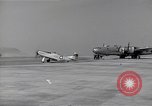
P-51 Mustangs of United States Army Air Force during a routine exercise at their base in Iwo Jima, Japan during World War II.
Planes of United States Army Air Force at their base in the Japanese island of Iwo Jima, during World War II. P-51 Mustangs of the U.S. AAF on the runway and parked. Mustangs take off and land during a routine exercise. Damaged B-29 bomber parked near the runway. Airmen and mechanics work on the damaged bomber.
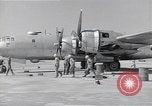
Mechanics repair damaged engine of a B-29 bomber of U.S. Army Air Force at their base in Iwo Jima, Japan during World War II.
Planes of United States Army Air Force at their base in the Japanese island of Iwo Jima, during World War II. A B-29 bomber crashed during take off repaired by mechanics. Damaged engine of the bomber. Mechanics repair damaged part. Man sits on shoulder of another to fix the repaired part back with the engine cabinet. Propeller blades start rotating as the mechanics rectify the problem.
CRITICALPAST.COM: About Us | Contact Us | FAQs - How to Order | License Agreement | My Account | My Lightboxes | Shopping Cart | Advanced Search | Featured Collections | Website Terms & Conditions | Privacy Policy ©2026 CriticalPast LLC.
License Agreement |
Terms & Conditions |
Privacy Policy
©2026 CriticalPast LLC.