


 Francais
 Deutsch
 Italiano
Refine Your Search
Naha Okinawa Ryukyu Islands 1945 stock footage and images
- Showing 3535 to 3540 of 9416 results more
more Hide
Hide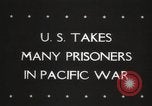
Japanese prisoners at a prison camp after being captured by American forces in the Pacific Theater during World War II.
The Japanese being taken as prisoners in the Pacific Theater during World War II. Allied soldiers cross a water channel and advance in Luzon, Philippines. Soldiers fire and advance. Explosions occur on the island. The soldiers fire rifles and guns. A soldier loads shells into a mortar and fires. A Japanese urges the natives over a loudspeaker to surrender. American soldiers aboard a ship as they look through binoculars to spot any Japanese soldier. Japanese soldiers swim towards the ship and come aboard as they surrender. Another local speaks into a loudspeaker as he urges the Japanese to surrender. A Japanese soldier waves a leaflet and surrenders to U.S. soldiers. A wounded Japanese soldier after surrendering to U.S. troops. Japanese prisoners at a prison camp. Prisoners eat and are lined up on the camp grounds.
German Generalleutnant Dittmar formally surrenders to U.S. soldiers in Magdeburg, Germany during World War II.
German General (Generalleutnant) Kurt Dittmar surrenders in Magdeburg, Germany during World War 2. German military commander General Dittmar, who was also Official Military Commentator of the German Armed Forces, stands with his party, including his son, young German soldier Berend Dittmar, Major Pluskat, and Major Werner, as American soldiers escort them. General Dittmar carries on an extended conversation with a French war corresondent. View of destroyed bridge span over the Elbe River, Magdeburg, Germany. German General Dittmar and his son, the boy soldier carrying a white flag with Red Cross on it, walk along sandy shore. They are met by U.S. Army soldiers of the 117th Regiment, 30th Infantry Division, including Captain Henry Abbes of Glendale, Long Island, New York, Commander of 'K' Company, who escort them. German General Dittmar conversing with captors while smoking a pipe, and then walking with his son, accompanied by American officers, through rubble strewn street of Magdeburg. (Records indicate that General Dittmar had traveled across the Elbe to ask for assistance in evacuating injured German soldiers and civilians from the east bank of the Elbe. U.S. Major General Leland Hobbs refused, and rather than returning across the River Elbe, Dittmar surrendered.)

Generals look over a harbor and wrecked Japanese installations in the Philippines.
Japanese installations in the Philippines during World War II. Corregidor island in the background. The coastline of Bataan and mountains in the background. Generals walk on a dock. Two Generals look over harbor and skyward while walking. Wrecked Japanese installations. A fortress on a hill in the background. Wrecked Japanese equipment on the dock.
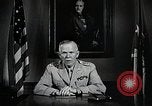
Chief of Staff George Marshall encourages war effort and outlines plan to defeat Japan late in World War 2
U.S. Army Chief of Staff George Marshall narrates film and is shown several times speaking seated at a desk. Marshall praises the Pacific Forces. Close up view of several U.S. military officers including General MacArthur (with a bandage over his right ear). Scene of U.S. Marines in combat on a Pacific Island during World War 2. U.S. marines advancing under fire. An enemy soldier is fallen in the distance, followed by a group of Japanese soldiers running for cover. Gun camera footage of a strafing attack by a U.S. aircraft on a Japanese ship, followed by strafing of parked Japanese airplanes at an airfield. Mid air dogfight scene is shown as a U.S. warplane hits and downs a Japanese aircraft. View on deck of a U.S. Navy aircraft carrier ship as a Japanese kamikaze aircraft bears down toward the ship, is hit by ship's guns, loses a wing, and, in flames, crashes into the ocean just off the ship. Scenes at Pearl Harbor after the Japanese attack in 1941, as medics care for wounded U.S. sailors in stretchers. Japanese soldiers seizing control in Bataan, with U.S. soldiers holding their hands up in surrender. Also U.S. soldiers in Corregidor standing by as they are addressed by Japanese captors. Scenes of Japanese soldiers in drills and training. Japanese Emperor Hirohito on horse back during a military parade. Scenes of dead Japanese soldiers laying on battle fields after battle. View of industrial smoke stacks of a factory in Japan. Japanese workers producing steel and munitions for war effort. Japanese soldiers cheering at a military rally. George Marshall speaks urging commitment by every American citizen in the war effort. Caricature image of Axis leaders Hitler and Mussolini with "X" marks over them, beside a non-marked image of Japanese General Hideki Tojo. Clip closes with several scenes of American flags being raised on flagpoles of military bases all over the world, as soldiers, sailors, marines, women WACS soldiers, and airmen salute the American flag.
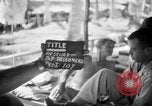
Walter Kane shares his experiences as a prisoner during an interviewed at 118th General Hospital in Leyte, Philippins.
Interviews of the rescued U.S. prisoners of war at the 118th General Hospital in Leyte, Philippine islands during World War II. U.S. Navy man Walter Kane from Baltimore being interviewed regarding his experience as a prisoner. Walter Kane shares his experiences.
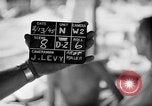
Walter O' French shares his experience while being interviewed at 118th General Hospital in Leyte, Philippines.
Interviews of the rescued U.S. prisoners of war at the 118th General Hospital in Leyte, Philippine islands during World War II. U.S. Army man Walter O. French from Hardy, Arkansas being interviewed regarding his experiences as a prisoner. Walter O. French shares his experience.
CRITICALPAST.COM: About Us | Contact Us | FAQs - How to Order | License Agreement | My Account | My Lightboxes | Shopping Cart | Advanced Search | Featured Collections | Website Terms & Conditions | Privacy Policy ©2026 CriticalPast LLC.
License Agreement |
Terms & Conditions |
Privacy Policy
©2026 CriticalPast LLC.