


 Francais
 Deutsch
 Italiano
Refine Your Search
Naha Okinawa Ryukyu Islands 1945 stock footage and images
- Showing 3631 to 3636 of 9416 results more
more Hide
Hide
Japanese Prisoners of War return to Japan from United States.
Film titled 'We The Japanese People', about Japan and Japanese prisoners of war returning home. Sun rises. Water dashes against rocks at the Japanese coast. View of Mount Fuji. Japanese POW (Prisoners of War) aboard ship. They sit and stand on ships at the Pacific shore. They shout and wave to people on the shore. POW disembark and walk with their luggage. They sit on the train and wave from the windows. Crowd on a road in Ginza, Tokyo. People at crossroads. Scene from rural Japan. Snow on mountains and land. People cross a bridge over stream. Hut besides stream. Flowers bloom over Cherry trees. Small islands in the sea. Ship underway at sea. Light house beside the sea. Boats at shoreline. City in the background.
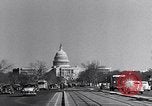
Japanese representatives at the UN Assembly, UN and UNESCO in United States and Paris.
Japanese diplomats in the United States. Car and bus traffic of 1950s cars on street in Washington Dc with the United States Capitol building in the background. Elected Japanese representatives climb up stairs of the U.S. assembly. The U.S. Vice President Allen W Barkley and Secretary David Rice Atchison receives Japanese representatives and shake hands with them. They pose. Building of the United Nations (The temporary United Nations Headquarters building in Lake Success, Long Island, New York, in the Sperry Gyroscope Corp building.) Japanese representatives go in the building. Warren Austin, a U.S. delegate stands and shakes hands with the representatives. They sit in hall, wear headphones and listen to the translated discussions. Scene changes to Paris, with car traffic on street and Arc de Triomphe in background. Building of the UNESCO (United Nations Educational Scientific and Cultural Organization). Japanese representatives get in the building. Meeting in session. Representatives of Japan, Laos, Vietnam and Cambodia. Japanese representative addresses and shakes hands with the UNESCO president and other members.
Italian Expeditionary Forces in action at Northern Africa Front raid over Malta.
Italian Expeditionary Forces at Northern Africa Front. Soldiers of Italian Expedition Force comes out of fox holes. They run out from dugouts. Machine gun emplacement at battle field. Soldiers fire guns. They look through binocular. Trucks and bikes in field. Soldiers run in trenches. Soldiers run in field with machine guns and fire in prone position. Airborne troops land on isolated emergency airfield built by Britishers on the desert. Paratroopers destroy gasoline and munition dumps in field. Soldiers stand with covered artillery. Troops get in aircraft with guns. Italian Expeditionary Forces in Malta: Air raid over Malta. Pilots get on planes. Plane taxis and takes off. Airplane in flight. Pilots in cockpit. Air plane in flight over sea. Aerial view of Malta Island. (World War II period).
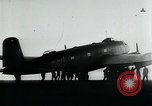
German FW-200 bomber takes off and bombs an Allied ship off of Valletta, Malta.
German bomber Focke-Wulf Fw 200 Condor bombs an Allied ship off island of Valletta, Malta. Ground crew ready the FW 200 German bomber. The pilot climbs up stairs to cockpit. Airmen fuel the bomber. Engines of bomber start. It taxis and takes off. German FW-200 Bomber in flight. View from inside cockpit of pilots in cockpit. Clouds visible from pilot cabin's screen. Pilot drinks hot beverage from insulated flask. Bomber in flight over sea. Pilot looks through binoculars. FW-200 Bomber releases bombs on an Allied ship. Smoke rises from burning ship. (World War II period).
35th anniversary of Wright Brothers' first flight. Advances in travel due to rail and airplane. Howard Hughes' round the world flight.
Film notes 35th anniversary of Wright Brothers' first flight and reviews history of transportation and advances in transportation brought about by railroad and aircraft. An animated map of the United states before the advent of mechanized transport methods. It illustrates the difficult and long overland journey to travel from the East Coast to the West Coast. Travel by horse and wagon over the Santa Fe Trail in 1849 is recreated in a brief film clip. Next, a locomotive is shown pulling a passenger train at high speed along a railroad at the base of a mountain. Animated map charts fairly direct path from Coast to Coast, taking only 4 days by railroad. Next a nearly straight course is traced across the map illustrating the path of an airplane taking only seven and a half hours for the journey. Change of scene shows aerial view of Howard Hughes' Lockheed 14 Super Electra Special, Model 14-N2 ( NX18973), christened "New York World's Fair 1939," in flight over New York harbor with the skyline of Manhattan, New York City in the background. Camera follows the plane as it passes over lower Manhattan. The Empire State building is seen prominently with other skyscrapers below the aircraft. This was filmed, on July 14, 1938, as Hughes and his crew were returning from Minneapolis, Minnesota, to Floyd Bennett Field, on Long Island, at the conclusion of their around-the-world flight (circling the Northern Hemisphere) from July 10 - July 14, 1938.
Transatlantic air service is extolled 35 years after the Wright Brothers first flight. Howard Hughes takes off on round-the- world flight
Animated map shows sailing vessel leaving Coast of United States heading to the British Isles. Next, the Cunard-White Star ocean liner, S.S. Aquitania, is shown underway in the Atlantic, with note that the ship crossing only takes four days. Animated map shows America and Europe "moving closer together" as a result. Noting that an airplane flew from New York to Paris in 16 hours and 38 minutes, Howard Hughes' Lockheed 14 Super Electra Special aircraft, heavily loaded with fuel, is seen making a difficult takeoff from the short (3500 foot) runway at Floyd Bennett Field, Long Island, on July 10th, 1938, headed to Paris, France on first leg of its round-the-world flight. Glimpse of the aircraft overhead as it sets course for Newfoundland on a Great Circle route to Paris.
CRITICALPAST.COM: About Us | Contact Us | FAQs - How to Order | License Agreement | My Account | My Lightboxes | Shopping Cart | Advanced Search | Featured Collections | Website Terms & Conditions | Privacy Policy ©2026 CriticalPast LLC.
License Agreement |
Terms & Conditions |
Privacy Policy
©2026 CriticalPast LLC.