


 Francais
 Deutsch
 Italiano
Refine Your Search
Naha Okinawa Ryukyu Islands 1945 stock footage and images
- Showing 3949 to 3954 of 9416 results more
more Hide
Hide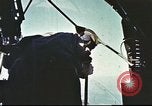
U.S. 8th Air Force B-17 Flying Fortresses bomb city in Europe during World War II.
U.S. 8th Air Force B-17 Flying Fortresses bomb targets in Europe during World War II. A B-17 drops bombs over a city. Aerial views of small islands along a coastal city. Smoke billows up from explosions. Formation of B-17s.
President Kennedy's casket lies in state in the U.S. Capitol and is carried to St. Matthew's Cathedral for Pontifical Funeral Mass.
Funeral services for former U.S. President John F. Kennedy in Washington DC. A horse-drawn caisson with President Kennedy's flag-draped casket moves along Pennsylvania Avenue and heads for the U.S. Capitol (First St SE, Washington, DC 20004, United States). United States President Lyndon Johnson, former President Kennedy's wife Jacqueline Kennedy and his brother Robert Kennedy get off a car outside the Capitol. President Kennedy's casket lies in state in the Capitol Rotunda. President Johnson places a wreath in front of the casket. Jacqueline Kennedy moves towards the casket along with her daughter Caroline. Thousands lined up outside the Capitol to view the casket. People cry in the Rotunda of Capitol. The cortège to Saint Matthew's Cathedral (1725 Rhode Island Ave NW, Washington, DC 20036, United States) shows dignitaries and leaders from all over the world walking along a road. The casket is carried by pallbearers into the cathedral for a Pontifical Funeral Mass followed by dignitaries. Priests conduct the ceremonies in the cathedral. Richard Cardinal Cushing conducts the Pontifical Requiem Mass. The casket is carried back to the caisson by the pallbearers.
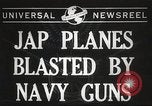
United States naval guns down Japanese torpedo airplanes in the Pacific Ocean during World War II.
A U.S. convoy underway in the Pacific Ocean heads for a raid on the Marshall Islands during World War II. F4U Corsair fighter airplanes with wings folded on the deck of a U.S. carrier underway. U.S. anti-aircraft guns down two Japanese torpedo airplanes. A Japanese airplane in flames falls in the ocean off the stern of the ship. A sailor lies down on the deck of the U.S. carrier as the flaming airplane passes. Another Japanese aircraft crosses behind the ship and also crashes in flames.
Promotion of war bonds in the United States during World War II.
A film titled 'What If They Quit' dramatizes promotion of war bonds in the United States during World War II. A man carries a box walks out of a building. He tries to convince a man named Joe who thinks that he cannot afford to buy war bonds anymore. Workers work in factories and on an assembly line contributing to war effort. A U.S. Task Force underway at sea. U.S. Marines hitting Pacific island beaches. Naval bombardment on sea waters. U.S. WACs (Women's Army Corps) parade in formation. U.S. troops advance on a beach under heavy fire. The man on the street convinces Joe to buy war bonds and says that if American troops can afford to fight then American citizens can also afford to buy bonds.
Japanese airplanes take off from the flight decks for the air attack on Pearl Harbor, Hawaii, United States.
Japanese air attack on Pearl Harbor, Hawaii, United States. Japanese carriers Kaga and Zuikaku underway at sea. Officers on the deck of a Japanese ship. Japanese sailors push airplanes on the flight deck of a Japanese carrier. A pilot runs down the flight deck to an airplane. Japanese officers being briefed on the flight deck. Japanese pilots run to embark their airplanes. Air 'boas' on the bridge of the Japanese carrier give a 'launch planes' signal. Japanese planes are launched from the carrier. A Japanese torpedo bomber in flight. The airplanes fly in formation and approach Pearl Harbor. Pearl Harbor burns under Japanese air attack. Bombs explode on Ford Island. (World War II period).
Japanese soldiers advance towards a battlefield along a muddy road during the Battle of Malay Sea and Singapore.
Japanese artillery fired in the Malay jungle, Kuantan during World War II. Imperial Japanese Army (IJA) soldiers load and fire artillery. Smoke rises due to the firing. A map of Singapore showing British positions. The map zooms into Pulau Ubin island. A soldier watches enemy action through binoculars. Japanese troops cross the Straits of Johor from Malay to Singapore in small boats and wade ashore with equipment. Shirtless Japanese gun crewmen load shells into artillery. A Japanese soldier puts a blade on his bayonet. The artillery fired and airplanes drop bombs as screaming Japanese infantry advance along a muddy road. British and Allied prisoners of war (POWs) are being searched and led away by Japanese guards.
CRITICALPAST.COM: About Us | Contact Us | FAQs - How to Order | License Agreement | My Account | My Lightboxes | Shopping Cart | Advanced Search | Featured Collections | Website Terms & Conditions | Privacy Policy ©2026 CriticalPast LLC.
License Agreement |
Terms & Conditions |
Privacy Policy
©2026 CriticalPast LLC.