


 Francais
 Deutsch
 Italiano
Refine Your Search
Naha Okinawa Ryukyu Islands 1945 stock footage and images
- Showing 3997 to 4002 of 9416 results more
more Hide
Hide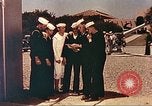
Young Navy recruits enjoy a fishing trip during training at the Naval Training Center in San Diego, California.
Dramatization: Young U.S. Navy recruits in training at the Naval Training Center in San Diego, California. The recruits undergo various training exercises. Dramatization shows a group of recruits working as teams to climb a wall. A recruit runs through a semaphore training exercise and toward barracks. He reads from a paper and announces permission has been granted for the recruits to go fishing. The recruits in uniform on fishing boats at sea. New recruits joke around standing on the boat. Two recruits slip a fish down the shirt of a fellow recruit. A recruit (played by George Reeves - later "Superman") points to several Destroyers and mistakenly calls them Battleships. Another recruit points out a submarine. A commanding officer points out the view of North Island Naval Base, and the port and downtown area of San Diego. The recruits are fishing. An officer asks an enlisted man to pick up a blue tackle box and he picks up a yellow one instead.
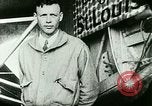
Charles Lindbergh takes off from Roosevelt Field in the "Spirit of St. Louis," on a solo flight across the Atlantic Ocean
Charles Lindbergh's poses next to his airplane, the "Spirit of St. Louis." Ground crew push the airplane, tail first, out of a hangar on Roosevelt Field, Long Island, New York. Its engine and nose are covered in canvas. Lindbergh shakes hands with an official. Ground crew top off the aircraft's fuel, by pouring several gallons into its tank from atop the wing. A man helps Lindbergh don his heavy flying coverall. The aircraft engine starts. Crowd surrounds the aircraft. Lindbergh climbs aboard and the "Spirit of St. Louis" starts its takeoff roll surrounded by group of people. Lindbergh makes a long takeoff roll, bouncing several times (once, quite hard) before breaking ground in a shallow climb.
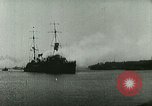
Charles Lindbergh feted in Washington, DC and New York City, upon return to U.S. after his historic transatlantic flight
American aviator Charles A. Lindbergh arrives aboard USS Memphis (CL-13) at the Washington Navy Yard, Washington D.C. upon his return from Europe to the United States following his pioneering trans-Atlantic solo aircraft flight. He comes down the gangplank and is greeted by a phalanx of officials. They drive Lindbergh away in an open car. Two days later, June 13, 1927, the scene shifts to New York harbor, where there is a virtual traffic jam of ships and boats of all sizes and shapes, assembled to greet Lindbergh. Fireboats salute with streams of water as Lindberg arrives (as backseat passenger) in a seaplane from Mitchel Field on Long Island. The seaplane is seen flying over the harbor,and descending to land. The seaplane is seen in the water amongst the flotilla of vessels, as. Lindbergh is picked up by a police launch that takes him to the ship Macom, where he is helped aboard by passengers. (He almost falls into the water while stepping from the launch to the ship.) Lindbergh waves from the deck of the Macom, as they proceed in a parade of vessels toward a Manhattan pier. Upon arriving, Lindbergh is hustled into an open car and driven away surrounded by New york City policemen,including mounted police, who escort the car through mobs of spectators. Police form lines to hold back enthusiastic admirers. The car proceeds along a city street where cheering spectators jam the sidewalks and office workers create a virtual storm of ticker tape and confetti from their windows high above the street.
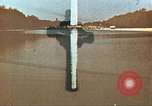
Funeral of the late Filipino President Manuel L. Quezon at St. Matthew's Cathedral in the Washington, D.C.
Filipino President Manuel Luis Quezon passes away in the United States. View of the Washington Monument and reflecting pool. Procession arrives in front of St. Matthew's Cathedral (1725 Rhode Island Ave NW, Washington, DC 20036, United States). Pallbearers carry the casket containing the body of President Quezon into the cathedral. Dignitaries and officials in the church. A woman lights candles. U.S. Navy women and men kneel before the altar. The body of President Quezon is seen in the casket. A depiction of the Filipino flag made from flowers is at the altar.
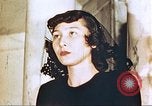
Funeral of Filipino President Manuel Luis Quezon at St. Matthew's Cathedral in Washington, D.C. (WW2)
Philippine Commonwealth President Manuel Luis Quezon passes away during his exile in the United States. A Filipino woman in mourning. President Quezon’s family, prominent United States and Filipino officials seated inside the cathedral. Funeral held at St. Matthew's Cathedral (1725 Rhode Island Ave NW, Washington, DC 20036, United States) in Washington, D.C. They pay tribute to the late President. Exterior of the cathedral. Casket containing the body of President Quezon is loaded into a hearse by pallbearers. Cars passing on the street. The casket is taken to Memorial Bridge. The casket is removed from the hearse and placed on a caisson. A band plays. Soldiers march holding rifles. The caisson moves across the Memorial Bridge into Arlington Cemetery. (World War II period).

SBD Dauntless take off from the flight deck of an aircraft carrier underway in the Pacific during the Battle of Midway.
A film titled 'Torpedo Squadron 8' on aviators and crewmen of Torpedo Squadron 8 who gave their lives on June 4, 1942 near Midway Island in the Pacific Ocean during the Battle of Midway of World War II . Ships underway in the Pacific Ocean. Aircraft parked on an aircraft carrier. The airplanes warm up. Pilots pose on the deck. U.S. Navy SBD Dauntless aircraft take off from the flight deck.
CRITICALPAST.COM: About Us | Contact Us | FAQs - How to Order | License Agreement | My Account | My Lightboxes | Shopping Cart | Advanced Search | Featured Collections | Website Terms & Conditions | Privacy Policy ©2026 CriticalPast LLC.
License Agreement |
Terms & Conditions |
Privacy Policy
©2026 CriticalPast LLC.