


 Francais
 Deutsch
 Italiano

Refine Your Search
Naha Okinawa Ryukyu Islands 1945 stock footage and images
- Showing 4297 to 4302 of 9416 results more
 Hide
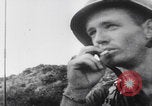
Tired 81st Infantry Division “Wildcats” soldiers resting and recuperating after the Battle of Angaur (WW2)
Faces of United States 81st Infantry Division “Wildcats” soldiers after the Battle of Angaur in World War II. A soldier smoking a cigarette. A tired soldier holding a rifle with bayonet. Soldier scoops food from GI ration and eats. A soldier chewing. A soldier sleeping at the foot of a tree. Medics dressing wounds of a heavily bandaged man. A young soldier eating while sitting on fallen tree trunk. An injured soldier with both eyes covered by bandages is led away. Soldier lying down. Medics evacuate injured patients. A soldier looks to the camera as medics treat his wounds. Soldiers sitting on top of a moving tank. Injured soldiers with dirty faces look to the camera. Logo that reads "Buy War Bonds--The Mighty 7th War Loan" superimposed over photo of the flag raising at Iwo Jima.

United States Army 7th Air Force Consolidated B-24 Liberator bombers taking off from Angaur (WW2)
United States Army 7th Air Force Consolidated B-24 Liberator bomber “Hay Maker” (Serial Number 44-40729) takes off from Angaur airfield, Palau during World War II. A Consolidated B-24 Liberator bomber with a black cow nose art takes off from the same airfield. Consolidated B-24 Liberator bomber “Shack Bunny” (Serial number: 44-40759) taking off from runway.

United States Army 7th Air Force Consolidated B-24 Liberator bombers landing at Angaur (WW2)
A United States Army Air Force Consolidated B-24 Liberator bomber with unicorn nose art lands at Angaur airfield, Palau during World War II. Another United States Army Air Force Consolidated B-24 Liberator bomber lands and taxis at Angaur Airfield runway. Its nose art depicts a reclining nude woman.

Fire aboard the USS Randolph from a Kamikazi attack while anchored at Ulithi, during World War II
The USS Randolph (CV-15) hit by a Japanese Yokosuka P1Y " Frances", twin-engine kamikaze bomber, on her starboard side,aft, just below the flight deck, as she was anchored at Ulithi, during World War 2. Flames appear in the dark aboard the carrier as firefighters work in the area under searchlights. Later scene shows crew members silhouetted against orange flames as they fight the fire. It appears to come under control, but several small explosions propel burning objects aloft, and flames continue to break out. (Note: 25 crew were killed and 106 wounded during this incident.)

Marines wounded in combat are treated in the field and evacuated to hospital ship in Saipan during World War 2
The treatment and recovery of Marine wounded in Saipan during World War 2. Injured Marines arrive at collection station and are provided medical aid. Blood plasma being administered. Patients on stretchers being placed in jeep and carried away to evacuation station. Wounded being placed aboard a LVT (Landing Vehicle Tracked) to be taken to a ship. LVT pulls away from the coast. Wounded being transferred from the LVT to another landing craft. Landing craft with wounded aboard comes along side a ship. Injured Marines with blood stained face. Litter patients in a sling being hoisted aboard the ship. Doctors and Corpsmen examine the wounded and provide them medical aid. Doctors in an operating room aboard the ship.
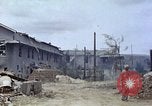
Injured Marines being treated at a division and a civilian hospital in Saipan during World War II.
A U.S. Navy training film about the treatment and recovery of soldier wounded in Saipan during World War II. Division hospital building. Marines pile up sand bags. Tori at the entrance of a Shinto temple as military vehicles move through the gate. A Japanese civilian hospital in a town. Debris being piled up. Marines enter the hospital. A litter patient being carried inside the hospital. Plasma and blood being administered to the wounded Marines. A doctor cleans a wound and administers penicillin. A doctor washes his hands. Patients at the hospital as an ambulance arrives. A sprinkler sprays water on ground to prevent dust from puffing up. A technician works on a microscope and looks into it. A man washes clothes.
CRITICALPAST.COM: About Us | Contact Us | FAQs - How to Order | License Agreement | My Account | My Lightboxes | Shopping Cart | Advanced Search | Featured Collections | Website Terms & Conditions | Privacy Policy ©2026 CriticalPast LLC.
License Agreement |
Terms & Conditions |
Privacy Policy
©2026 CriticalPast LLC.