


 Francais
 Deutsch
 Italiano
Refine Your Search
Naples Italy 1943 stock footage and images
- Showing 163 to 168 of 4566 results more
more Hide
Hide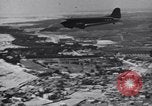
Leaders of U.S., Britain, and the Soviet Union meet in Teheran, Iran, to plan actions against Nazi Germany during World War II
Film begins showing a U.S. Army Air Forces C-47 transport plane in flight over the city of Cairo and Pyramids, in Egypt during World War 2. U.S. President Franklin D. Roosevelt's voice is heard speaking in his 1943 Christmas report to the Armed Forces. He states that following the Cairo Conference, he and Prime Minister Winston Churchill flew to Teheran, Iran. View of city of Teheran from an airplane overhead. View of front of the Soviet Embassy building there. Wider view showing conference principals on the porch with reporters and photographers below the steps. Next, a closer look with Soviet Marshal Stalin, President Roosevelt, and Prime Minister Churchill, seated on chairs, conversing. Closeup of the Big Three with their military commanders standing behind them. Views of ongoing Soviet operations on the Eastern Front. Russian troops firing field artillery from a snowy field. (A transport airplane is in the far background.) Shells bursting on snowy hillside. Soviet soldiers training in white arctic clothing rush through toward tanks and lie down in the snow. Three Soviet aircraft buzz a snow covered field. A huge explosion is seen and then Soviet cavalry charge across snow. View shifts to U.S. Army troops operating in Italy. A jeep filled with soldiers tows an artillery field piece across a shallow river. U.S. soldiers ride across a stream in a truck. Rear view of artillery piece being towed toward an italian town. Glimpses of aerial combat between Allied and German aircraft. General Dwight D. Eisenhower and General Mark Clark are seen riding in a jeep across a bridge in Italy. Glimpse of Italian people trying to clean up destroyed section of a town. Portrait of Benito Mussolini in the debris. General Eisenhower walking with a local British commanding officer and General Mark Clark, in Italy. Eisenhower and Clark at an outdoor briefing by British officers. Eisenhower pinning the Legion of Merit medal on U.S. Army Air Forces Lieutenant General Carl Spaatz, deputy commander of the Mediterranean Allied Air Forces who President Roosevelt says has been selected to be commander of Strategic Air Forces in Europe. Glimpse of B-24 Liberator bombers dropping bombs in Europe. Film shifts back to Teheran and the Big Three Leaders sitting in chairs. Closeups of them. Then their foreign secretaries step being them (Molotov, Hull, and Eden.) Nazi swastika flag. German armed forces marching on parade. German boys playing on artillery pieces under watchful eyes of German soldiers. Children at a playground. European farmers harvesting grain by hand. German troops in black parading. Glimpse of Adolf Hitler giving impassioned speech. Several views of Teheran conferees. President Roosevelt holding a ceremonial sword. Scenes of good will with hand shakes among conferees. Glimpses of British, Soviet, and Chinese troops attacking. Massed flags of the Allies.
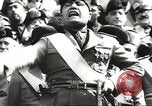
American offensive campaigns in Europe and Pacific Theater during World War 2
Fall of Benito Mussolini in Italy. Mussolini seen speaking to a crowd and shaking his fist. Sicily surrenders to Allied troops during World War II. German soldiers holding white surrender flags march forward. Civilians in Italy cheer the arrival of smiling American soldiers. Scene changes to American B-25 bomber aircraft dropping bombs over Japanese positions in Pacific Theater. Close view of bombardier calibrating position and bombs away from bomb bay doors toward Japanese-held targets. Gun camera footage of Allied aircraft attacking Nazi German Wolfpack submarines in the Atlantic Ocean. Allied aircraft, including B-25 bombers, bombing German industry and cities during a night raid. In England, United Kingdom, church service is held open to the sky in the ruins of bombed out Coventry Cathedral, which had been destroyed by German Luftwaffe blitz bombing of Britain. Clergy, robed choir members, and British parishioners seen at the enthronement service of Bishop of Coventry Neville Gorton in 1943, enclosed only by the exterior walls of St. Michaels, Coventry Cathedral.
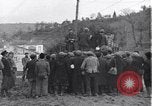
The Allied Military Government (AMG) begins immediate efforts to cleanup and rebuild Liberated areas of Sicily in World War II.
Allied Military Government efforts to rebuild Sicily after capturing it from Axis forces during World War 2. Italian men needing employnent board an open truck for transport to a job site. Workers standing with American soldiers preparing to work. A huge crowd of men pushing and shoving outside an Allied Military Government (AMG) labor hiring headquarters where they were offered decent wages to begin rebuilding after the war's destruction. Italian men, as well as American soldiers, rebuilding roads in the Alpine region of Italy, where German forces had destroyed them as they withdrew. U.S. Army engineers using a bulldozer, to clear and smooth a road. A large dump truck spreading new gravel for a highway bed. A team of workers manning a cable to pull down a damaged portion of a building. A British Army officer and a Colonial soldier in a turban, set explosive charges to destroy a bomb-damaged building. They detonate the charges and bring down the entire large building. Bulldozers at work on huge piles of rubble. A steam shovel being employed to clear large piles of debris. Men at work in Palermo, to clear entire streets buried in rubble. Men clearing rubble near piles of twisted steel building girders. Rubble being moved by horse-drawn carts and dumped into the sea. Italian masons at work building new homes and refurbishing old ones. In views three months after the original Allied landing in Sicily during July,1943, Palermo is seen well on the way to restoration. School children, including girls with brooms, walking to a place needing cleanup. Views of them cleaning steps and windows. Citizens picking up debris from streets and sidewalks. A man using a hose to clean a street and sidewalk in the city.
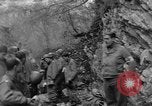
U.S. Army forces assault the German Winter Line of Defense during the Italian campaign of World War II
American troops of the 45th Infantry Division, are seen in mountains after breaking through the first segment of the German Winter Line, near San Pietro Infine, Italy, in World War 2. It is Christmas Day, 1943 and they occupy Mount Lungo. They receive Christmas dinner in their individual mass kits and sit down on the ground to eat it. On December 28th, they employ pack mules and also use stretchers to retrieve remains of fallen 3rd Division defenders down the steep mountain trails of Mount Lungo. They place the carefully wrapped remains at the base of a bullet pock-marked stone structure. Scene shifts to Mount Sammucro where American troops take advantage of a brief lull in fighting. On 1 January, 1944, Second Corp reinforcements have arrived and Americans commence a new assault on the German Winter Line defenses, with an artillery barrage on German positions guarding San Vittore del Lazio. View of smoke rising from that town. Shelling of Mountaintop flanking Highway 6held by Germans. Groups of American troops firing mortars from valley below. Shells exploding on German positions. Closeup of American gun crew loading and firing a 155mm long tom field gun. Soldiers holding their ears when gun fires. Bombs dropped from American warplane aircraft explode near roads in the valley. Glimpse from U.S. warplane flying overhead, of smoke rising from German positions in the Winter Line. Soldiers of the 168th Infantry Regiment firing a recoiless rifle from wooded area. Shells striking at base of mountain. Troops of the U.S. 137 Infantry Regiment advancing on San Vittore. view in the Italian town on 7 January, 1944, when street fighting has ended. American soldiers are seen mingling with the civilian inhabitants. German military equipment destroyed and burning during the American Winter Line offensive. Captured German soldiers being taken into custody, searched, and processed as prisoners of war.
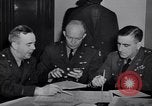
General Dwight D Eisenhower and Allied forces capture North Africa and Sicily, receives the French Legion of Honour medal (WWII)
General Dwight D Eisenhower from the North Africa campaign to the D-Day Normandy landings during World War II. Eisenhower with other military officers in the War Plan Office discusses strategy. A mural covering the west wall of the Eisenhower Museum in Abilene, Kansas. An animated map shows plan to seize key positions in North Africa. Fight in Algiers and Casablanca. Allied troops fire artillery, bombarding a North African coastal town. Troops advancing from beachhead, engage in street fighting with Vichy French troops in Casablanca, Morocco. A flare gun is fired. Unfavorable weather conditions delay the troops advancing towards Tunis and Bizerte. Allied troops fighting at nighttime. Allied soldiers walk through mud, allied military vehicles pass through water on the roads. Troops fire artillery under a canopy, hitting the side of a hill. Thick clouds of smoke cover a hill. U.S. General Omar Bradley and his troops capture Bizerte, Tunisia and the British 1st Army captures Tunis. German and Italian prisoners raise their hands up upon surrender. Animated map shows the surrender of the Axis troops. A ceremony commemorates the victory. North African cavalrymen join the parade. General Eisenhower and Free French Forces General Henri Giraud review a military parade. Henri Giraud bestows to General Eisenhower the French Grand Cross of the Legion of Honor. A mural on a wall of the Eisenhower Museum depicts the Allied invasion of Sicily. Allied troops march into Sicily in 1943.Civilians in the streets to celebrate. A mural on the wall of Eisenhower Museum depicts invasion of Italy. Allied troops land ashore and march into Italy. U.S. General Mark Clark 5th Army at Salerno. A sign reads Napoli. Eisenhower comes out of a tent. U.S. President Roosevelt visits the troops in the combat area with Eisenhower. United States President Roosevelt, British Prime Minister Winston Churchill, and Joseph Stalin in Cairo, Egypt. Another mural on the wall of the Eisenhower Museum. Eisenhower with other officers. Dramatization of German troops guarding and preparing the defenses of Normandy before the Allied landings. Eisenhower reviews training of the troops as they prepare for the invasion of France. Allied troops undergo physical training though obstacle courses. Churchill inspects the troops. Eisenhower reviews the troops on the eve of invasion. Eisenhower speaks to airborne troops wearing blackened camouflage face paint.
U.S. shuttle-bombing of German positions and military installations under Operation Frantic during World War II.
Film title slate indicates "Operation Titanic" but it, in fact, depicts "Operation Frantic" with U.S. shuttle bombing operations over Germany from bases in Great Britain, Italy and Russia during World War II. United States Army Air Force B-17 Flying Fortresses in flight. Aerial view of bombers in flight with several aircraft flying in formation leaving behind contrails. View inside bomber aircraft with bombardier preparing to drop bombs. View of bomb bay door opening and closeup of hand near bomb drop switch. Bombs awawy view as bombs are dropped from American aircraft. German defenses are bombed along the invasion coast of France (just prior to D-Day) on June 2, 1944. Aerial views of B-24 and B-17 bombers also in flight bombing German military installations in German-occupied northwestern Europe. Aerial view of a target area. Smoke rising up from bombardment. Two different U.S. Army Air Force B-17 Liberator aircraft are seen falling from the sky toward crashes after being hit by German enemy fire. One of them has smoke trailing from it, and the other is in a free fall. Railroad and marshaling yards are also bombed over Debrecen, Hungary on June 2, 1944, with aircraft continuing on (shuttle bombing) rather than returning to base. United States Army Air Forces B-24 Liberator flying in formation on June 21, 1944. Aerial view as they bomb the Focke-Wulf Fw 190 engine aircraft factory near Basdorf, Germany. German factories are bombed. B-17 aircraft on the same date are seeing in formation and bomb railway stations, freight yards, and factory targets, along with the Nazi German Ministry of War, Ministry of Propaganda, and Gestapo headquarters in Berlin, Germany. Heavy flak bursts seen in the air near the aircraft. Dogfight scenes as several German airplanes are shot down. Machine gunners aboard U.S. bomber aircraft firing at German fighter aircraft and shooting down 43 of them, according to narrator. Aerial view of ball turret rotating below bomber and firing guns at German fighter aircraft. The B-17s and B-24s bombing the targets. Synthetic oil plants and refineries are bombed at Ruhland Germany, east of Leipzig. Planning for the operation was done on December 7, 1943. A document about the operation is typed. Animated map shows Nazi positions and method of shuttle-bombing, allowing American aircraft to bomb from Soviet bases, and allies broadly to bomb German targets from bases in the United Kingdom, Italy, and Soviet Ukraine.