


 Francais
 Deutsch
 Italiano
Refine Your Search
Naples Italy 1943 stock footage and images
- Showing 1927 to 1932 of 4562 results more
more Hide
Hide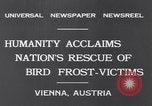
Newsreel 'Humanity Acclaims Nation's Rescue of Bird Frost-Victims, Vienna Austria'
Little swallows are gathered by natives and put in boxes. Children bring storm stricken swallows. The birds are then put in a plane and flown to Italy in warm climate.
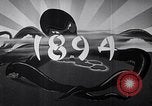
The Rise of Japanese militarism in the 20th Century
Film opens showing reenactment of Japanese attack ostensibly against Formosa, in 1894. Japanese troops and artillery are shown. The event is depicted in a critical political cartoon. Next, Japanese Admiral Heihachiro Togo is seen in 1904, standing with other naval officers. Then, Japanese warships are shown, firing barrages of naval gunfire at the Russian fleet in Port Arthur, Manchuria. Huge black clouds arise from burning ships. Scenes of Japanese people celebrating their naval victory. Date shifts to 1910. Cartoon depicts Japanese annexation of Korea. Cartoon illustrates Japanese actions in World War I when, siding with the Allies, Japan acquired the German-held Shandong (Shantung) Peninsula of China, as well as German-held Marianas, Carolines, and Marshalls islands in the Pacific. Japanese representatives are seen participating in Post World War 1 international activities. They signed the so-called Five-Power,Four-Power, and Nine-Power treaties, and participated in the League of Nations. Glimpse of two Japanese officers, followed by cartoon depiction of the Mariana, Caroline, and Marshall Islands, that Japan insisted on keeping. Cartoon shows them being fortified. A Japanese military marching band parades down a city street while being cheered by spectators on the sidewalks. Next, Japanese military General, Baron Tanaka Giichi, is seen in uniform with other officers. Cartoon illustrates the so-called Tanaka Memorial document that Baron Tanaka allegedly presented to the Emperor, in 1927, outlining a strategy to conquer the world. Cartoon then illustrates plan of conquest by acquiring Chinese manpower; Manchurian iron and coal; Siberian timber, coal, wheat, and metals; Tin,oil and rubber from Malaysia and the East Indies. The United States is shown as the last conquest. Views of ordinary farm and factory activities in the U.S. Cars parked in the Ford Motor Company factory lot. Japanese officials and legislators meeting in the Diet (Parliament). Japanese theater patrons and a Japanese woman singing with an American-style band, are shown as examples of activities the Japanese Government sought to discourage. A Japanese female ensemble in traditional dress, playing traditional instruments, is shown as more desirable. Western dancing and western hollywood movies are shown and narrator states they were forbidden by the Japanese government. Japanese movie scene depicts ancient martial arts. A musical production on stage displays German Nazi swastika flag , Japanese rising sun, and symbol of Kingdom of Italy, celebrating the axis alliance. Japanese men are shown playing the ancient game of Chu Shogi, instead of playing Western card games. People are shown in a library, where Western books are replaced by more militaristic tomes, such as: "If we fight" by Admiral Shinsaku Hirata, March 15, 1930 (shown on film slate). Slate goes on to quote about attack on Hawaii as the first battle in war of the Pacific. Film cites another approved Japanese publication: "Arguments Against American Policies" by Kawashima Seichiro, Christmas Day, 1924. It discusses distruction of the American fleet and subsequent landing on the U.S. West Coast.

A gas turbine car at the Gas Turbine Power Conference in Washington D.C.
A futuristic gas turbine car designed by Chrysler Corporation with body hand crafted in Italy. The parts of the car displayed at a show. Two women seated in the space-age car. The roof canopy of the concept car slowly descends, automatically. Dashboard of the car and the turbine engine seen. A deceleration air flap is demonstrated.
Steel production and daily life in Youngstown in Ohio
Exterior of steel mill in Youngstown, Ohio. Houses next to steel mill. Downtown Youngstown Ohio. Transit bus picks up passengers. POV bus traveling downtown street. Family with child exits bus. Shoe store window downtown with pedestrians. Workers entering steel mills via overhead bridges. Steam locomotive trains passing steel mills with good nat sound of whistles. Overhead crane bucket picking up iron ore. Bucket dropping iron ore into skip hoist. Skip hoist buckets moving up conveyor to blast furnace top. Workers smelting iron ore in blast furnace. Molten iron and slag pouring from blast furnace. Johnny Chonko controlling wheel to adjust blast control to furnace. Pete Zeeman, the 'blower' looks through blast furnace look glass to evaluate. Frank Melai, an immigrant from Italy, at the blast furnace. Frank looking at his Christmas tree at home with family. Frank's family opens gifts during Christmas. Frank puts a new smoking pipe into his mouth.
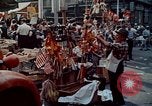
Italian influence on American life. Italian Festival San Gennaro at Mulberry Street, in New York City.
Italian influence on American life, reflected in gastronomy and history. A man selling flags and parade goods for the Feast of San Gennaro (Festa di San Gennaro) in Mulberry Street, New York City. An Italian American woman cooks Italian sausage and meats. Man holding a green parrot. Italian American woman inspects her boyfriend’s necklace. Poster reads “Feast of San Gennaro”. A man pins money on a string of cash attached to the carriage of San Gennaro. A metal effigy of San Gennaro. Italian American brass band. Italian chefs prepare and cook pizza at a restaurant kitchen. Exterior view of Marconi Restaurant signage in Little Italy. Views of Ferris Wheel; . decorative lights; a brass band. A chef rolls and toss a pizza dough by hand. Waiter takes a bottle of Chianti from the restaurant bar. Chef sprinkles cheese on a Pizza Margherita. Customers eating pizza in restaurant. A woman eats pizza while a man pours a glass of Chianti. Man and woman put napkin on dog and feed him pizza. A Casino. View of “Larry’s Bar” sign. View of George Washington Bridge over the Hudson River. Heroic sculpture of Italian explorer and navigator Giovanni da Verrazzano (c. 1485-1528) by Ettore Ximenes (1855–1926) in Battery Park, New York City. Home of Giuseppe Garibaldi, on Staten Island, New York. Visitors enter the home, which displays sign reading: (in Italian)" He lived in exile, 1851 to 1853. Giuseppe Garibaldi, Hero of two worlds." View of statue at Christopher Columbus Memorial Fountain, Columbus Circle. in front of the Union Station, Washington, DC. Italian Carabinieri march in Columbus Day parade on 5th Avenue, in New York City. Italian and American flags displayed on building. St. Patrick's Cathedral is seen. Italian journalists at work in Washington, DC and New York City. An Italian journalist speaks about his experience as a journalist in New York City.
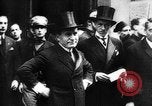
Major changes in lifestyle of the people in United States in the 1920s leading to economic prosperity.
Brief view of Mussolini in Italy wearing a top hat. Clip proceeds on theme of lifestyle of people in United States in the 1920s, also referred to as the "Roaring 20s". Pedestrians and various people on busy streets of New York City as cars and truck move past them. A woman gets her make up done in a makeup studio. A woman in flapper fashions smokes a cigarette. View of a line of women's legs all wearing silk stockings and shorter skirts than in prior times. Women in swimming suits at a beauty pageant. Federal agents smash liquor bottles and break up wooden barrels draining liquor to enforce prohibition. Gangsters killed in an encounter in the street. Gangsters, possibly mafia, being arrested and led away by police at gun point. Men and women perform Charleston dance. A bartender is seen mixing a drink. Men and women enjoy ballroom dancing at a night club. Closeup of a street sign for Wall Street. Brief view of crowds outside New York Stock Exchange building around time of stock market crash of 1929.
CRITICALPAST.COM: About Us | Contact Us | FAQs - How to Order | License Agreement | My Account | My Lightboxes | Shopping Cart | Advanced Search | Featured Collections | Website Terms & Conditions | Privacy Policy ©2026 CriticalPast LLC.
License Agreement |
Terms & Conditions |
Privacy Policy
©2026 CriticalPast LLC.