


 Francais
 Deutsch
 Italiano
Refine Your Search
Naples Italy 1943 stock footage and images
- Showing 3067 to 3072 of 4562 results more
more Hide
Hide
Precautions to be taken during a gas attack in United States.
'What to do in a gas attack' A dramatization shows the precautions to be taken in event of a gas attack and the first aid measures to be used after the gas exposure. Newspaper headlines about the gas attacks, a gas alarm sounds. Plane drops gas bombs and smoke rises. Various precautions to be taken in case of a gas attack like closing the windows and other openings in the house. A man and woman move upstairs in the house to escape fumes. In case of liquid gas attack, gas spreads and men of the United States Citizens Defense Core neutralize the gas. Men wearing protective clothing and masks wipe off the gas. A sign reads 'gas mustard'. Men neutralize the crops in a field after a gas attack. After a liquid gas attack a man removes his clothes and shoes before entering the house as a preventive measure. Removes liquid gas from the skin by blotting with a tissue, tissue thrown in a bin. Exposed skin cleaned and rinsed with bleaching solution. A baking soda solution containing water used to irrigate eyes. Man takes a shower and soaks himself up. Nose irrigated with baking soda solution. Man gargles with the solution. Man smokes a cigarette and lies down to prevent exertion. A man of the United States Citizens Defense Core takes away the clothes lying outside the house for treating them. (World War II period).
Instructional film on civilian precautions and first aid measures to be taken during a gas attack in the United States.
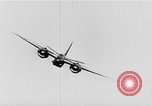
From a dramatized civilian protection film produced as a public service announcement or PSA by the Clorox Chemical company. Shows the precautions to be taken in case of a gas attack and the first aid measures to be used after gas exposure during World War 2. Aircraft in flight. Bomb wreckage during World War II including scenes from blitz firebombed areas in Europe or England, and scenes from China under attack by Japanese. Civilians fleeing in China as a Japanese attack begins. Back in the U.S., view of a new tank rolling into final assembly at a factory, and bullets being manufactured and poured into large containers in a munitions or ammunition factory. Narrator covers various precautions to be taken in case of a gas attack while at home, and actors depict: Closing the windows and other openings in the house. Woman seals kitchen exhaust fan. Man checks and closes fireplace flue in house. A man and woman move upstairs in the house to escape fumes. Air Warden sounds alert using a spinning handheld device, and asks people to stay indoors. Clothes affected by gas attack are left outside a house. Liquid gas removed from the skin by blotting with a tissue. Exposed skin cleaned and rinsed with bleaching solution. A baking soda solution containing water used to irrigate eyes. Man takes a shower and soaks himself up. Nose irrigated with baking soda solution. In case of unavailability of first aid one must take a bath. Woman takes a shower and rinses face and eyes. War scenes including a German Luftwaffe aircraft hit and diving toward ground. Wreckage of a German warplane. Views of a bottle of bleach, and baking soda solution, and a bar of soap used as cleaning tools in gas attack.

Eleanor Roosevelt addresses a public meeting in United States, and tells a joke to the audience.
Eleanor Roosevelt arrives and addresses a public meeting in United States, wearing a red cross hat. During the speech she relates a joke involving her husband, President Roosevelt and the Japanese. It deals with a U.S. Marine ordered to leave Guadalcanal, but disappointed that he has not shot a Japanese soldier. The commanding officer gives him advice which Eleanor Roosevelt relates as a joke to the audience. (World War II period).
Soldiers undergo hot and cold temperature tests at Fort Knox in Kentucky, United States (WW2)
Volunteers undergo Army medical research at Fort Knox in Kentucky, United States during World War II. Soldiers tested for their ability to adapt to hot temperatures. Soldiers carry bags and walk under high temperatures to prepare them for war conditions in deserts and humid jungles. They walk on a treadmill under high temperatures. The amount of liquid to be consumed by each one of them is determined by the medics. At night soldiers relax with temperatures lowered to 90 degrees. Tanks also examined for different climatic conditions. Men check the efficiency of Army clothing. Wire put up on the bodies of soldiers record body temperature. Men wearing clothes enter a cold room and get into sleeping bags. A man in another room observes the body temperatures. Tanks tested for weather efficiency. Men wear jackets and masks for protection against cold weather.
Japanese attack on United States aircraft carrier Hornet in the Pacific Theater during World War II.
'I was there' depicts Japanese attack on USS Hornet. A car pulls up to the Naval hospital in California, United States. Men relax by the pool side as electrician's meet on United States aircraft carrier Hornet, Tom Heikendor, narrates how the carrier was attacked by the Japanese planes in the Pacific Theater off Santa Cruz. Japanese fighter planes attack the Hornet and explosions occur. Anti aircraft guns knocks down a Japanese plane. Another set of Japanese planes attack the carrier. Smoke rises as explosions occur. Smoke rises from the carrier. Wounded men aboard the carrier transferred onto a destroyer by breeches buoys. A stretcher transferred onto the destroyer.

American attack on Rendova Island in Solomon Island during World War II.
'In the Solomons ' United States ships underway in the Pacific and soldiers on the deck of a ship. A man looks through binoculars towards the sea. Admiral William Halsey and others look at a map and discuss the strategy. An animated map of Solomon Islands shows Japanese establishments. Guns on board the American ships fire at Japan's positions at night. Soldiers loaded in landing crafts move away from the ship. Soldiers wade through water and land at the Rendova Island. They march inland on the island. Soldiers engage in a fierce battle with Japanese as they fire guns. Planes drop bombs over the island. Survivors of a ship sunk brought on board another ship. Survivors sleep and relax.
CRITICALPAST.COM: About Us | Contact Us | FAQs - How to Order | License Agreement | My Account | My Lightboxes | Shopping Cart | Advanced Search | Featured Collections | Website Terms & Conditions | Privacy Policy ©2026 CriticalPast LLC.
License Agreement |
Terms & Conditions |
Privacy Policy
©2026 CriticalPast LLC.