


 Francais
 Deutsch
 Italiano
Refine Your Search
Nevada United States 1936 stock footage and images
- Showing 6595 to 6600 of 27249 results more
more Hide
Hide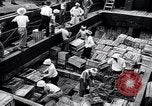
United States Army provides medical, food and material aid to Japan.
United States Army helps and provides aid to Japan in the years soon after end of World War 2. Workers unload the cargo of food from truck. Aerial view of flooded area. Ambulances of 'Army Medical Care' pass through muddy land. To care for the sick, doctors and nurses reach the flooded area of Japan in ambulance. Nurse gets down from ambulance. Army personnel lift the boxes of food and clothing. Sign of 'Toy Factory'. Interior of toy factory. Japanese work at machines in factory, where they process and recycle tin cans received from American military bases, and turn them into toy cars for children. Women work at machines in toy factory. Toys of small cars made and displayed.
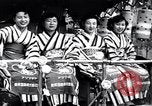
Japanese, United States Army and Americans celebrate anniversary of Yokohama Port which opened in 1859.
Anniversary celebration of Yokohama port, which opened in 1859. Japanese women seated in striped kimonos. A dragon dance in Yokohama’s China Town. Celebration Parade down Isezaki Street, in Yokohama. Dragon floats dance. Musicians march as they play music. U.S. Army participates in celebration. Yokohama locals dressed in costumes ride in parade floats. Japanese women in swimsuits wave from moving float. Military Police personnel ride on top of armored vehicles. A woman wearing a wedding dress dances on top of float. Japanese children wearing paper crowns enjoy the parade. Japanese policemen control the throng. Japanese children watch the various floats. The Big Picture host Sergeant Stuart Queen speaks about friendship of United States with Japan after the end of World War II.
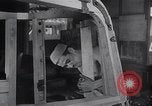
United States Army helps reconstruction and industrial development during Military Occupation of Japan
Industrial development in Japan with the help of United States Army: Workers in automobile plant. Skilled Japanese workers repair damaged equipment for Allies, during Korean war. Ship under construction in Japanese shipyard. Japanese children run behind jeeps of American soldiers. Japanese children pose for camera. American soldier gives candy to Japanese children who swarm over him. American soldier gives doll to little Japanese girl. Americans and Japanese participate in swimming meet. Americans and Japanese together participate in activities after World War II.
United States Navy helicopter lands on the flight deck of USS Mississippi (AG-128) in Atlantic Ocean.
Guided Missile Terrier for the USS Mississippi (AG-128) in Atlantic Ocean. Sailor with green flag waves a helicopter in and it lands on the flight deck of USS Mississippi (AG-128). It is a HUP-2 of Helicopter Utility Squadron (HU-2) (nicknamed the "Atlantic Fleet Angels," under the command of CAPT. Richard S. Roberts from 1953-1955). Partial view of another HUP-2 helicopter in foreground. United States Navy helicopter lands on the flight deck of USS Mississippi. Admiral Robert Bostwick Carney gets into a helicopter. USS Wisconsin (BB-64) underway. A helicopter airborne in foreground. Side view of USS Wisconsin and bow.
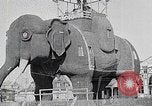
Lucy, the elephant building made of wood and tin, seen near Atlantic City in Margate, New Jersey, United States
Structure of a giant, hollow wooden elephant building. Dubbed Lucy, this building was built in 1882. It weighs 90 tons and has a substructure of wood and skin made of hammered tin. Men and women tourists go inside the elephant building through a door in the elephants leg at bottom. It is located near the Atlantic coast, in Margate, New Jersey, United States, two miles south of Atlantic City, New Jersey.
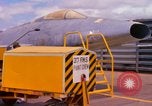
United States Air Force airman paints camouflage paint on a F100D 'Super Sabre' plane,Vietnam
United States Air Force airman of 37 FMS Paint Crew paints camouflage paint on a F100D 'Super Sabre' plane of 355 TFS at an air force base in Phu Cat,Vietnam. Painter uses a pressurized spray painter to paint the plane with dark and light green camouflage paints. Tail section of the plane reads 'Fighting Falcons-355 TFS' (Vietnam War period).
CRITICALPAST.COM: About Us | Contact Us | FAQs - How to Order | License Agreement | My Account | My Lightboxes | Shopping Cart | Advanced Search | Featured Collections | Website Terms & Conditions | Privacy Policy ©2026 CriticalPast LLC.
License Agreement |
Terms & Conditions |
Privacy Policy
©2026 CriticalPast LLC.