


 Francais
 Deutsch
 Italiano
Refine Your Search
Nevada United States 1936 stock footage and images
- Showing 9169 to 9174 of 27248 results more
more Hide
Hide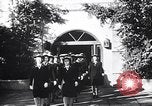
U.S. Coast Guard sailors and SPARS report to various Battle Station across the United States.
U.S. Coast Guard SPARS (US CG Women's Reserve) march at the Training Station. CG men and women recruits take their places at various Battle Stations across the U.S. U.S. CG men and women personnel report for duty on shore and at sea. SPARS arrive in Washington and New York. A sailor watches through binoculars, a SPARS with documents, sailor on cutter, SPARS drives a car, sailor by a plane. A radioman and woman operate the radio. Men and women gunner mates on cutters. A U.S. CG pilot in the cockpit, SPARS parachute riggers at work. A deck gun on a cutter. A crew of 8 sailors observe the gun. SPARS take their places at a shore station. The captain and his crew come aboard a cutter. U.S. CG cutters at sea. Includes narration by Ginger Rogers and James Cagney.

Charles Linbergh returns to the United States aboard USS Memphis.
Aviator Charles Lindbergh returns to the U.S. after his trans-Atlantic flight. Lindbergh aboard the USS Memphis as it nears America. Other ships in water. Sailors on deck and watch tower. Sailors cheer and hail Lindbergh. He bids farewell to the ship's Captain and other officers. Lindbergh looks through binoculars. Blimps in flight.
Development of the automobile from 1910 to 1927 in the United States.
Growth of suburban areas caused by inter-development of the automobile and the public road system (1897-1927). A farmer delivers goods to people living in the city. He sorts fruits and vegetables in his horse cart. The farmers home and farm in the countryside. Men in an early automobile on a dirt road. A car follows a horse carriage in the countryside. The car with a driver and a couple halts. The carriage stops near the car. 1910: Three men seated in an automobile with a wind shield, as it is driven on a developed road. 1927: Two men get into a modern automobile with a hood and doors. A car leaves a farm.

Developing businesses housed in modern buildings and increasing automobile traffic on the city streets, United States.
Growth of suburban areas caused by inter-development of the automobile and the public road system (1897-1927). Emerging businesses housed in modern buildings and well kept compounds. A businessman seated at a table inside an office. View of the compound garden from the office window. Women and men workers take a walk in the garden. Automobile traffic on a city street. Double decker buses, cars and pedestrians. A man emerges from inside a house in the city, He gets into his car parked by the sidewalk and drives away.
City residents and Native American families using early automobiles in the United States.
Growth of suburban and rural areas outside of cities caused by inter-development of the automobile and the public road system (1897-1927). An African American family emerges from a two story apartment building. Men, women and children seated outside. African American woman and children get into a parked automobile (circa 1925 Ford Model T Touring). African American man uses the hand crank in front of the engine to start the car. They drive away. Next scene shows a car parked beside a group of Native American Indian women and children, who are outside a tent; possibly on an Indian Reservation. Next scene is a busy highway packed with cars during a traffic jam. Final scene shows municipal electricians in an electric service truck with a tall, elevated rig on board allowing them access to electricity wiring. Men stand aloft on the rig while the truck moves between light poles, and the men perform some work on an electric pole.
Trucks and vans used as fire engines, delivery vans, transportation for troops, water and milk tankers in the United States.
Growth of suburban areas caused by inter-development of the automobile and the public road system (1897-1927). Trucks used to save time and for long hauls. Horse carriages carry goods. A fire engine leaves the fire station. A delivery van delivers baked goods. A water tanker moves alongside a car. A delivery truck for horses. Troops transported in trucks. Truckloads of soldiers driven in the countryside. A truck at a gas station. Simpson's milk tankers on their way.
CRITICALPAST.COM: About Us | Contact Us | FAQs - How to Order | License Agreement | My Account | My Lightboxes | Shopping Cart | Advanced Search | Featured Collections | Website Terms & Conditions | Privacy Policy ©2026 CriticalPast LLC.
License Agreement |
Terms & Conditions |
Privacy Policy
©2026 CriticalPast LLC.