


 Francais
 Deutsch
 Italiano
Refine Your Search
Nevada United States 1936 stock footage and images
- Showing 13087 to 13092 of 27248 results more
more Hide
Hide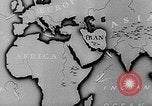
Nationalization of oil refinery at Abadan, Iran.
Major events of the year 1951. Nationalization of Anglo Iranian oil refinery at Abadan, Iran. Workers at the refinery. British action leads people to protest against Britain and other western democracies on streets in Iran. Prime Minister of Iran Mohammad Mosaddegh (or Mosaddeq) takes the matter to the United Nations. Delegates of various countries at the meeting. The United Nations headquarters in New York, United states.
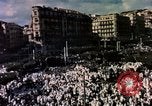
Independence celebrations in Algeria and unfurling of the Algerian flag at the UN Headquarters in New York City.
A documentary titled 'America salutes Algerian Independence' depicts independence celebrations in Algeria and its admission into the United Nations. A huge crowd of people in the streets of Algeria in north Africa to celebrate their independence. The Algerian flag is waved. Algerian soldiers march on parade. People with the Algerian flags. The Algerian flag is raised in a ceremony. Soldiers stand at attention. The United Nations Headquarters in New York City in the United States. Flags of the member nations flutter. Algerian Prime Minister Mohamed Ahmed Ben Bella is greeted by UN Secretary General U Thant, President Ahmed Sekou Toure of Guinea and President of the UN General Assembly Muhammad Zafrulla Khan. The Algerian flag is unfurled and it flutters among the flags of other member nations. Algerian war victims present at the ceremony. In the UNO, the full body of the General Assembly gives a standing ovation to Algeria as it joins the UNO. Algerian delegates seated. A map of Africa with the focus on Algeria. The capital city of Algiers. Ships at the harbor in Algiers. People in a market place. Minarets of Jeema Kebir Mosque . The National Museum houses things of art and craft such as brocade garments, rugs, specimens of metal work and jewelry.
American citizens celebrate "I am an American Day" in New York City during World War II.
Opening slate reads “New Americans Celebrate their Citizenship.” Huge Crowd is gathered in New York City’s Central Park, on “I am an American Day,” which also includes newly naturalized American citizens (although they are not featured, as such, in the film). New York Mayor, Fiorello LaGuardia, presides and delivers a speech from a podium. New York clergymen are seated with one another on a front row seat where patriotic bunting is draped. Vice President Henry R. Wallace is also seen in that front row. Various views of U.S. military units parading along 5th Avenue in New York City. The units include huge columns of United States soldiers, including one large group of African American soldiers.
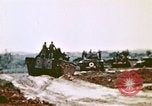
Transport through tanks, trucks and jeeps slowed down in Okinawa, Pacific Theater.
Okinawa Operations in Pacific Theater. United States Marine units and 24th Army Corps advance the island. Roads muddy due to water. Trucks, jeeps and tanks move along the water flooded roads with difficulty. Advancing troops and supplies slowed down. Tank and infantry units in fields. Phosphorous and small arms fired on camouflaged Japanese positions. Heavy smoke rises up. Fire and smoke. Tanks and soldiers advance. Army corps relieved by Marines in South Naha. (World War II period).
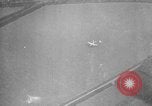
Allied Army paratroopers land at Arnhem Netherlands and advance inwards fighting with enemy during World War II.
United States Army and British Army airlifts paratroopers from England to the border of Holland during World War II. British and American transport airplanes and gliders land near Arnhem Holland (Netherlands). Soldiers, tanks and guns supplies offloaded and soldiers begin fighting with the enemy. Soldiers of Dutch Army aid the Allied forces. Allied soldiers rescue injured soldiers and advance towards enemy lines. Allied soldiers meet with Dutch Resistance or Dutch Underground Army members wearing identifying armbands. Group of German Army prisoners is seen including many young boy soldiers. Allied landing draws attention of German units allowing U.S. Army units to cross border into Germany. American soldiers near a bridge and crossing into Germany. They pass near railroad station at Roetgen Germany. Nazi German prisoners use horse carts and bicycle transport while being led away under Allied guard.
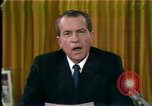
U.S. President Richard Nixon addresses nation about steps to end the war in Vietnam. He asks support of the "silent majority"
Stand of U.S. President Richard Nixon on Vietnam War. President Nixon addresses the nation about the Vietnam War from White House. He details how United States got involved in the war. He talks of protests and demonstrations of anti war activists and wants an everlasting solution to the problem. He reminds of Woodrow Wilson's efforts to end wars and peace. Nixon tells the youth of America about their demonstrations: "I respect your idealism. I share your concern for peace. I want peace as much as you do." He speaks to the "great silent majority" of Americans (contrasted with the youth demonstrators) and asks for their support in fighting "the forces of totalitarianism" and in supporting his plans for fighting and ending the war. He asks that Americans be united for peace and united against defeat. In the final part of this speech segment, President Nixon invokes the term "silent majority."
CRITICALPAST.COM: About Us | Contact Us | FAQs - How to Order | License Agreement | My Account | My Lightboxes | Shopping Cart | Advanced Search | Featured Collections | Website Terms & Conditions | Privacy Policy ©2026 CriticalPast LLC.
License Agreement |
Terms & Conditions |
Privacy Policy
©2026 CriticalPast LLC.