


 Francais
 Deutsch
 Italiano
Refine Your Search
Nevada United States 1936 stock footage and images
- Showing 13141 to 13146 of 27248 results more
more Hide
Hide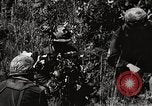
Squad members take positions before enemy attack.
Part of the U.S. Army training film describes the role of Light Weapon Infantrymen. Squad members check their rifles and take positions. Automatic rifleman determines the direction of fire. The Squad leader checks the positions of his team members. Bushes and logs kept in place to hide from the enemy. Logs are laid over the hidden area with sacks on top and camouflaged with bushes. United States soldiers fix the wire and place land mines on ground. Gasoline barrel placed on ground and camouflaged.
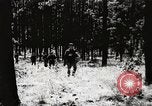
Squad members ready to defend their area from enemy attack.
Part of the U.S. Army training film describes the role of Light Weapon Infantrymen. Squad members ready to defend their area from enemy attack. Positions constructed and area is well camouflaged. Enemy tanks advancing. Supplementary positions taken and communication trenches dug. Squad leader informs platoon leader of advancing enemy infantry. United States soldiers open fire on enemy. To counter attack, the enemy blows a gap in the tactical wire. Squad reorganizes before another enemy attack
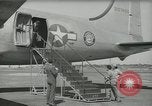
Film rehearsals. Actor playing role of reporter, interviews actor playing role of Soviet diplomat (WW2)
Actors portraying a scene where Soviet diplomat disembarks from a United States Army Air Force aircraft during World War II. Reporter interviews "His Excellency" on Soviet Union's attitude towards division of Germany. Diplomat answers saying the Allies should control Germany's key industries and take away its economic power to wage war.
Hand sending method of International Morse code.
Hand sending method of International Morse code. A United States Army operator operates the hand key to write a coded message. Senior officer Young talks about rhythmic and uniform use of Dits and Dahs while the other officer operates the hand key. Operator demonstrates letters using only Dits and only Dahs on screen. Officer explains phonetic alphabet for the word Hotel. Dits sound of Hotel equates to the sound of a horse galloping.
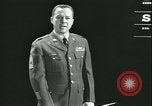
Officer Young explains the importance of smooth hand sending by morse code signal operator.
United States officer Young explains the importance of smooth hand sending by Operator. The Operator operates on hand key. 'Take 3 basic steps' with Dits and Dahs written on screen. The first step is to adjust key. Musician tuning drum. Pistol lying on piano. Woman tuning piano.
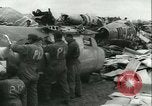
Reclaiming salvaged materials during and after World War II.
A United States post-war report about salvage and reclamation efforts to reuse supplies and reduce costs both during World War 2 and after the war. Technicians create aluminum plates for Army mess gear from salvaged aircraft parts during World War 2. Reclaimed parts used to make washing machine of gasoline drums, field telephone wires, air force tire trailer. The army salvaging and reclaiming cranes, chains, tents, tanks, shoes, axes, medical equipment, musical instruments, fire lamps, fire extinguishers. Technicians load crates of reclaimed materials on conveyor belts. An Army signal corps cameraman holding a motion picture camera. Films being picked up in bags from an Army van. Films being edited, cut, rebuilt and run on film projector equipment.
CRITICALPAST.COM: About Us | Contact Us | FAQs - How to Order | License Agreement | My Account | My Lightboxes | Shopping Cart | Advanced Search | Featured Collections | Website Terms & Conditions | Privacy Policy ©2026 CriticalPast LLC.
License Agreement |
Terms & Conditions |
Privacy Policy
©2026 CriticalPast LLC.