


 Francais
 Deutsch
 Italiano
Refine Your Search
Nevada United States 1936 stock footage and images
- Showing 13291 to 13296 of 27248 results more
more Hide
Hide
World War 2 film promoting public investment in War Bonds and stamps to aid the war effort and temper inflation
World War 2 era film that also includes some World War 1 scenes. Show girls or chorus girls in follies-like show, costumed as U.S. silver dollars and marching to tune and lyrics alluding to dramatic increase of currency in circulation, over the years. Animation with stacks of coins shows increase in national income from $46 billion,in 1933, to $71 billion, in 1939, and $142 billion in 1943. Back to the "follies dollars," a boy asks why, and then scenes of the Japanese attack on Pearl Harbor,are shown, with U.S. battleships being sunk. Wartime arms plants are shown. An M2A3 Light Tank rolls off a production line. Ships being constructed in a shipyard. B-24 Liberator bombers being built in a factory. Artillery shells being produced. Defense workers receiving their pay. The "follies dollars" group themselves to illustrate the fractions of income devoted to taxes and savings. But other spending is curtailed by wartime shortages. A woman talking with clerk in a drug store. U.S. Army troops crossing a pontoon bridge in open trucks, towing 75mm M1A1 howitzers. Infantry on the march. Animation showing industrial production devoted to war materiel and lots of dollars chasing few civilian goods. A grocery clerk offers to sell a woman customer butter for more than the established price, and she agrees. The "follies" performers then introduce the idea of an "inflationary dollar," and some history of past U.S. inflations. Animated examples of price inflation are shown. Glimpses of World War I scenes are seen, circa 1917 -1918, including: a 12-inch railway gun firing; a huge explosion from shell bursting near the camera; various scenes of United States infantry soldiers and French soldiers in battle action, running to bomb craters for cover and emerging from trenches to go up "over the top" into no-mans land during combat. Meanwhile, singing narration refers to the home front inflation due to competition for limited civilian goods. Map shows Europe and singing narration cites rising prices for food in occupied France and other countries suffering ravages of World War II. Montage of scenes showing needy civilians obtaining food in those countries. Animation shows increases, by 1944, in cost of U.S. civilian goods since the Pearl Harbor attack. "Follies" character called "Double-duty dollar," appears explaining he serves the war and curtails inflation on the home front by being saved through investments in War Bonds and stamps.
Warren Harding assumes office of the President and changes in the life of American people from the early to modern times.
The life of people during 1920s in the United States. Sketch of Warren Gamaliel Harding taking oath of office of the President of U.S. Sketches of the U.S. President Warren G. Harding. People in the factories. Sketches of the people in the various towns of America. The President addresses the people. Horse drawn wagons on the streets. Modern cars on the street. Women in houses as they perform various activities. Sketches depict the revolution brought about due to the invention of cars. People enjoy at various occasions in a car. Cars on streets. People listen to radio. Sketches depicts the motion pictures of the times. A family posing for a picture, each with one leg kicked out. Sketches of American writers like Fitzgerald and Hemingway who chose to live abroad. Footage of Moulin Rouge night club in Paris France and neon lights of other Paris night clubs seen at night. Women dance on a Paris night club stage. Sketches of famous writers and their view of modern America. Brief scene of people at Coney Island Amusement Park in New York sliding down a slide and riding on the "Human Pool Table" ride.
The Scopes trial and the Sacco-Vanzetti trial in the U.S.
Court trials in the United States after World War I. Sketches: The Scopes trial. A science teacher John Thomas Scope. Picture of the evolution of man. Defense attorney, Clarence Seward Darrow supports the theory of evolution. Prosecutor, William Jennings Bryan bases his position on the Bible. A person with a poster. People gathered outside the court room for the trial. Sketches: the court room session. People protesting. In separate matter. Accused anarchists, Ferdinando Nicola Sacco and Bartolomeo Vanzetti, two Italian Americans, on trial in Massachusetts for the 1920 armed robbery and murder of two pay-clerks. People protest against the trial. Policemen bring in the accused, to be tried. A huge crowd gathered to protest against the trial.

Various changes being brought about in U.S. in areas of sports, aviation and politics after World War I.
Leisure activities in the United States after World War I. A high rise skyscraper building in America. People enjoy thrilling sports. Flagpole sitting. New sports figures like George Herman Ruth (Babe Ruth), baseball player, and Jack Dempsey, a boxer. Charles Lindbergh, an American aviator is seen and gets into a plane. He addresses the people. People welcome the return of Lindbergh after a successful flight. A parade during the Presidential elections. Police men control the crowd. Sketch depicts Herbert Clark Hoover as one of the candidates for the Presidential election . Sketch of Herbert Clark Hoover with his wife. Sketches of the catholic candidate in the election Alfred Emanuel Smith. Sketches show people at coastal places, destruction of booze barrels during prohibition, and men drinking alcohol. Picture of Alphonse Gabriel Capone (Al Capone), a mafia gangster in America.
The U.S. female soldiers in uniform march and General Matthew Ridgway speaks on the services provided by women in U.S. army.
TV program, 'The big picture, ' depicts the role of women in the U.S. Army. U.S. Army Captain Carl Zimmerman speaks on the role of women in the American army. U.S. army soldiers marching. U.S. women soldiers in uniform marching. United States army General Matthew Bunker Ridgway speaks about the services provided by women in the U.S. army.
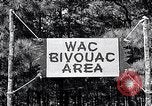
U.S. Women's Army Corps personnel training in different fields and given career advice at the training center
The role of women in the United States Army. A sign reads ' WAC Bivouac area'. Women carry heavy packs and march. During 10 minute break, they sit on ground and talk. Women's Army Corps (WAC) personnel set up tents and line up for chow, eating from mess kits. Women play softball. A woman reads letter from home. A woman drinks from a canteen. Women exercise and do calisthenics. They learn unarmed defense tactics. WAC military police march in formation. A woman being interviewed. Women in classrooms being given career guidance. A woman works on the punch card machine. A man and a woman drafting. Women work in the kitchen. Women work in laboratories. A woman on X ray machine and a solider lying on the table. Dentists check soldier. A woman being commissioned as an officer. Women disembark from a ship. WAC assigned to Japan, Paris or Germany. Views of a Shinto shrine in Japan, the Arc de Triomphe in Paris, and people in Berlin walking through Brandenburg gate British Sector and heading to other side, as German police officers watch. Woman assists male officers in a meeting, as the men view early television screen. View of Patton tank on the move.
CRITICALPAST.COM: About Us | Contact Us | FAQs - How to Order | License Agreement | My Account | My Lightboxes | Shopping Cart | Advanced Search | Featured Collections | Website Terms & Conditions | Privacy Policy ©2026 CriticalPast LLC.
License Agreement |
Terms & Conditions |
Privacy Policy
©2026 CriticalPast LLC.