


 Francais
 Deutsch
 Italiano
Refine Your Search
Nevada United States 1936 stock footage and images
- Showing 1999 to 2004 of 27245 results more
more Hide
Hide
Men dust poison in the field with the help of one mule drawn duster in United States.
Man on one mule drawn duster in field, United States. Another man stands nearby. Man dusts poison in the field. Flea hopper, louse and leaf worms are the other insects harmful for the plants. Insects on the leaf. It destroys the leaf.
Airplane dusts poison on a field and men discuss in United States.
Airplanes used for dusting poison (pesticide) on a farm field in United States. Man talks on an early model telephone in his house. Airplane parked on ground. Pilot comes out of a house and boards the plane. Other men stand nearby. The airplane takes off and in flight. Trees in the background. The airplane dusts poison in the field. Men stand on the cotton field and discuss.
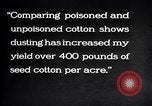
The cotton yield per acre increases due to poisoning in United States.
Airplanes used for dusting poison on the fields in United States. The yield per acre increases due to the use of poison. Man walks and inspects the cotton in the field. Trees in the background. Men and women arrive and pick the cotton. A house. Man stands near the piles of cotton. He compares the yield of the poisoned and untreated fields. Airplanes in formation dusting poison over a field. High altitude view of the airplanes dusting poison. Isom and Jim fishing.
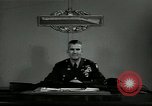
Colonel William Wilson Quinn talks about importance of the blue badge infantry soldiers of the United States Army
Colonel William Wilson Quinn on the show 'The Big Picture' in United States. Blue badge model framed on the wall in the background. He speaks about the importance of the blue badge of the rifleman or infantry man and the soldiers who wear the blue badge. He speaks about the great work of the infantrymen during the Korean War. He also speaks about the war at Sicily, the battle of the Bulge and the great work of various divisions. He says that the program 'The Big Picture' is the result of the great work of the Signal Corps combat cameramen who took the pictures and films of the Infantrymen.
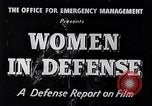
American women work as part of the National Defense Program, United States (WW2)
Wartime activities of women in United States during World War II, narrated by Hollywood actress Katharine Hepburn. A statue of a historic “Pioneer” American woman. American women work to save and help the nation. Women work at a laboratory as scientists. A woman looks under a microscope. Test tubes and other equipment on tables. Women handling chemicals in various flasks without protective gear. They work for the National Defense Program. A woman works near a machine that tests rubber or cloth for parachutes. Woman conducts abrasion test on clothing using a Wyzenbeek machine. She feeds guinea pigs and records their weights. Another woman works in the field of science. A woman gives a lecture on nutrition. A nutrition chart on wall. Other women attend the lecture. Women design working clothes for women. A woman wears a factory jumpsuit uniform.
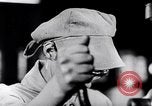
American women actively participate in the National Defense Program as war production workers in United States.
Wartime activities of women in the United States during World War 2. American women wearing uniforms work at machines in factories, assisting with the war production effort. They perform work in operating machines including drill presses, sewing, and fine detail work with precision instruments. They sew airplane wing fabric and parachutes. They assemble and inspect precision instruments employing tiny bearings. The women war workers operate drill presses and lathes in a machine shop.
CRITICALPAST.COM: About Us | Contact Us | FAQs - How to Order | License Agreement | My Account | My Lightboxes | Shopping Cart | Advanced Search | Featured Collections | Website Terms & Conditions | Privacy Policy ©2026 CriticalPast LLC.
License Agreement |
Terms & Conditions |
Privacy Policy
©2026 CriticalPast LLC.