


 Francais
 Deutsch
 Italiano

Refine Your Search
Nevada United States 1936 stock footage and images
- Showing 20617 to 20622 of 35682 results more
 Hide
Color Sound

Techniques used by a destroyer in rescuing downed pilot
A U.S. Navy training film regarding destroyer rescue of a downed pilot. An aircraft carrier in the sea. A helicopter hovers over the aircraft carrier. A destroyer amidst the sea. Crew members and rescue equipment on the ship. including scuba divers. Small boats lowered in the sea. An officer watches through the binoculars. Another sailor talks on the radio. Various airplanes take off from the flight deck. Various landings on the flight deck. Actual footage of a U.S. Navy jet with number 5357 landing on flight deck and a fire burning beneath it. The plane continues past barriers, off the port deck, pilot ejects, and plane plunges into the sea. Pilot in the sea. The rescue ship comes nearby the pilot. It rescues the pilot with the help of a rescue sling.

NASA 204 Review Board activities following Apollo 1 accident. Panel members meet
Apollo 204 review board at National Aeronautics and Space Administration (NASA) in United States, following the tragic Apollo 1 accident on January 17, 1967. Men at table, including two U.S. Air Force Lieutenant Colonels, in uniform, discuss mission and documents. A black board in the background. A man talks on the phone. Charts and print outs about the mission on the wall. 'Apollo Design Reference Mission' written on the chart and related pictures displayed.

Television discussion on WorldNet about the presence of the Soviet/Cuban in Nicaragua.
Television discussion about United States- Latin American relations in United States. Frank Carlucci answers the questions of the people regarding this topic. Maria C Siccardi presents the show. A question is asked from Brasilia regarding the presence of the Soviet/Cuban in Nicaragua. Discussion about the possibility of an agreement in the Caribbean, Cubans in Central America and their relation to the situation in the Caribbean, achieving peace and elections in Nicaragua.
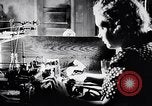
American women working at shipyards and factories in support of the war effort (WW2)
United States Employment Service helps find jobs to women during World War II. The government agency also arranges training programs for the women war production workers. Women workers in the shipyards repairing the parts of the battleships and making equipment for battleships. Women tighten nuts on ship body with large wrenches. Women tossing rivet materials to other women workers. Women building ships. They are asked why they are doing that work. They respond that their family members are in army, and they want to work with them. The United States Employment Service recruits female workers for the war work. View of offices and clerical workers helping to place workers for the war effort.
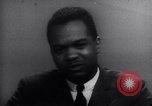
Events following the assassination of Martin Luther King in 1968
Speaking after the assassination of Martin Luther King, Walter Edward Fauntroy pastor of the New Bethel Baptist Church in Washington, D.C makes an appeal for mourners to honor him in silence and in the spirit of non-violence. He appeals to people to remain in their homes and to pray for a spreading of the spirit of this great man. He adds that those who respond violently in their grief, do Dr. King and his memory, dishonor. Next, a front loader is seen clearing smoking debris from riots, looting, and destruction that occurred in major cities of the U.S. during protests after the death of Martin Luther King, Jr. A fire truck on a city street sprays water on a burning building. Street sweepers clean a city street. View of cars parked in front of one of several churches set up as emergency centers in Atlanta. Inside the church, tables are seen filled with all manner of food, clothing, and other necessities to help persons in need. Views of people availing themselves of the needed item. Workers outside bringing supplies to the emergency centers. View inside an emergency center of people helping those in need. Closeup of two Catholic Nuns providing meals to those in need. Children seated at tables eating meals. U.S. President Lyndon Johnson broadcasts an appeal for citizens to reject violence and calls for unity and understanding. He states that he has just conveyed his and Mrs. Johnson's sympathy to Mrs. King. Glimpse of American flag at half staff on the White House. Still photo of Martin Luther King.
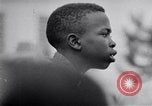
Civil rights demonstrations, racial tensions, and school integration in America in the early 1960's.
African American men and women carry signs and demonstrate for equal rights outside a restaurant or store in the United States for civil rights. Jesse Jackson leads crowd in his "I am somebody" chant. A sign in the gathered crowd reads, "Jesse Jackson Black Jesus". Views of the March on Washington for Jobs and Freedom on August 28 1963, highlighting civil rights issues for African Americans. Next scene is during the Selma to Montgomery march and shows Martin Luther King Jr. and his wife Coretta Scott King marching next to James Michael Letherer (Jim Letherer) of Saginaw, Michigan. (Letherer, who lost his right leg to cancer as a child, did the entire march on crutches.) Next scene shows African American people as they riot and flip over a car during racial riots. A building burns during race riots. Ernest Green talks to others at the headquarters for the Apprenticeship Program of the Workers Defense League, funded by the A. Philip Randolph Education Fund. A white man enters a voting booth. White and black people at a polling place. Narrator says that African American voting is increasing in America. Images of of Mayor Carl Stokes,a black political leader in Cleveland, Ohio; Jesse Jackson, Preacher; and Ernest Green (Ernie Green), Youth Organizer and Executive. View of grounds of the Washington and Lincoln Memorial teeming with protestors against inequality and segregation during the March on Washington for Jobs and Freedom in 1963. View of United States Supreme Court building and point of view shot as camera approaches interior chamber of the Supreme Court. Black students outside a school. Exterior view of John Philip Sousa Junior High School in Washington DC shows integrated student body. View of white students demonstrating against integration at Little Rock. Interior view of integrated elementary school classroom with both white and black children. Curb side sit-in demonstration in a southern city. Picketing demonstrators outside the S&W Cafeteria hold signs that read, "Christian Morality Condemns Segregation" and "All Men are Created Equal." African American demonstrators at the lunch counter of the S&W Cafeteria are served a meal by the waitress, along side white patrons at the lunch counter. View of a swimming pool that has been closed by a municipality rather than allow integration.
CRITICALPAST.COM: About Us | Contact Us | FAQs - How to Order | License Agreement | My Account | My Lightboxes | Shopping Cart | Advanced Search | Featured Collections | Website Terms & Conditions | Privacy Policy ©2026 CriticalPast LLC.
License Agreement |
Terms & Conditions |
Privacy Policy
©2026 CriticalPast LLC.