


 Francais
 Deutsch
 Italiano
Refine Your Search
Nevada United States 1936 stock footage and images
- Showing 21925 to 21930 of 27294 results more
more Hide
Hide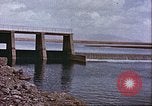
Morrison-Knudsen construction company builds dams and irrigation canals in Afghanistan
Opening scene shows the Boghra diversion dam and associated irrigation canal built by Morrison-Knudsen Construction Company (MK) along the Helmand River in Afghanistan. Three MKA (Morrison-Knudsen-Afghanistan) engineers stand on the bank of the new irrigation canal of this project. Glimpse of a small power plant built on the canal. A man turns a large wheel releasing water from lateral canals into the main canal which would irrigate an experimental farming area. An MKA yellow truck,carrying three Afghans in the back, drives through an ancient gate to the headquarters for this experimental farm at an ancient caravan fortress named Nad-e Ali. Next, an Afghan is seen driving a tractor pulling a set of harrows to till the soil. A field where seed was planted. Scene shifts to later when the seeds have grown and an Afghan farmers are seen harvesting the new grain by hand. The next year, fields of alfalfa are seen from the first year's seeding. Another tractor is seen working at the edge of a field of crop. Afghan farmers use hand cultivators to tend the crops. View of large fields of crops. An Afghan boy stands on the bank of the Boghra canal. View of camels grazing in sparse desert area. Scene shifts to Afghan and MKA officials negotiating another contract. View of brass sign on the Export Import Bank in Washington, DC. Inside, officials of the Bank are seated around a table. (Narrator states the Bank provided a 22 million dollar loan for the new extended construction contract.) View of the Helmand River (and its deep canyon Northwest of Kandahar) and the Arghandab River, where large dams were to be constructed. Dump trucks are next seen commencing work at the Arghandab site, building a work road atop a dike along the side of the river. Camera pans across the broad sweep of the project underway. Construction equipment of all types seen moving along the work road and at work atop the dam. Afghan workers operating power shovels. Earth and stones moving on a conveyor belt. Wooden forms being built and steel reinforcing bars being installed. Afghans clearing areas for drilling operations. Afghan powder men ram charges into areas to be blasted. View of man pushing handle to ignite the charges. Explosion raises smoke, debris and dust. More views of construction equipment in operation Views of the dam at about the 200 foot height.
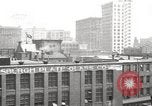
A post office and U.S. Customs building in Atlanta, Georgia.
Important buildings in Atlanta, Georgia. A business district in Atlanta. A sign on a building reads 'Pittsburgh Plate glass company'. Exteriors of a post office and U.S. Customs buildings. Exteriors of the State Capitol. Automobile and pedestrian traffic on a street. Streetcar, automobile and pedestrian traffic in the business district.

Jews flee to Israel; formation of Israel; Egyptian aircraft raid the town of Tel Aviv.
The state of Israel is formed. Refugee settlement tents in an area and people behind a barbed wire fence (possibly Jewish refugee camp in Cyprus where immigrants to Israel awaited political negotiations). A ship in a harbor. Jews board the ship. The Israeli flag hoisted aboard the ship. People get onto the ship. A man and a woman aboard the ship while it is underway towards Israel. Men load cargo onto a ship. Jews aboard a ship as they wave. Two men shake hands. Traffic on a street in a city in Israel. Prime Minister of Israel David Ben Gurion arrives and enters a building. A flag of Israel on the top of a building. An Egyptian aircraft in flight over Tel Aviv. A damaged building after an air raid. Dead bodies of Israeli people in streets after a bombing. Soldiers find a cache of ammunition and hand grenades in crates. Also found is a Nazi German book with a swastika symbol. Israeli Defense Forces (IDF) soldiers on the observation deck of a watch tower of what appears to be a liberated prison or detention area. Israeli soldiers in formation on a street.

The USS LST-349, carrying German prisoners of war from Anzio to Naples, is driven against rocks off Ponza , Italy during a storm, and sinks.
View from rocks above as the USS LST -349, is seen being pounded by wind and wave against rocks off Ponza, Italy during World War 2. German prisoners of war are huddled together on her deck as American crew members work to rescue them. Prisoners are seen being assisted as they climb up the steep rocks from the ship. Some are ferried off in inflated rafts. Narrator says: “The ship begins to break in two, with some crew and 20 prisoners still aboard.” View of ship going down as those on the rocks struggle and rescue efforts continue. Narrator states: “The waves swept two Americans and six German prisoners off the cliffs to their deaths. In all, 14 died, 4 Americans, one British officer, and 9 German prisoners.” In the final scene, the ship has sunk out of sight and all survivors (unseen) have moved inland.

Manhattan, New York City, from perspective of children
Street scenes and landmarks in midtown and lower Manhattan, New York City. The camera focuses on children, such as several shown on sidewalks being pulled along by their mothers. Traffic and pedestrians shopping near 7th Avenue. A girl looking at mannequin models wearing latest fashions in department store windows. A boy looking at the Empire State Building. View of Manhattan from Brooklyn Bridge Park. Children (mostly boys) are running and playing. One rides a bicycle. A tugboat nearby in the East River. (Boys throw stones in direction of a passing tugboat.) Skyscrapers are seen across the river. View of elevated train moving overhead, with skyscraper buildings in background. Views from the moving railroad train. A boy riding inside the train, looking out at the tall buildings. Views of skyscrapers of New York City as seen from moving subway car or train car. Children with adults looking at Manhattan views and landmarks from the observation deck of a building. A girl looks down over the edge of the deck.
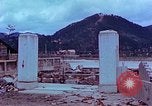
Damaged granite columns in Hiroshima, Japan.
A survey of physical damage of bomb blasts in Hiroshima, Japan after World War II. Two granite columns on each side of an entrance. The displaced columns. The base of a granite column shows the extent and direction of displacement. A shattered wall in the background. Two granite columns felled by a blast. Two granite columns in a state of collapse in the background.
CRITICALPAST.COM: About Us | Contact Us | FAQs - How to Order | License Agreement | My Account | My Lightboxes | Shopping Cart | Advanced Search | Featured Collections | Website Terms & Conditions | Privacy Policy ©2026 CriticalPast LLC.
License Agreement |
Terms & Conditions |
Privacy Policy
©2026 CriticalPast LLC.