


 Francais
 Deutsch
 Italiano
Refine Your Search
Nevada United States 1936 stock footage and images
- Showing 21943 to 21948 of 27294 results more
more Hide
Hide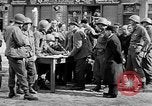
U.S. soldiers interact with German civilians in Munich during occupation of Germany after World War II.
Training film for U.S. soldiers during occupation of Germany after World War 2, guiding them on their role of "reeducation" and restoring normal life to civilians in Germany after World War II. U.S. soldiers seated and Germans standing around them talking to the solders. A German MG Police officer outside a building. A German police officer monitors citizens in a line. Germans talk to U.S. soldiers outside the Office of Military Government for Bavaria, in Munich. The U.S. soldier reviews their identification papers and questions them. German children at play. A smiling American soldier seated with a group of young German children around him. A group of German boys plays baseball on the lawn in front of the largely destroyed Altes Armeemuseum in Munich (later home to the Bayerische Staatskanzlei or Bavarian State Chancellery) in Greek architectural style with six prominent ionic columns. A U.S. soldier talks to German civilians. Soldiers talking with German men , women and children. A soldier frisks men and women entering a secure area. German police grab and restrain a German citizen for some offense and escort him away. Young children seated and learning at an outdoor class. The children standing and smiling.
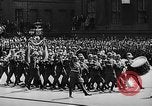
Montage of brief German Nazi scenes prior to World War II
Film opens showing German military marching band parading on city street. Spectators line sidewalks and a few stand outside 2nd story windows on buildings. The band stops marching and moves into formation facing to the side of the street opposite the spectators on the sidewalk. A glimpse of Adolf Hitler, smiling. View of the military band again, playing in their fixed formation. A Smiling Field Marshal Hermann Goering see at the head of a group of German miitary officers watching the events. Two Military leaders from Axis States walk past the camera and render Nazi salute. View of Military drummer on horseback performing as he passes statue of 18th Century Prussian General Gerhard Johann David Waitz von Scharnhorst, on Unter den Linden. Italian Benito Mussolini walking with Adolf Hitler on Berlin Street in 1937. They are followed by entourage of Italian and German military officers.Scenes of dense crowds cheering Adolf Hitler in various places and times. Film concludes with showing Hitler giving an impassioned speech.

Soviet Ambassador Molotov and representatives talk and Molotov boards an airplane at Washington D.C.
Soviet Foreign Minister V.M.Molotov secretly visits Washington DC, during World War II (May/June 1942) A four engine Soviet TB-7 (a.k.a Petlyakov Pe-8) bomber with the crew standing beneath its wing. U.S. Army General George C. Marshall, U.S. Secretary of State, Cordell Hull, Soviet Ambassador Maksim M. Litvinov, and Soviet Foreign Minister, Vyacheslav Mikhailovich Molotov stand near the door of the airplane. A Soviet officer talks. Soviet crew members climb into the airplane. Molotov bids goodbye to General Marshall and the others. Molotov then boards the airplane. The Soviet bomber taxis out, for the return journey to the USSR (which will proceed via Gander ,Newfoundland).
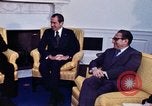
President Nixon with Arab leaders and Dr. Kissinger in the Oval Office of the White House in Washington DC.
U.S. President Richard Nixon in the Oval Office of the White House in Washington DC. The President converses with U.S. Secretary of State Henry Alfred Kissinger and Arab leaders in the Oval Office.
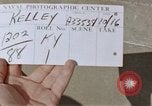
Lord Mountabatten receives welcome and being greeted by naval officers at NAS in Anacostia, Washington D.C.
Arrival of Lord Mountbatten at Naval Air Station (NAS) at Anacostia, Washington D.C. Navy band on the field prior to the arrival of the Earl. Color guard (Marine) at attention. Naval honor guard at attention. British sedan parked on the edge of field. British MP stands. Plane director motions the plane to parking area. R4Y taxis to parking area. U.S. Navy Admiral Arleigh A. Burke, Rear Admiral Baker, stand by waiting for disembarkation of Admiral of the Fleet The Earl Mountbatten of Burma, KG, The First Sea Lord and Chief of Naval Staff of Great Britain, Lord Mountbatten and party. Ramp of plane being lowered. Lord Mountbatten leaves the ramp, stops momentarily by the side boys. He is greeted by Adm. Burke. He goes through the receiving line. Admiral Burke and two British Officers stand at attention during rendering of honors. Marine honor guard in front of operations at NAS. Naval honor guards. Lord Mountbatten speaks to Admiral Burke. He gets into the sedan. Admiral Burke and Rear Admiral Baker walk. Admiral Burke gets into a sedan. Personnel on top of operations platform looking on. Four star Admiral's flag. Long line of Naval personnel holding state flags.
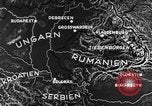
German Luftwaffe Ju-87 Stuka dive bombers attack Soviet tanks. German troops on the ground in Hungary during World War II
German Air Force engages Soviet ground forces in Hungary during World War 2. Opening scene shows map of Hungary, Croatia, Serbia, Romania. Next, in view from cockpit , a loose formation of German Ju-87 Stuka dive bombers is seen in flight. They bomb and strafe Soviet tanks on the ground. (Narrator states that German aircraft flew thousands of missions destroying more than three hundred Soviet tanks.) German soldiers are seen in trenches in Hungary. Next, are scenes of fires and of German soldiers near a burning Soviet tank.
CRITICALPAST.COM: About Us | Contact Us | FAQs - How to Order | License Agreement | My Account | My Lightboxes | Shopping Cart | Advanced Search | Featured Collections | Website Terms & Conditions | Privacy Policy ©2026 CriticalPast LLC.
License Agreement |
Terms & Conditions |
Privacy Policy
©2026 CriticalPast LLC.