


 Francais
 Deutsch
 Italiano
Refine Your Search
Nevada United States 1936 stock footage and images
- Showing 23077 to 23082 of 27294 results more
more Hide
Hide
U.S. Army Infantry in action. Taking prisoners. Negotiating a truce. Operating a tactical nuclear weapon atomic cannon.
U.S. Army troops moving through an enemy town on foot and in vehicles and tanks. U.S. Army infantry taking prisoners during the Korean War. A sign at Prison camp reads: "POW Camp #1, Utilities, Carpenter Shop." American troops process prisoners of war. Each is registered and given a POW identification to be worn at all times. Korean truce being signed at Panmunjom, in 1953. Amphibious assault forces underway at sea and troops wading ashore. A field headquarters in combat zone, where U.S. Army commanders are being briefed by an Intelligence (G2) officer. U.S. Army troops in camouflaged positions. U.S. tanks firing their guns and moving in a line. U.S. Army atomic cannon or nuclear cannon (e.g., M65 or Atomic Annie) firing tactical nuclear explosive shells. Various sized atomic bomb or nuclear bomb explosions from the shells. Army technician monitoring radiation readings on a tank exposed to tactical nuclear weapon effects. An airman hosing down an airplane exposed to radioactivity.
New recruits enter boot camp and technical training in the U.S. Army
New recruits being inducted into the U.S. Army. They arrive at boot camp and undergo basic training: marching; calisthenics; weapons training on firing range. Recruits receiving technical training. Instructor describing Bohr atom model. Army soldiers receive training regarding new hi-tech weapons systems.
Importance of aerial support to Infantry in the atomic age, when ordinary supply lines may be unavailable.
Scenes of destroyed Lines of Communication (LOCs) during World War II. Lines of supply trucks burning on a highway. Destroyed rail lines, trains, and locomotives. Destroyed seaports and channels. U.S. paratroopers board a C-119 transport aircraft. Helicopters transporting U.S. Army infantry. Many helicopters in flight. Paratroops dropping and landing in large numbers. Troops running from landing helicopters. Helicopters carrying artillery pieces and supplies.
Smaller U.S. Army dispersed forces using better communications and aerial transport in the atomic age
A communications center setup in a U.S. Army GMC CCKW 2 1⁄2 ton 6X6 truck. Army radio operator at work inside the truck. Soldiers operating communications equipment on the roof of a vehicle. Soldiers at work inside the vehicle. U.S. army gun crews firing Howitzers; M1919 Browning .30 caliber medium machine guns; Browning M1917A1 Caliber .30 Heavy Machine Guns, and rifles, from positions hidden in foliage. U.S. troops manually rolling artillery pieces through the underbrush. Infantry being dropped off and picked up by Sikorsky H-19 Chickasaw helicopters. An artillery piece being transported by helicopter. About 10 helicopters in flight low over the ground.
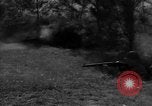
U. S. Army troops training in field conditions.
Camera pans across U.S. soldiers engaged in live fire maneuvers to maintain readiness for ground combat. Scene shifts to weary American soldiers taking a break in World War II. One smokes a cigarette. Another smokes a cigar. Scene shifts again to U.S. soldiers on maneuvers, walking along a wooded trail. Others are seen marching in a desert environment.
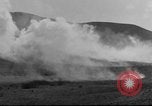
U.S. Army soldiers training in live fire exercises.
Smoke rises from exploding shell. U.S. Army soldiers crawl across a field and into trenches, with live machine gun fire directed low over their heads. They employ their weapons, including flame throwers, and attack several buildings, cutting their way through barbed wire in the process. Smoke fills the area.
CRITICALPAST.COM: About Us | Contact Us | FAQs - How to Order | License Agreement | My Account | My Lightboxes | Shopping Cart | Advanced Search | Featured Collections | Website Terms & Conditions | Privacy Policy ©2026 CriticalPast LLC.
License Agreement |
Terms & Conditions |
Privacy Policy
©2026 CriticalPast LLC.