


 Francais
 Deutsch
 Italiano
Refine Your Search
Nevada United States 1936 stock footage and images
- Showing 23395 to 23400 of 27294 results more
more Hide
Hide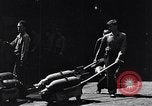
TBM aircraft bomb loading activities on USS Makin Island.
Bomb loading activities on USS Makin Island. Men move bombs on truck. Men bombing up aircraft TBMs. TBMs taxi on flight deck for take off. (World War II period).
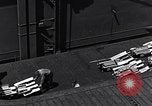
Men bring rockets on flight deck of USS Making Island and FM aircrafts catapulted.
Men bring rockets up on elevator to flight deck and transport rockets on flight deck. Pilots emerge on flight deck to man their planes. FM aircrafts catapulted from flight deck.
Ship is moored using hawsers in island area.
Ships at anchor in island area. LCI underway. Tugs approach and ship is moored using hawsers.
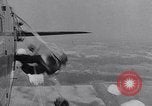
U.S. Army paratrooper training circa 1940
American paratrooper training circa 1940. Paratroopers seen jumping from door of a C-47 (DC-3) transport aircraft in flight. Scene shifts to below, where parachutes of jumping troopers open instantly as they leave door of a C-47 overhead. View inside the cabin of a C-47, as jumpmaster looks out the open door. Paratroopers are seated inside the cabin. View from the doorway, of other C-47s and their paratroopers descending as they jump. View from ground of C-47 overhead with two "sticks" of paratroopers descending from it, and a chute carrying military equipment descending too. Parachutes approaching the ground.
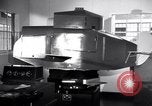
U.S. Military aircraft and training prior to World War II
American military aircraft training circa 1940. A Link Trainer in operation at an aviation training facility. Used for teaching pilots instrument flying, it is seen moving physically in response to the actuation of artificial flight control actions as the trainee responds to instrument indications inside the mockup cockpit. It bears the number 654, on its mock tail. The wings and tail are for decoration only. Scene shifts to formations of various aircraft in flight over a body of water. The aircraft appear to be U.S. Navy types, including: Grumman F4F Wildcat; Douglas TBD Devastator; and Grumman TBF Avenger. Another formation shows many North American training aircraft in flight over the water.
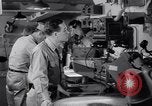
U.S. Navy control room aboard a warship, equipped with radar, circa 1940
U.S. Navy officers and sailors in a control room aboard a warship, circa World War 2 era. The sailors wear headsets and communicate on radios. View of a radar scope equipped with shield to reduce external light. An officer looks into the scope. Scene shifts to view of the radar display on a plan position indicator (PPI) screen. Returns are seen on the scope as the display refreshes with rotations of the antenna.
CRITICALPAST.COM: About Us | Contact Us | FAQs - How to Order | License Agreement | My Account | My Lightboxes | Shopping Cart | Advanced Search | Featured Collections | Website Terms & Conditions | Privacy Policy ©2026 CriticalPast LLC.
License Agreement |
Terms & Conditions |
Privacy Policy
©2026 CriticalPast LLC.