


 Francais
 Deutsch
 Italiano
Refine Your Search
Nevada United States 1936 stock footage and images
- Showing 23569 to 23574 of 27246 results more
more Hide
Hide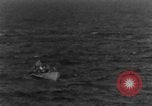
Search for survivors after collapse of U.S. Air Force Radar Station (Texas Tower No. 4,TT-4) in the Atlantic ocean, off Long Island.
Search and rescue efforts after the destruction of Texas Tower Number 4, a U.S. Air Force Air Defense Command Offshore Radar station, in 1961. It was located off Long Island (39degrees48'N 72degrees40'W) and operated by airmen of the 646th Radar Squadron. It had experienced structural difficulties including damage from Hurricane Donna, on September 12, 1960 and was being scheduled for repair or dismantling. The USNS New Bedford and the USS Wasp were in the vicinity, on January 15, 1961, when the storm caused the Tower to collapse and sink.But they were unable to save anyone. In subsequent search and rescue operations, after the storm, The USS Sunbird (ASR-15) submarine rescue ship is seen at the site, along with sailors in a motor whaleboat from the USS Blandy (DD-943). A helicopter from the USS Wasp (CV-18)flies overhead. A scuba diver surfaces near the whaleboat and is taken aboard. A motor whaleboat from the USS Sunbird maneuvers in rough water. Whaleboats seen returning sailors and divers to the Sunbird.
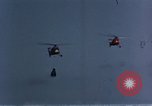
NASA Freedom Seven mission. Alan B Shepard on deck of aircraft carrier USS Lake Champlain.
NASA Freedom Seven, America's first sub-orbital flight. Commander Alan B Shepard in Freedom Seven Capsule. Aircraft carrier USS Lake Champlain underway. Marine helicopter HUS-1 above the capsule as it descends down after the flight. Capsule near surface of water. HUS-1 lifts the capsule. Another HUS-1 in flight. Mercury capsule lowers. Crowd on aircraft carrier. Capsule lowered on special pad on carrier. Landing bag collapsed and tied-down. Landing on aircraft carrier deck. Commander Alan B Shepard assisted by copilot in the helicopter. Commander Alan B Shepard and others on flight deck. Commander Shepard retrieves his helmet from capsule and walks in Admiral's cabin. He gets out of his space suit. Doctor Robert Laning and Jerome Strong beside him. President Kennedy congratulates him on phone. He talks to other officers. He drinks from a glass. He climbs aboard a Grumman S2F/TF aircraft on deck. Personnel on super structure of carrier. The plane takes off.
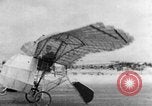
Ornithopter aircraft of various designs demonstrated including Gustav Lilienthal's large ornithopter.
Several attempts to fly ornithopters, intended to fly by flapping of wings. They manage to move their wings but fail in attempts to fly. The largest of them might be Gustav Lilienthal's large ornithopter, which was demonstrated in Germany and had a 3 horse power motor.
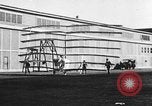
Men attempt to fly a 7-wing airplane contraption.
History of early flight and historic early attempts in aviation. Men run beside a seven-winged airplane as it begins to move in front of a hangar building. The aircraft collapses into pieces on the ground. before attaining speed.
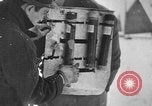
Attempted use of rockets to propel an ice skater
Three rockets are adjusted on a metal holder fastened to the back of an ice skater. View of rocket ignition control fastened on skater's belt. He presses button to close battery circuit and ignite rockets. He leans forward and starts to be propelled by the rockets. But the skater loses his balance in the humorous stunt and falls on the ice, with the rockets still firing.
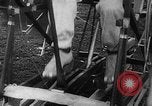
Attempts to fly a human-powered airplane or vintage flying machine
Early attempts of aviation. Views of a man using bicycle-type pedals to power an airplane. View of the machine atop a launching ramp. Two men assist as the operator pedals and the machine moves down the ramp. The would-be airplane simply falls off the end of the ramp onto the ground. The attempt is repeated with the same results.
CRITICALPAST.COM: About Us | Contact Us | FAQs - How to Order | License Agreement | My Account | My Lightboxes | Shopping Cart | Advanced Search | Featured Collections | Website Terms & Conditions | Privacy Policy ©2026 CriticalPast LLC.
License Agreement |
Terms & Conditions |
Privacy Policy
©2026 CriticalPast LLC.