


 Francais
 Deutsch
 Italiano
Refine Your Search
Nevada United States 1936 stock footage and images
- Showing 23881 to 23886 of 27246 results more
more Hide
Hide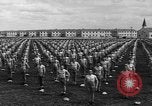
U.S. Army Air Forces Aviation Cadets in basic training perform calisthenics
In opening scene, hundreds of Army Aviation Cadet candidates are seen in formation with hands on their hips. They perform calisthenic exercises, principally Jumping Jacks, which the camera shows from several viewpoints. This activity dominates the remainder of the film. (World War II; WW II; World War 2; World War Two)
Part of a newsreel restrospective about U.S. President Franklin D. Roosevelt, made after his death in 1945
Film opens showing forward port section of the British Battleship HMS Prince of Wales in Placentia Bay, Argentia, Newfoundland. Next, Winston Churchill is seen greeting President Franklin D. Roosevelt as he arrives to meet with him during their Atlantic Conference in 1941. The President is assisted by his son, Army Captain James Roosevelt. The entire ship's company is seen assembled on deck for a church service. Closeup of President Roosevelt, Prime Minister Churchill and their principal advisors. all singing "Onward Christian Soldiers" during the service. Scene shifts to December 7, 1941, showing the American battleship USS Arizona and other battleships being bombed by Japanese aircraft. View shifts to the White House in Washington, DC. on July 19, 1940, President Roosevelt is broadcasting his speech to the Democratic National Convention, accepting nomination for an unprescedented 4th term as President. Views of ordinary Americans in various settings. Legislators congratulating the new Vice President, Harry S. Truman, after inauguration in January 1941. Truman seated and surrounded by staff and well-wishers. View of Truman, his wife, Bess and daughter Margaret, walking across the lawn at their home in Independence, Missouri. View of the three of them, inside their home, opening and sharing congratulatory messages received by the new Vice President. Immediately following FDR's death, now, President Truman is seen assuring the public that he will continue the course set by his predecessor. Glimpses of President Roosevelt seated in front of the White House and at his desk. In Yalta for the Big Three Conference, Roosevelt rides in a jeep as Prime Minister Churchill walks beside. Closeup of Roosevelt and Churchill. Participants gathering for the Yalta conference. Closeup of Roosevelt and Stalin. Churchill arriving and taking his seat. Closeup of the Big Three, Winston Churchill, Franklin D. Roosevelt, and Joseph Stalin. (World War II period).
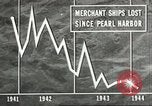
U.S. Coast Guard and maritime authorities assure protection and safety of U.S. ports during World War II
A chart shows the losses of American merchant ships to German submarines diminishing over the course of World War 2. Women walking into the Merchant Marine Council headquarters in Washington DC. Council member officers meeting in their board room. Glimpse of merchant vessels and tugboats. Sign identifies office of the Captain of the Port. Inside, two men discuss movement and anchorage of ships. View of anchor being dropped from a large ship. A small Coast Guard patrol boat moves among anchored ships, checking for possible threats. Closeup of officers aboard the patrol boat with American flag behind them. Sign at office of Port Security Officer. Inside, men update a chart showing ships in port and locations. Coastguardsman patrols cargo area for safety and threats. Cargoes being moved on rail at the port. Explosive cargo and artillery shells are seen in containers. Officer oversees loading of munitions on a ship. Coast Guardsman walking across stacks of military gas cans (Jerrycans) on a barge. Officer and guardsman examine one that appears to be leaking, and remove it.
U.S. Coast Guard Guard coordinates with other agencies in protecting against and fighting fires at U.S. ports in World War II
A fire breaks out at a U.S. Port, during World War 2. Fire boats respond and spray water on the blaze. Coast Guard officers are seen at the site. Scene shifts to a ship listing in a harbor as fire boats spray torrents of water on it during a fire. Fire boats sending out huge sprays of water as a greeting and salute at a harbor. A jet-propelled spraying device demonstrated in the water. Coastguardsmen maneuvering the spray and its line in the water, from a small boat. Closeup of the device in the water. The boat crew demonstrate a fogging spray device for use against oil fire on water. View of oil on water covered by the fog. Men ride a jeep pulling a small fire-fighting water pump on a pier at a port. They stop and demonstrate how the pump draws water from the harbor to produce a powerful spray for fire-fighting
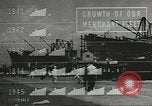
Coast Guard officers of the Marine Inspection Division overseeing ship construction and marine safety equipment in World War II
A diagram depicts growth of merchant fleet with time. Coast Guard officers of the Marine Inspection Division review plans and construction of ships to assure that they adhere to established safety standards. Views of several ships in various stages of construction during World War 2. A new ship being launched and going down the ways. Coast Guard officers reviewing initial plans for a ship. View inside a laboratory at the U.S. Bureau of Standards. A civilian measures a test specimen using a micrometer as U.S. Coast Guard Lieutenant from the Marine Inspection Division observes. Coast Guard officers examine defective parts from ships. Coast Guard officer inspecting a large steel part during manufacture. A vibrator machine testing the performance of ship parts under simulated sea conditions. Life boat davits being tested during manufacture. Coast Guardsmen testing materials for use in life jackets and testing the finished life jackets. A Coast Guardsman giving life jackets a final inspection. He rejects one.
Licensing of Merchant Marine seamen and officers by the U.S. Coast Guard
Chart shows number of Merchant Marine seamen increasing as World War 2 progresses. Agents of the Coast Guard, the U.S. Maritime Commission, and the Public Health Service collaborate to assure fitness of Merchant Marine seamen. Some are seen being given physical exams by a physician. A prospective seaman demonstrates his skill with ropes. Coastguardsman observes skills of a candidate seaman at the wheel of a ship. A candidate receiving his Merchant Seaman's Certificate from the Coast Guard. Officers enter the Marine License Examination Room. Inside, men are seen taking exams to qualify for licenses as Masters, Mates, Engineers, and Pilots. Merchant Marine seamen being sworn in. Licensed seamen engineers being finger printed. Coast Guard officers supervise the signing of Shipping Articles (contracts between masters and crewmen). A line of seamen waiting to sign on to a ship. Coast Guard offices on shore where seamen may sign on to a ship. Seamen receiving pay under supervision of the Coast Guard.
CRITICALPAST.COM: About Us | Contact Us | FAQs - How to Order | License Agreement | My Account | My Lightboxes | Shopping Cart | Advanced Search | Featured Collections | Website Terms & Conditions | Privacy Policy ©2026 CriticalPast LLC.
License Agreement |
Terms & Conditions |
Privacy Policy
©2026 CriticalPast LLC.