


 Francais
 Deutsch
 Italiano
Refine Your Search
Nevada United States 1936 stock footage and images
- Showing 24955 to 24960 of 27247 results more
more Hide
Hide
U.S. soldiers work at the Vietnamese Refugee Processing Center at Eglin Air Force Base
U.S. military personnel at Eglin Air Force base, near the end of the Vietnam War (after the fall of Saigon). A jeep moves along a road of the Vietnamese Refugee Processing Center encampment. Tents in the background. Cooks prepare food in a tent. A soldier seated outside a Vietnamese refugee tent and barracks area. 'Post Office So Buu Chinh' written on a board. A soldier hammers the board in position. A woman takes photographs of some men and women. Another sign board reads: 'Departure Center Noi Khoi Hanh'.
The first takeoff and the first landing of airplanes on the U.S. Navy's first Aircraft Carrier, USS Langley (CV-1)
The first U.S. Aircraft Carrier, USS Langley (CV-1) anchored on the York River, in Virginia, October 17, 1922. A Vought VE-7airplane, piloted by Lieutenant Virgil C. Griffin, accelerates along its flight deck and successfully completes the first airplane takeoff from the deck of the Langley. The VE-7 seen flying over the ship. On October 26, 1922, Lieutenant Commander Godfrey de Courcelles Chevalier, in an Aeromarine 39-B airplane, makes the first successful landing on the USS Langley, while she is underway. Eugene Ely was the first when he took off from the USS Birmingham, Hampton Roads, Virginia, November 14, 1910
Views of Alaska from a moving railroad train. View on top of a deep glacier. Sunset and full moon over lake
Views from moving train on Alaska railroad. Ice floating in water with snow covered hills in the background. View from the top of a glacier. Sun sets at the horizon with bay in the foreground. Full moon in sky over lake. Trees silhouetted.
Scenes from movie about tests of incendiary bombing at the Eglin Field before use against Japanese cities in World War II.
Tests of incendiary bombing, before employing it against Japanese cities in World War 2. Planes in flight. Exterior of a building. A sign reads: 'Headquarters Army Air Forces Proving Ground Command'. Sign reads: 'Proof Department building no 8'. Hands open an envelope. U.S. Actor Lee J. Cobb, playing an Army Air Forces Captain, reads the document. The document contains information derived from tests of incendiary bombing, conducted at Eglin Field, Florida. He goes to chart and describes those tests. Scene shifts to the field where a set of Japanese-style houses has been erected. Typical fire-fighting means are shown: water tanks and sand buckets. Two types of incendiary bombs are shown. A bomber drops incendiary bombs on the Japanese-style houses. Crews on the ground attempt to extinguish the fires. But fire consumes the test village.
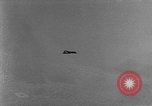
U.S. Air Force tests effectiveness of incendiary bombs on a test village built at Eglin Field, Florida, in World War II
Tests before incendiary bombing of Japanese cities during World War 2. The tests being conducted at the Eglin air field in Florida. A plane in flight. The plane drops numerous small indendiary bombs on the huts in the test area. High altitude view of the bombing. Smoke arises due to the bombardment. A conflagration ensues. Air Force personnel put out the fires with hoses.
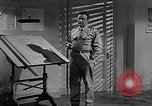
Effects of conventional bombs compared to incendiary bombs in tests against wooden structures, at Eglin Field in World War II
Tests to compare effects of conventional bombs to those of incendiaries,on wooden structures. Test conducted at Eglin Field, Florida, during World War 2. Actor Lee J. Cobb, portrays an Air Force Captain, seated at Project Officer's desk. He shows photographs of a wooden test house constructed similar to houses in Japan. View of wooden structure being ignited from within. The resultant fire is put out promptly. B-17 airplane in flight over the test area, drops conventional bombs, which destroy some of the test village houses. A second bombing using incendiary bombs that break apart and ignite many fires, produces greater destruction across the test village.
CRITICALPAST.COM: About Us | Contact Us | FAQs - How to Order | License Agreement | My Account | My Lightboxes | Shopping Cart | Advanced Search | Featured Collections | Website Terms & Conditions | Privacy Policy ©2026 CriticalPast LLC.
License Agreement |
Terms & Conditions |
Privacy Policy
©2026 CriticalPast LLC.