


 Francais
 Deutsch
 Italiano
Refine Your Search
Nevada United States 1936 stock footage and images
- Showing 26539 to 26544 of 27247 results more
more Hide
Hide
British Vickers Wellington bomber commander radios his crew members while in flight during WWII.
Period dramatization: Vickers Wellington bomber in flight over RAF Mildenhall air field during World War 2. Vickers Wellington OJ-F navigator removing maps from his pack. Pilot and copilot seen through bomber cockpit window at night. The commanding officer radios his crew. View of nose gunner at night as he replies, "I'm OK skipper." Another crew member puts on an oxygen mask and replies. Crew members each reply, including radio operator at his controls, who says, "well, it seems to all be here, sir." Commanding pilot communicates with the copilot inside cockpit, saying, "hello second pilot, ready to do some oil pumping?" The copilot replies, "that's all a second pilot's for!" “Freihausen, here we come” says the commander (Note: Freihausen is a fictitious location). Vickers Wellington OJ-F , part of No. 149 Squadron RAF, in flight at night.
RAF Vickers Wellington bomber drop bombs over Germany at night (WW2) (dramatization)
Period dramatization: A Royal Air Force (RAF) navigator of Vickers Wellington bomber looks at his maps during World War II. Commanding pilot of Vickers Wellington bomber radios navigator, asking, "where are we now" as they approach Germany at night during WW2. Navigator replies, "I can't tell where we are." Crew member gives thumbs up signal after command. Plane descending in altitude. Low angle shot of bomber commander pilot at yoke steering as he radios to crew, "hello everybody, let me know if you see anything." Bomber spinning propeller while in flight at night. Crew member radios, "hello skip, search lights and flak at starboard quarter." Bomber commander replies, "the natives appear hostile." Bomber navigator using calipers on maps at night speaks into mask, "hello skipper, the target's about 50 miles up river." Bomber pilot replying, "OK." Vickers Wellington bomber banking turn at night. Bomber navigator climbing to viewing window with map and radios, "I can see the canal as plain as my face." Pilot radios back, "OK, I'll turn around and check up." Bomber pilot radios, "any signs of life?" German soldiers at night running to anti-aircraft artillery and yelling, "fire" as guns fire. Flares at night as bomber crew radio to each other. Vickers Wellington bomber nose gunner moves gun at night and strafes targets. German artillery fires more as the Vickers Wellington bomber dives towards target. Bomber pilot face lit by night flares. Crew hand actuating switches on control panel to open bomb bay doors. Crew member heard saying, "bomb bay doors open." Crew member looking through Vickers Wellington bomb sight at night. Close up, hand pressing button to release bombs on Vickers Wellington bomber. Dramatization special effects using miniature buildings of bombs dropping on railway and oil storage facility. Side view outside Vickers Wellington bomber at night as nose gun fires. Bomber crewman radios, saying "I got a bulls eye with the last one." Pilot radios back, "good man."
German Messerschmitt Bf 110 bombers over England and in battle with RAF Spitfires (WW2)
German soldier of ground crew sitting on large bomb being towed toward a parked German bomber aircraft during World War II. German ground crew moves a bomb in front of a Junkers Ju 88. German forces load a large bomb onto the wing of a Junkers Ju 88. German Junkers Ju 88 bomber takes off from airfield. German pilot in cockpit of Messerschmitt Bf 110 with ground crew alongside. Messerschmitt Bf 110 in flight. Squadron of German Messerschmitt Bf 110 bombers in flight. View through canopy of bomber at English Channel water. German pilots in bomber while in flight. View of cliffs of Dover, England as seen from German bomber. Aerial view of England being bombed by Luftwaffe bombers as seen from bomber. A German Messerschmitt Bf 110 bomber in high banking turn. Point of view from German planes as British Royal Air Force RAF spitfires are fired upon. German gun camera footage of dogfights and aerial combat as German aircraft battle against British Royal Air Force fighter aircraft over British skies. German Messerschmitt Bf 110 bombers flying over English city.
German V-1 rocket wreckage examined in England (WW2)
World War 2 German V-1 rocket in flight at night. Searchlights find a German V-1 rocket’s trailing exhaust tail over the English coast at night. The jet-propelled V-1 rocket in flight at daytime. V-1 rocket explodes after being shot down. Men examine wreckage of shot-down V-1 rocket. Remains of a V-1 rocket body, with a label reading “R. Ventil”
French 501st Combat Tank Regiment soldier cleaning M4 tank in North Dalton, England (WW2)
The Regimental Insignia of the 1st Tank Company Regiment of Free France and the words “1 ere Compagnie” as part of a banner. The previous World War II campaigns of the First Tank Regiment- Narvik (Narvik, Norway), Bjervik (Bjervik, Norway), Ankenes (Ankenes, Norway), Lybie (Libya), Tripolitaine (Tripolitania, in present-day northwestern Libya), Tunisie (Tunisia)- are written on the banner. Reverse of the banner shows the Regimental Insignia of the 501st Combat Tank Regiment with words written “501RCC EN TUER” (“501 RCC in kill” in English). French 1st Company Tank soldiers assembled near the village of North Dalton, Yorkshire, England. French soldiers carrying oil barrels between tanks. A jeep drives past tanks. A French soldier cleans a tank bearing the insignia of the 2nd French Armored Division and the name "Narvik" on side of tank. French soldier wipes the side of a tank bearing the name “NARVIK”. French soldiers cleaning the “NARVIK” French M4 Sherman tank.
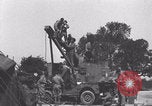
French 501st Combat Tank Regiment soldiers repair a Jeep in England (WW2)
The French 501st Combat Tank Regiment (501e Régiment de chars de combat 501e RCC in French) in North Dalton, England during World War II. Soldiers lift the front end of a Jeep using an M31 (T2) Tank Recovery Vehicle. French soldiers inspect the undercarriage of the Jeep. French mechanics repairing Jeep. Mechanic turns a socket wrench. Jeep reverses and drives away after repair is done. A smiling French soldier.
CRITICALPAST.COM: About Us | Contact Us | FAQs - How to Order | License Agreement | My Account | My Lightboxes | Shopping Cart | Advanced Search | Featured Collections | Website Terms & Conditions | Privacy Policy ©2026 CriticalPast LLC.
License Agreement |
Terms & Conditions |
Privacy Policy
©2026 CriticalPast LLC.