


 Francais
 Deutsch
 Italiano
Refine Your Search
Nevada United States 1936 stock footage and images
- Showing 26569 to 26574 of 27247 results more
more Hide
Hide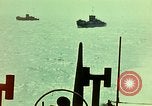
American landing craft in England, preparing for Normandy invasion, during World War II
Large Landing Craft Infantry, LCI(L) underway during training exercises in England, preparing for the Normandy invasion of World War 2. Glimpse from stern of craft, with American flag flying. LCI(L)s behind and British coastline in background. Several LCI(L)s moving in near formation. Gunners aboard camera craft ready their Oerlikon 20mm antiaircraft cannon. They open a locker and remove canisters of ammunition. Cluster of the landing craft moored in a bay. Camera craft moves past Landing Craft tank 644, run aground on a sand bar.
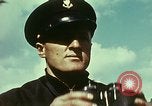
American landing craft gathered in England, preparing for Normandy invasion, during World War II
A Coast Guard crew member aboard a Large Landing Craft Infantry, LCI(L) moored in a bay in England, scans the skies with binoculars. LCI(L) 487 is one of a number of U.S. landing craft gathered in the bay. Two of the craft behind, display the American Union jack of white stars on a blue field. A barrage balloon is seen aloft. A town is nestled on a green hill in the background. Closeup of barrage balloon. View of the bay, in late afternoon, shadowed by the hill. Three barrage balloons are seen aloft. Crewmen on deck are sorting out and coiling lines, while another sharpens large compound shears with a file.
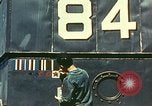
U.S. Landing Craft, in England, preparing for the Normandy invasion during World War II
U.S.Coast Guard crewmen painting battle star on superstructure of Landing Craft Infantry (Large), LCI(L) number 84, during World War 2, in France. (This craft was already a veteran of North African and Italian campaigns, and is preparing to take part in the Normandy invasion.) Another Guardsman questions whether it will be as good as other stars already painted. Others keep pestering the painter about this and he reassures them all. (View of perfect finished red star.) Landing craft Gunners display the landing craft's Oerlikon 20-millimeter Mk 4 automatic antiaircraft cannon. Views of LCI(L)s numbered 85, 89, 92,90, and 496, all tied together at a port in England. Sailors on LCI(L) 85, at their Oerlikon 20-millimeter cannon. U.S. Navy Union Jack displayed nearby. U.S. Coast Guard officers viewing sky with binoculars.
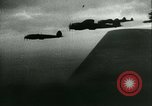
German Luftwaffe bombers drop bombs over England during the Blitz of World War II.
German Luftwaffe aircraft bomb England in the Battle of Britain during World War II. German Luftwaffe He-111 bombers in flight. Pilots and gunners in the aircraft. Interior views of cockpit and crew in German He-111 aircraft. Aerial views of the formation of bomber aircraft in flight through clouds and approaching the British coast for a daylight raid. A co-pilot charts the route using a compass. Pilot is seen putting on an oxygen mask with assistance from another crew member as the bombers climb to high altitude. Gunners in their positions. Views of target zone approaching as seen from point of view of German bomber crew members in daytime. Pilot, navigator, gunner prepare for the attack. Aerial view of the target area. The Germans experience FLAK from British antiaircraft guns. Flak bursts near aircraft as seen from inside the German aircraft. "Bombs away" aerial views from the side, and from inside the German aircraft. Bombs descend on the targets. Scene shifts to bombardment at night. The German crew in the aircraft. Using search lights and antiaircraft guns, British attempt to hit the bombers. Multiple views of crew inside He-111 bombers from various angles, including behind nose gunner and bombardier. Flashes and explosions seen on the ground as bombs hit targets in London and elsewhere in Britain during blitzkrieg, or blitz attack.
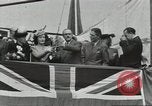
Various ship launchings on firth of Clyde in Scotland.
Close-up views of several different ships launching on firth of Clyde in Scotland. Closeup view of dirt or coal smeared faces of boys wearing hats and watching expectantly and with excitement as a ship readies for launch. British flag decorated on the deck of a ship. Dignitaries on grandstand including a woman (the sponsor) who smashes a bottle of champagne against the ship, christening it as it launches. Close views of the ship sliding down skids stern-first into the water. Change to view of a ship named "Rinovia" being launched from dry dock to water by tipping it to the side off dry dock. It slides off skids into the water and quickly rights itself. View of a medical ship named "Herdubreid " being launched. White cross symbol seen on the bow and the flag of Iceland waving on the bow, with sailors gathered around it. Clip includes several close up views of ship hulls and skids, anchors, propellers and areas of the lower stern of ships being launched.
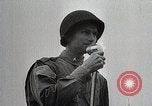
U.S. Paratroopers of 82nd and 101st Airborne divisions preparing to depart England the day before D-day in World War II
Film begins showing Brigadier General James M. Gavin, Commander of the Force A (parachute) contingent of the 82nd Airborne Division, standing on the hood of a jeep, at an airfield, to brief his paratroopers as they prepare for the D-Day invasion, during World War 2. A C-47 transport plane taxis behind the assembled group of troopers. Barbed wire is strung in the foreground. Paratroopers are issued French currency before departure. Some gamble with it using dice. Troops are seen playing volleyball on a field surrounded by trees. On an airfield, one trooper hits ground balls with a soft ball and several others field it. Some other troopers sit in grass next to the ramp, assembling wooden containers for airdrop. Two Army Air Forces mechanics fasten a tow bar on the nose wheel of a British-built Horsa Mk.II glider. They then tow it with a tug. View from above of Horsa gliders and C-47 tow airplanes, all in D-Day paint stripes, lined up on an airfield ramp. Paratrooper tent camp is viewed from above. Then, General Dwight D. Eisenhower and other senior officers are seen visiting paratroopers of the 101st Airborne Division, at the camp, on June 5, 1944, as they prepare to board their aircraft. Famous closeup of General Eisenhower speaking to a tall paratrooper who has his face camouflaged with grease paint.View looking down, as Eisenhower circulates among the troopers. Closeup of him conversing with another one directly.
CRITICALPAST.COM: About Us | Contact Us | FAQs - How to Order | License Agreement | My Account | My Lightboxes | Shopping Cart | Advanced Search | Featured Collections | Website Terms & Conditions | Privacy Policy ©2026 CriticalPast LLC.
License Agreement |
Terms & Conditions |
Privacy Policy
©2026 CriticalPast LLC.