


 Francais
 Deutsch
 Italiano
Refine Your Search
Nevada United States 1936 stock footage and images
- Showing 2767 to 2772 of 27246 results more
more Hide
Hide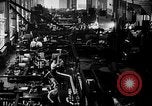
Shells produced at an ordnance factory in United States, World War 2.
War materiel production: Manufacturing of ordnance in United States early in World War 2. Workers mine shells as they work on a machine at an ordnance factory. War production worker removes gun shells from a machine. Shells lined up on a factory conveyor belt and move forward. Man inspects the shells as he places them on an instrument and a meter shows a reading. A man attaches nose of the shells after they have been armed. Shells piled up in trolleys as men push them.
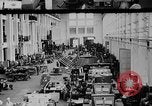
Manufacture and assembly of M2A2 tanks at an ordnance factory in United States early in World War 2
Manufacturing of ordnance in United States early in World War 2 timeframe. M2A2 Twin Turret tanks (nicknamed "Mae West tanks) lined up at production floor in an ordnance factory. Tanks hoisted in a sling as they are lowered into the floor of the plant. Newly built M2A2 light tanks moving through the war materiel production factory.
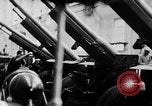
Howitzers moved to storage space at an ordnance factory in United States.
Manufacturing of military ordnance in United States early in World War 2. Howitzers lined up at storage space in an ordnance factory. Howitzer hoisted in a sling and lowered into the storage space in the plant. War production worker signals while lowering of Howitzers.
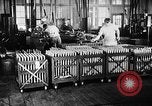
Manufacturing of gun barrels at an ordnance factory in United States early in World War 2
War production in the U.S. early in World War 2. Manufacturing of ordnance war materiel in United States. Metal gun barrels piled up in trolleys on factory floor of an ordnance factory. In background, machinists are seen turning gun barrels on a lathe. A worker removes a barrel from those on a trolley, inspects it and places it back in the trolley. Men push trolley carts loaded with gun barrels.
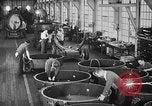
Search lights built and tested at an ordnance factory in United States early during World War 2.
Manufacturing of searchlights in United States early in World War 2. Men work on parts of a searchlight at a war production ordnance factory. Components of search light assembled by workers. Searchlight tested. A man sights through a pair of binoculars as searchlight glows in the background.
Relocation of Japanese Americans in United States during World War II.
Shows Milton S Eisenhower speaking about the threat posed by Nisei or Japanese American people in United States during World War II. Japanese residents along the west coast have direct access to American oil fields and harbors. Views of harbors with boats and ships. This heightens the need to migrate the Nisei to interiors of America. Commander General of Western Command at his office plans the migration (internment) of Nisei people. Signs and notice banners with headlines "Civilian Exclusion Order number 6" and "Instructions to all persons of Japanese Ancestry." The signs inform the people of the compulsory mass migration. Nisei people fill up documents and submit it to war relocation authority. People undergo medical examination. They sell their property through 'Evacuee property department'. Japanese load their belongings onto trucks and buses. Deserted shops and homes of Japanese Americans. Rows of temporary houses at Santa Anita race track in Arcadia, California. People of Japanese ancestry eat in a large dining hall and attend church service. Men prepare houses for the Nisei. Japanese Americans boarding railroad trains at train stations, and boarding buses to be moved to relocation centers (internment centers).
CRITICALPAST.COM: About Us | Contact Us | FAQs - How to Order | License Agreement | My Account | My Lightboxes | Shopping Cart | Advanced Search | Featured Collections | Website Terms & Conditions | Privacy Policy ©2026 CriticalPast LLC.
License Agreement |
Terms & Conditions |
Privacy Policy
©2026 CriticalPast LLC.