


 Francais
 Deutsch
 Italiano

Refine Your Search
Nevada United States 1936 stock footage and images
- Showing 31081 to 31086 of 35683 results more
 Hide
Color Sound
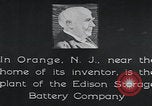
Workers manufacture Edison nickel-iron batteries at the Edison Storage Battery Company Building in West Orange, New Jersey
Manufacturing Edison batteries (also known as nickel-iron battery or NiFe battery) in West Orange, New Jersey, United States. View of the Edison Storage Battery Company Building (177 Main Street, West Orange, New Jersey, USA), the manufacturing facility for Edison batteries. Smoke emanates from vats. Motorized ceiling rack carries cylinders receiving nickel flake via electro plating. Aerial view of battery tube steel manufacture. Factory workers working in assembly lines to assemble batteries. The workers pack batteries for shipment. The four main parts of an Edison battery- negative plates (steel), container (steel), electrolyte (alkaline), and positive plates (steel)- on display. The steel positive plate and perforated steel tube which hold Nickel Hydrate on display. A finger touches the carbon steel ribbon that runs through a perforating machine to create battery tubes. A pen points to the perforation of the carbon steel ribbon. Machines nickel plate steel ribbons. Man places reels of steel ribbons in a tub. Men pushes the tubs into an automatic machine. A machine winding steel ribbons into tubes. Closer view of the steel tube showing its spiral pattern. Hand holding a steel tube. The manufacturing of nickel flake by an electro plating process. Metal sheet cylinders lifted out from vats of nickel. The cylindrical rolls of metal sheet are lowered to alternating vats of copper and nickel. Man unfolds a nickel-copper sheet. A machine cuts the nickel-copper sheet into small pieces. The copper in the nickel-copper pieces is chemically dissolved in a electro plating vat. The positive tubes are loaded with alternate layers of nickel hydrate and nickel flake. Man fits the tubes into a metal mold. Nickel hydrate and nickel flakes are fed into a machine. The man takes off the metal mold, taking the tubes. Cross section of a steel tube. Steel rings on a machine. Man counts the 8 steel rings of the tube. A woman mounts the tubes and presses them into a permanent position in a nickel-plated steel grid. A finished positive plate. A man mounts positive plates on the pole piece. He screws them into place. View of the negative plate, showing its perforated steel pockets holding iron oxide. Machines fold the perforated steel ribbons into Negative Pockets. A worker inserts Negative Pockets into a metal mold. A machine fills the Negative Pockets with iron oxide. Worker mounts the Negative Pockets in a nickel-plated steel grid. A machine secures the Negative Plates by a pressure of 120 tons. The Negative Plates are equidistantly spaced on the negative pole piece. Worker assembles the positive and negative plate groups together. A woman inserts additional insulation between each plate. The container is made of a nickel-plated steel sheet folded and welded to form one piece. Workers carefully inspect and insulate the assembled elements before the elements are permanently sealed in the container. Workers wearing goggles fill the finished battery cells with alkaline solution. Man closes the Filler Cap of the battery cell. Two terminals are seen on top of battery cell. Quality control inspectors check the finished products. A Weston DC voltmeter. A man dips battery cells into an insulating preservative compound. He places the battery cells in trays. Another man connects the cells in trays.
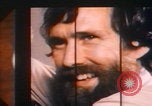
View of Thomas Alva Edison’s West Orange factory; various inventions by Edison
An Edison phonograph playing a record. American inventor Thomas Alva Edison and his wife Mina Miller Edison at the porch of a house. Edison taking his hat off. Edison punching his timecard in timeclock as he arrives in his office. View of Thomas Edison’s West Orange Laboratory (211 Main St, West Orange, NJ 07052, United States) in New Jersey. Thomas Edison shakes hands with an employee inside his factory. Edison watches his employees working. A hole being drilled. A lathe machine scrapes a block of metal. Wheels of belt driven machines moving inside a factory. Cylinder phonograph playing ‘Mary had a Little Lamb’. Illustration depicting Thomas Edison with gramophone by Poyet. A wax cylinder phonograph playing music. Still image of a male opera singer and an orchestra perform in a recording studio. A glowing lightbulb.
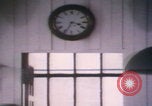
Early filmmaking in Thomas Alva Edison’s Black Maria studio; Edison showing lightbulbs
A wall clock hanging on top of a window. Camera shows American inventor Thomas Alva Edison’s laboratory. Glass laboratory bottles and tubes on display. Footage circa 1920 of Thomas Alva Edison showing early lightbulbs to colleagues. A carbon filament light bulb lights up. Camera moves closer to show the glowing carbon filament inside the lamp. Early filmmaking in the United States. A man cranks a Kinetograph, the first movie camera invented by Edison. A belly dancer performs in one of Edison’s early films. A film rolling. A boxing match filmed by Thomas Edison. A cameraman records the boxing match inside Edison’s Black Maria film studio in West Orange, New Jersey. Exteriors of the Black Maria studio showing the turntable and wheels underneath. 19th century women wearing summer dresses strolling in film captured by Edison. Cameramen sent by Edison films people on the beach and in amusement park rides. Edison having lunch with other inventors Henry Ford Sr., Harvey Firestone Sr., and Alexander Graham Bell. View of Edison’s study. A light bulb is turned off.
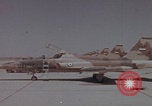
Iranian Air Force jets and pilot training.
Aircraft from the Imperial Iranian Air Force fleet includes United States McDonnell Douglas F-4 Phantom II and Northrop F-5 fighter jets. A row of Northrop F-5 fighter jets at an airfield in Iran. Sign in English and Persian reads “31st T.F. (Tactical Fighter) Squadron”. Imperial Iranian Air Force pilots attend class. A map of the Middle East showing flight paths, radii, flags of the various Air Forces in the region. Flags and roundels of the Soviet Union, Iran, Iraq, Lebanon. A bomb is installed into a jet fighter-bomber. A fuze is fitted into the bomb nose. A man wearing a jacket with an “F-5 Iran” patch. Iranian military pilots run out of a building and board trucks.

General Robert McClure talks to Iranian General Khazaee at the Military Assistance Advisory Group, Iran
Imperial Iranian Army Brigadier General Mohammad Ali Khazaee meets Major General Robert A. McClure, Chief of the Military Assistance Advisory Group (MAAG), Iran. Major General McClure speaks with the Iranian senior military officer. Flags of the United States and Iran hangs behind General McClure. Brigadier General Khazaee listens to General McClure. The Iranian general puts on his glasses and reads document. Major General McClure points to a wall map of Iran, the Persian Gulf and the Middle East.
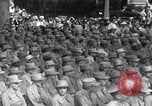
Director Oveta Culp Hobby speaks to first batch of graduating WAAC officers in Fort Des Moines (WW2)
United States Women’s Army Auxiliary Corps Director Oveta Culp Hobby speaking to first WAAC officers to graduate from Officers Candidate School in Fort Des Moines, Iowa during World War II. The Women’s Army Auxiliary Corps salute before taking their seats. Audience clapping before Director Hobby congratulates the graduates of the six-week WAAC program. “In the days and years to come, this saga will become of increasing strength to the nation. Shortly you will go on active duty, your graduation today is, in a real sense, a commencement of service” Hobby continued. “I can assure you, that you will be serving the purpose you had in mind when you volunteered as officer candidates for the Women’s Army Auxiliary Corps. I can assure you that it is a path of duty and devotion. You will serve as incorruptible witnesses for freedom. You have formed the soul of this corp. We will flourish and inspire and guide those who will follow you” Hobby concludes her speech before introducing Representative Congresswoman Edith Nourse Rogers to the graduates.
CRITICALPAST.COM: About Us | Contact Us | FAQs - How to Order | License Agreement | My Account | My Lightboxes | Shopping Cart | Advanced Search | Featured Collections | Website Terms & Conditions | Privacy Policy ©2026 CriticalPast LLC.
License Agreement |
Terms & Conditions |
Privacy Policy
©2026 CriticalPast LLC.