


 Francais
 Deutsch
 Italiano

Refine Your Search
Nevada United States 1936 stock footage and images
- Showing 31519 to 31524 of 35684 results more
 Hide
Color Sound
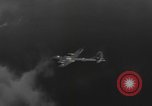
Recording, analyzing and circulation of weather information by the Hurricane Warning Center in Miami, Florida.
A documentary on Weather Bureau's Hurricane Warning Center in Miami, Florida. An aircraft in flight overhead. A routine report is sent by the crew of the aircraft to the hurricane center. The pilot, he co-pilot, the navigator and other members of the crew seated inside the aircraft. Weather conditions are observed and recorded. A radar operator working and looking for any unusual conditions. The information is transmitted to the center. Women working and typing messages at the center. A map locates Miami and information about weather conditions is circulated to other areas from Miami. A ship underway at sea. Men locating the position of a hurricane on a map. They discuss amongst themselves. The crew of the aircraft being instructed by an officer. An airplane parked at an air base. It takes off. Animation shows the position of the hurricane and the air movement. The information is circulated to people. A man reading news about the hurricane in a newspaper. A man and a woman seated at a beach. A sailing boat underway in the foreground.
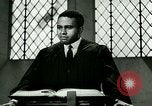
African American soldiers serving in various combat positions during World War II
At the beginning an African American pastor is seen speaking to his congregation during World War II. Scene shifts to Morton Field,where the "Tuskegee Airmen" were trained. They are seen receiving their pilot's wings in a graduation ceremony. A band plays. North American T-6 training aircraft are parked in the background. Next, the pilots in flight gear, and wearing seat-pack parachutes, walk toward Curtiss P-40 fighter airplanes parked on a flight line. A pair of P-40s take off. Two groups of four planes, each, is seen in formation high above. Closeup of a Tuskagee Airman pilot at the controls of his airplane, in flight. Several views of their P-40 aircraft in various formations flying above clouds. Scene shifts to a snowy Northern location where Army troops board jeeps and trucks and maneuver through the snow. A large battery of M1918 155mm howitzers is lined up in the snow. The soldiers fire them simultaneously on an officer's command. Scene shifts to a desert setting, where African American soldiers are seen closeup, in turrets of tanks. Others who are gathered on a field run to their respective tanks, that begin moving out. Views of M3 Stuart Light Tanks in training maneuvers over terrain where explosives are being detonated. African American Army engineers building a pontoon bridge across a river. Army quartermaster vehicles moving troops and supplies along dirt roads. A soldier silhouetted against light sky signals to others who are installing telephone and telegraph lines on poles. Mounted cavalrymen on maneuvers. Half track M3 Gun Motor Carriage tank destroyers operating on a snowy field. Closeup of one with an African American Officer manning a heavy machine gun. Numerous M3 tank destroyers firing their guns as they move across a training field. Anti-aircraft gun crews racing to their respective gun emplacements, in the snow, as a large barrage balloon is sent aloft behind them. An African American crew manning a 37mm anti-aircraft gun. The gun sight is raised in front of the primary gunner. The position is sandbagged. Infantrymen, crawling through sandy terrain in a training course as live machine gun fire is directed above them. Glimpse of troops running through water and starting to scale a bluff. (World War II; WW II; World War 2; World War Two)

A map of Europe shows the location of Nazi concentration camps during World War II.
Film about the conditions at German concentration camps in Europe during World War II. Affidavits by George C. Stevens and E.R. Kellog that attest to authenticity of scenes in the film. A map of Europe depicts the location of Nazi concentration camps.

Protecting harbors against sneak attack craft.
Animation depicts various means of detecting sneak attack craft and protecting harbors. It illustrates ways of detecting a sneak torpedo through means like multi terrain loop and short pulse herald. A man in a control room speaks on a phone. A human torpedo underwater. A torpedo dives under the water. Detection device used to detect the presence of torpedoes in water. A technician works on the control panel of the detection device. A graph being printed. Short pulse herald technique being used to to detect torpedoes underwater. A radar detects the presence of torpedoes in sea. A torpedo underway on the surface and underwater. Effectiveness of torpedo nets. (World War II period).

Ringling Brothers Barnum and Bailey circus comes to a town in America
As film begins, attendants riding atop elephants are seen from the rear as they parade along a the street of an American town. Front view of a circus wagon pulled by a team of horses and followed by numerous camels tethered behind it. A circus hand escorts a zebra and two other animals. Behind them are two automobiles. Next, local people are seen lined up to enter the fairgrounds where the circus tents are set up.
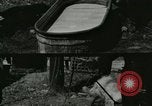
Workers of Ringling Brothers Barnum and Bailey Circus camping at the fair grounds in an American town
The first scene of the film shows a circus hand washing a dog outdoors in a metal wash tub. local people watch him. The next scene shows a worker hanging wash on lines set behind the circus tents where they are camping.
CRITICALPAST.COM: About Us | Contact Us | FAQs - How to Order | License Agreement | My Account | My Lightboxes | Shopping Cart | Advanced Search | Featured Collections | Website Terms & Conditions | Privacy Policy ©2026 CriticalPast LLC.
License Agreement |
Terms & Conditions |
Privacy Policy
©2026 CriticalPast LLC.