


 Francais
 Deutsch
 Italiano

Refine Your Search
Nevada United States 1936 stock footage and images
- Showing 31861 to 31866 of 35683 results more
 Hide
Color Sound
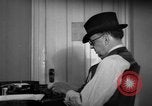
John Lomax and Lead Belly reenact events in their relationship
Reenactment of events in relationship between Huddie William Ledbetter (Lead Belly), American folk and blues musician, and Musicologist John A. Lomax.. Lomax sits at a typewriter as Lead Belly comes in and asks for a job. Lead Belly says Lomax gave a recording of his songs to the Governor, who pardoned him from prison. In thanks, he says he will work for Lomax for life. Lomax refuses because of Lead Belly having killed two men.. Lead Belly claims that he has changed and promises to sing for him. Lomax relents and provides him a job.
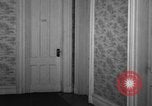
John Lomax and Lead Belly reenact events from their relationship. Lead Belly released from prison asks to work for Lomax
Lead Belly (Huddie William Ledbetter) and John Lomax reenact scenes from the past in their relationship. Lead Belly walks down a hall and knocks before he enters a room carrying a guitar. Lomax is working at a typewriter. He is coached regarding his lines. There is a knock on the door and Lomax says "come in." Lomax is coached some more about his lines. Scene shifts. Knock at door, and Lead Belly enters, saying "Boss, here I is." He states that the Governor pardoned him because Lomax sent him a recording of his songs, and he asks Lomax to employ him for life. Lomax declines, calling Lead Belly "a mean boy" because he killed two men. Lead Belly claims that he has changed and promises to be his driver and to sing for him. Lomax hires him.
The uses and the importance of colored grenades in a combat (WWII)
'Colored smoke grenades: their use in combat' shows the types, uses and importance of colored smoke grenades during combat in WW2. Colored smoke grenades burst. An orange smoke grenade burns. Grenades piled up in a crate. A soldier picks up a grenade from the crate and removes the outer can. He throws it on the ground and orange smoke rises from it. An aerial views of an area along a coast. Units advance in a field. An aircraft in flight. Different units burst different colored smoke grenades to pass on the information about their position to their Commander. The aircraft drops a colored grenade to get some information from the unit on advance. The unit sets off a purple grenade as an answer. (World War II period).
The use of colored grenades by a unit cut off from its headquarters during combat in WW2.
The types, uses and importance of colored smoke grenades during combat in WWII. An enactment shows a unit in a forest which has been cut off from its headquarters. The leader of the unit sights a friendly reconnaissance plane and throws a green smoke grenade to signal their position. Another grenade burns indicating their immediate need. The pilot of the aircraft throws a sign grenade. He signals them the way to be followed by throwing a red smoke grenade along the road to be followed.
Use of colored grenades by a unit to know the direction of the enemy fire during WW2.
The types, uses and importance of colored smoke grenades during WWII. An enactment shows units during an advance. Laying out a cloth in an arrow sign indicating the direction of an enemy fire and burning a smoke grenade near it. The smoke signal indicates the help required by the unit in knowing the direction of the enemy fire. A reconnaissance plane surveys the combat area and enemy installations. A pillbox being located and smoke grenades being burst. Soldiers fire 4.2 mortars at the pillbox and smoke rises. Smoke engulfs the pillbox. Ground units attack the area. A soldier sets off a colored smoke grenade to indicate cease fire. Soldiers advance and smoke from colored grenades rises.
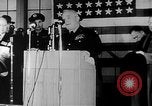
Career of Air Force General Henry (Hap) Arnold. The world War II years.
General Henry Arnold dispenses with his prepared remarks and gives impromptu speech about air power. General Arnold at the Casablanca conferences, seen with President Roosevelt and General Marshall and other Allied military leaders. British bombers departing on nighttime bombing raids. A submarine surfacing. Newspaper headlines report German torpedoing of the ships, SS Robin Moor and SS Sessa. B-24 Liberator bombers taxiing before takeoff. B-24 aircraft seen in flight on antisubmarine missions. View of German submarine surfacing. View from inside cockpit of B-24 flying low with camera pointing toward ocean below. View from aircraft flying low over submarine. Explosion in water. Aerial view of B-24 in flight and view of explosions in water as seen from aircraft in flight. General Arnold consulting with General Joseph Stilwell and Claire Chennault. They walk in front of line of P-40 Flying Tiger aircraft with tiger teeth painted on their noses. Snow-covered Himalaya Mountains shown as narrator discusses "airlift over the hump" in World War 2.
CRITICALPAST.COM: About Us | Contact Us | FAQs - How to Order | License Agreement | My Account | My Lightboxes | Shopping Cart | Advanced Search | Featured Collections | Website Terms & Conditions | Privacy Policy ©2026 CriticalPast LLC.
License Agreement |
Terms & Conditions |
Privacy Policy
©2026 CriticalPast LLC.