


 Francais
 Deutsch
 Italiano

Refine Your Search
Nevada United States 1936 stock footage and images
- Showing 31939 to 31944 of 35683 results more
 Hide
Color Sound
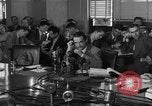
Howard Hughes and Retired Major General Oliver Echols testify before Senate committee chaired by Senator Brewster
Howard Hughes and retired Major General Oliver P. Echols ( former Air Force Chief Material Officer, responsible for all Air Force wartime procurement) testify before the Senate War Investigating Subcommittee, chaired by Senator Owen Brewster.

United Auto Workers Union (UAW) initiate 1939 Tool and die workers strike against General Motors that spreads to other General Motors workers.
Opening Slate reads: "International Union United Auto Workers (UAW) of America " over-layed on medalion reading: "Affiliated with C.I.O."This is followed by the title of the film: "United Action Means Victory, Story of the General Motors Tool and Die Strike 1939." This is followed by numerous credits, and a foreward signed by UAW President, R. J. Thomas and Secretary-Treasurer, George F. Gaddes. Next, Camera shows Walter Reuther, Director of the General Motors Department of the UAW, seated behind Union President R.J. Thomas, as he speaks to members of the union executive board. Camera pans over the board members. Views of a tool and die makers at work, in measuring and in machine shops, using grinders, drilling machines, welding equipment and other machinery. Walter Reuther is seen meeting with Union officials after they decide to strike. Actors supposedly brawling outside an auto plant. (They all pull their punches.) Newspapers announcing peaceful settlement of labor complaints. Walter Reuther insists on waiting for General Motors response to the Union's demands. Strikers marching outside an auto plant. One carries a sign calling for Fisher Pontiac workers to strike. Most of these are women. View of a Chevrolet plant with picketers marching in a courtyard. Slate reads:"Chevrolet Gear and Experimental." More views of picketers. One wears a hat reading: "UAW-CIO Picket Captain." Building with sign reading: "Chevrolet Engineering Laboratory." Engineers from the Lab shake hands with strikers and join them. More views of pickets. Some receiving drinks from folks supporting the strike. Union members seen paying their dues to union cashiers.
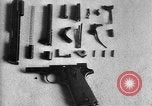
A Colt Model 1911 sidearm is assembled
A Colt Model 1911 and its various parts. The semi-automatic pistol including magazine spring, slide, magazine catch, trigger assembly, and barrel are shown being assembled in an animated sequence, part by part.
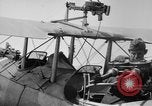
American airman demonstrates maneuverability of Lewis machine guns installed on De Havilland DH-4 airplane in World War I
American airman standing in observer's cockpit of a De Havilland DH-4 aircraft, during World War 1, demonstrates the flexibility of twin Lewis machine guns installed on a Scarff ring. He rotates the twin guns through various angles and elevations as he moves up and down, himself, in the open cockpit. He then turns his attention to a single Lewis gun mounted atop the upper wing. He removes the gun's ammunition cannister and replaces it with another.
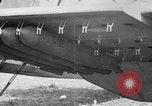
Bomb release mechanism is demonstrated during World War I
Film opens showing bombs installed in racks under bottom wing of a airplane in World War 1. Glimpse of a Vickers machine gun mounted on the fuselage below the cockpit. Scene shifts to inside the airplane cockpit, where a hand actuates a lever on bomb release mechanism. View from outside as bombs are released sequentially from the underwing racks, where they fall harmlessly a few feet to the ground under the parked airplane. Next, an airplane is seen diving toward the ground and releasing bombs that then explode sequentially on the ground, along the line of flight.
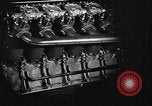
Views of the famous Liberty Engine used in American aircraft during World War I
View of the famous Liberty L-12 engine of World War 1. It is a 27-litre (1,649 cubic inch) water-cooled 45° V-12 aircraft engine of 400 horsepower. (World War I; World War 1; WWI; WW1)
CRITICALPAST.COM: About Us | Contact Us | FAQs - How to Order | License Agreement | My Account | My Lightboxes | Shopping Cart | Advanced Search | Featured Collections | Website Terms & Conditions | Privacy Policy ©2026 CriticalPast LLC.
License Agreement |
Terms & Conditions |
Privacy Policy
©2026 CriticalPast LLC.